Wardrobe & care
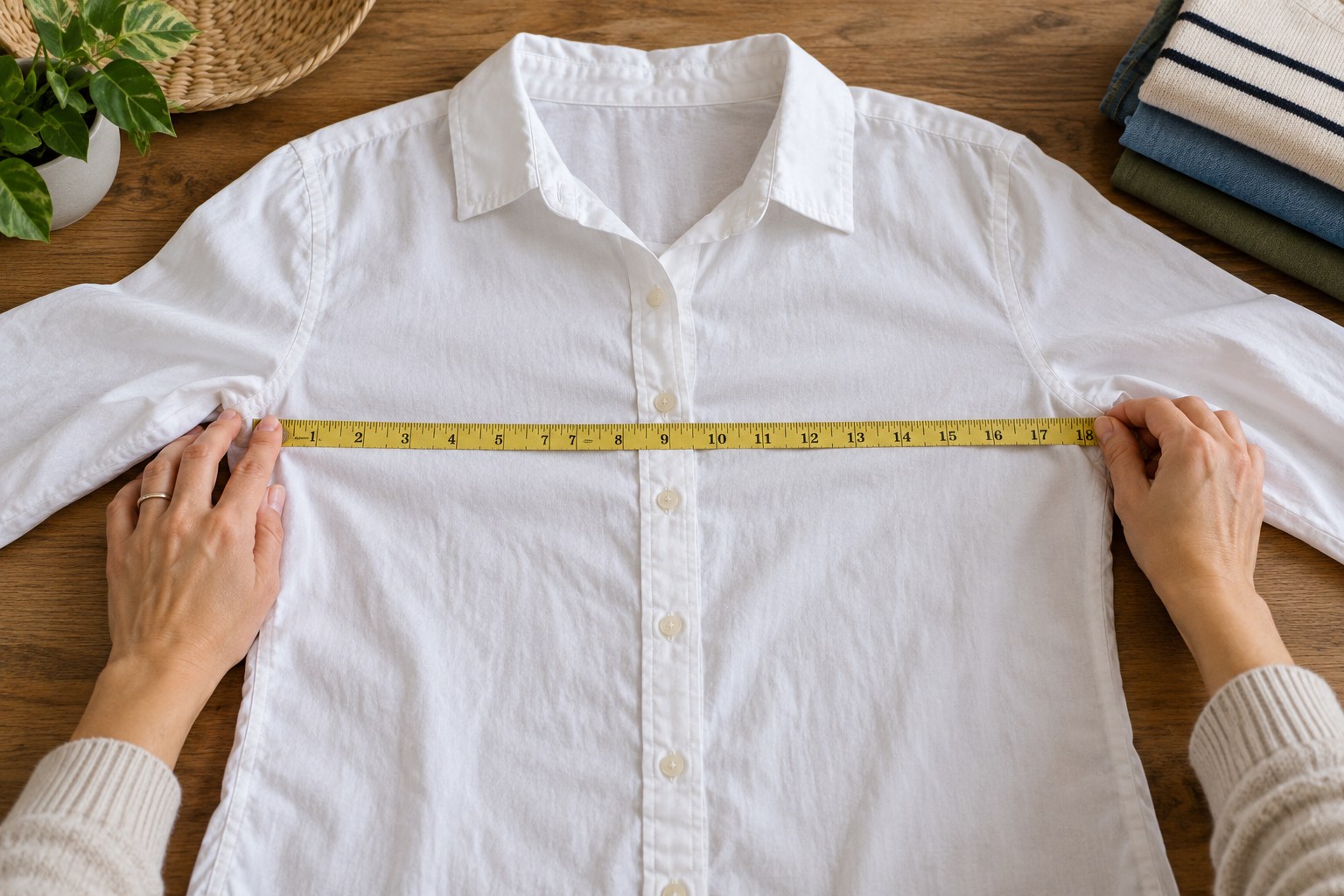
Measure an existing garment before buying another size
Use a garment that fits the way you want as a measurement reference, while keeping body measurements and garment measurements clearly separate.
Clothes, accessories & the ways to wear them
Wardrobe & care
When two body measurements point to different sizes, use the garment's construction and the seller's chart to identify which areas need room.
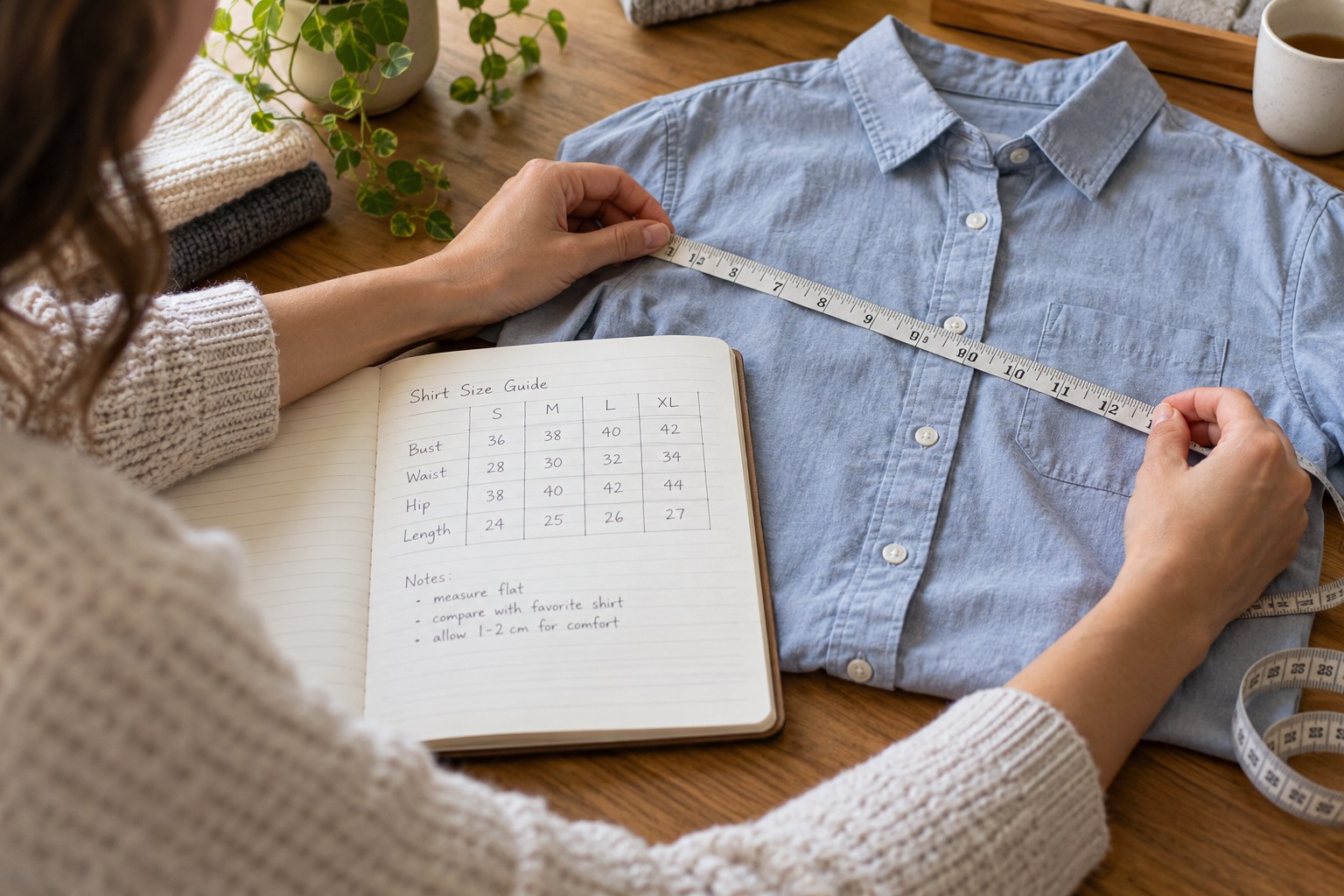
AI-generated illustration. Items shown are illustrative, not specific products for sale.
A size chart may place one measurement in one size and another measurement in the next. That does not mean your measurements are wrong or your body needs to fit the chart more neatly. It means the chart simplifies a range of proportions. The task is to understand how the particular garment accommodates those proportions.
First, check whether the chart lists body measurements or finished garment dimensions. Read the measuring instructions and confirm the unit. A number in inches compared with one in centimetres creates an obvious error, but a flat garment width compared with a full body circumference can be less immediately noticeable. Resolve the method before interpreting the size difference.
A woven dress with a fitted waist and back zip behaves differently from a loose tunic with an elasticated section. Look at which part must pass over the body, which part fastens and which areas have ease built into the design. A narrow upper sleeve may matter as much as the listed bust measurement; a fixed waistband may need more attention than a generously cut skirt.
Use the seller's fit notes and photographs as supporting information, not as a substitute for measurements. Words such as relaxed, fitted or oversized describe an intended effect but do not establish how much room the garment provides. If a crucial area is not measured, ask a specific question about it, such as the upper-sleeve width or whether the waistband measurement is relaxed or stretched.
Consider a dress where the bust measurement points to one size and the waist measurement points to the next. Choosing by only the smaller number could make the fixed waist uncomfortable. Choosing the larger size might provide room there but change the shoulder or neckline fit. The decision depends on the cut and any realistic adjustment, not on a universal instruction to always size up or down.
An alteration may be possible, but do not assume that every area can be changed equally. Decorative seams, pockets, lining and closures can limit the work. If an alteration is part of the purchase plan, discuss the actual garment or its construction with a tailor before treating the change as straightforward. Its cost and effect on the design belong in the decision.
For an elasticated or adjustable garment, examine the usable adjustment rather than the presence of elastic alone. A waistband can stretch while another part of the garment remains restrictive. Likewise, a wrap closure may allow some variation but still need enough overlap for the coverage you want while sitting and moving.
Compare a similar garment you already wear, using the same measurement method as the seller where possible. Note how that reference feels during movement, not just whether it closes. A familiar fit gives context to the chart, especially when deciding between two nearby options.
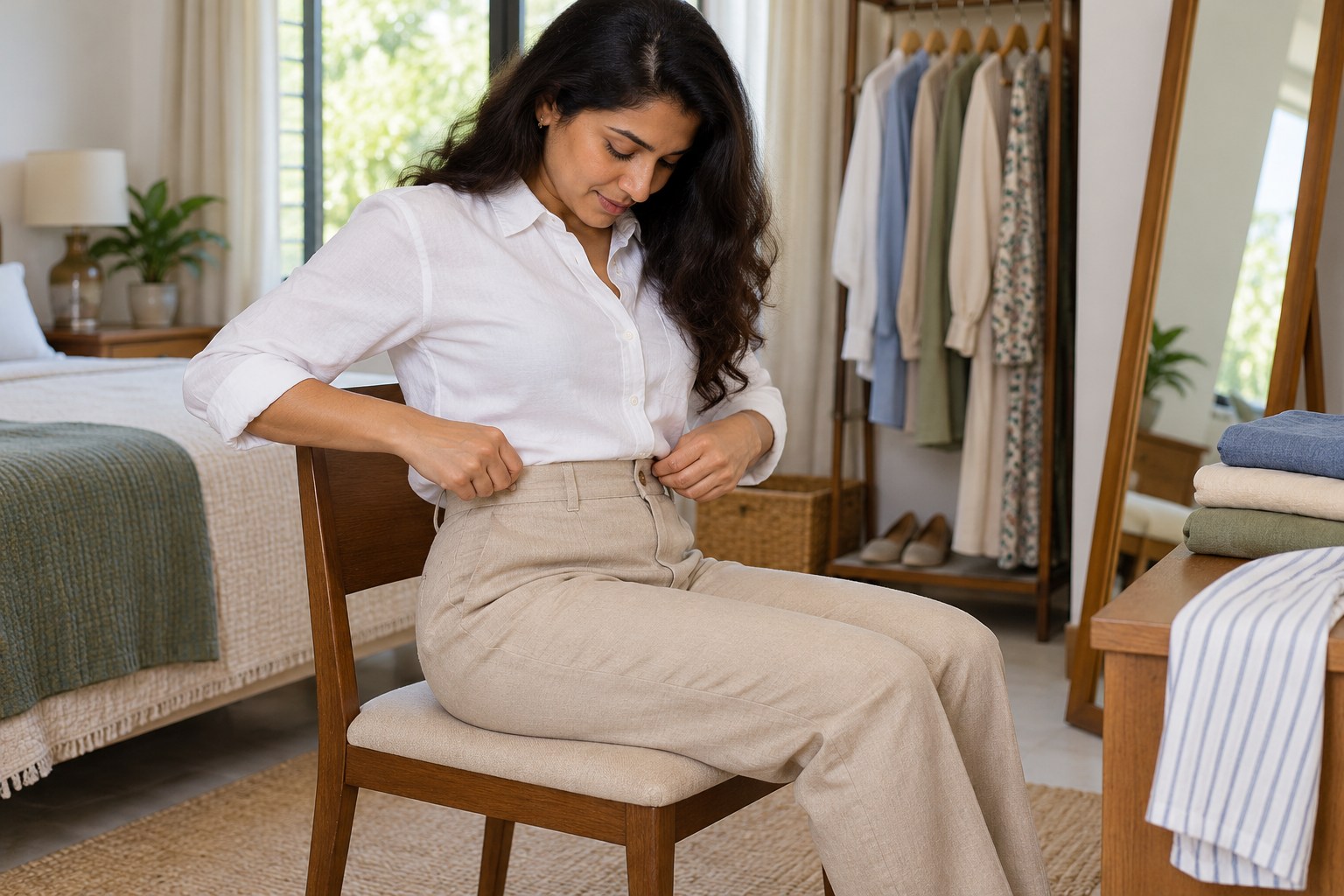
If you can try the garment, sit, reach and walk in it before deciding. Watch for pulling at seams, a neckline that shifts and an opening that changes more than you want. Do not rely on a fitted garment becoming comfortable merely because it can be fastened.
When the available information remains unclear, choose a retailer or purchase arrangement that lets you resolve the uncertainty appropriately, checking its current terms yourself. A different cut may serve you better than forcing a decision between two unsuitable sizes. The useful result is a garment that works for your proportions and activities, not a particular letter or number on its label.
Wardrobe & care
Use a garment that fits the way you want as a measurement reference, while keeping body measurements and garment measurements clearly separate.
Wardrobe & care
Assess trouser rise through the position of the waistband and crotch during sitting, walking and bending, not only through a front-view mirror check.
Wardrobe & care
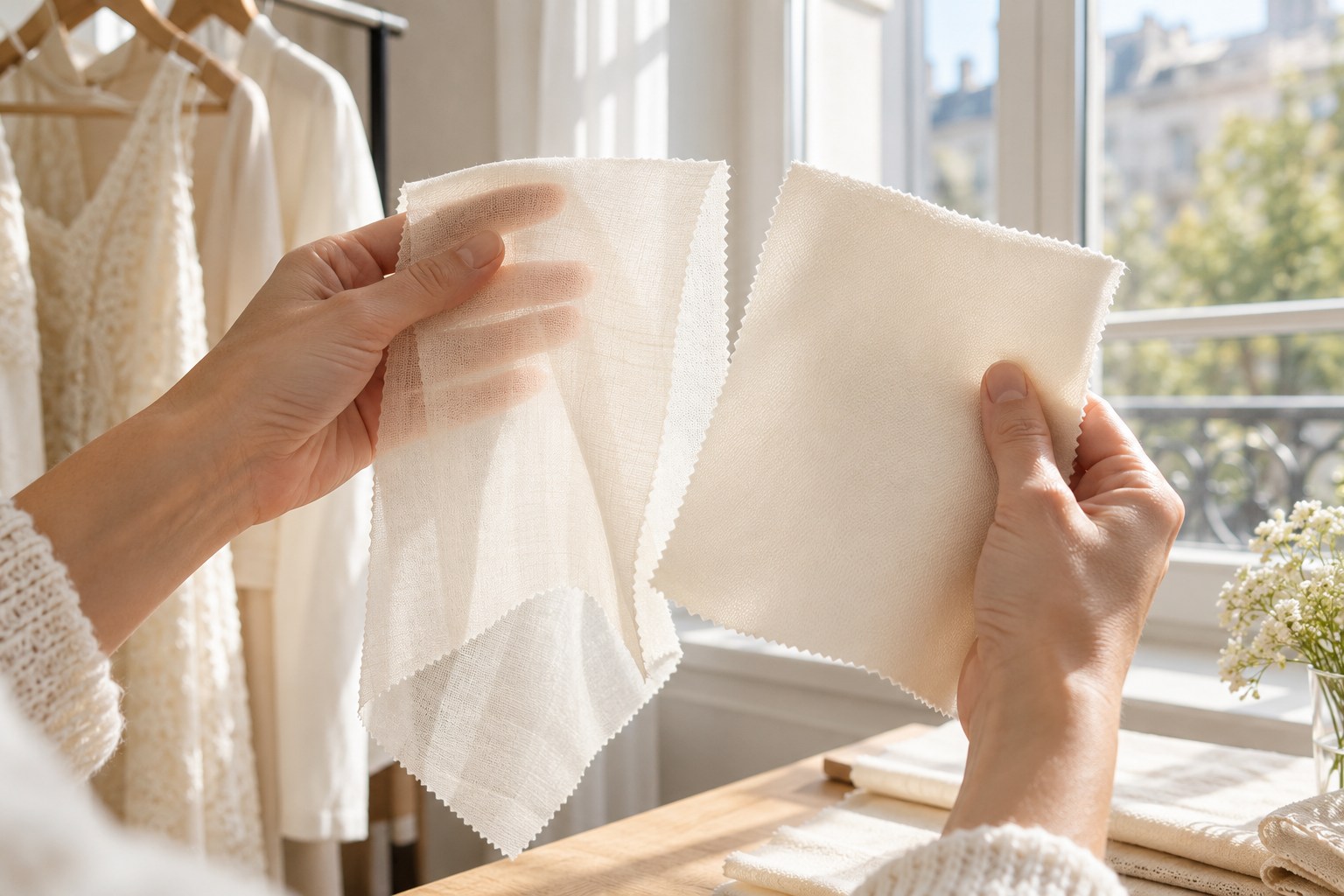
Compare light-coloured dress fabrics through opacity, drape and construction, rather than assuming that a heavier cloth is always the better choice.