Wardrobe & care
Read a size chart when two measurements disagree
When two body measurements point to different sizes, use the garment's construction and the seller's chart to identify which areas need room.
Clothes, accessories & the ways to wear them
Wardrobe & care
Use a garment that fits the way you want as a measurement reference, while keeping body measurements and garment measurements clearly separate.
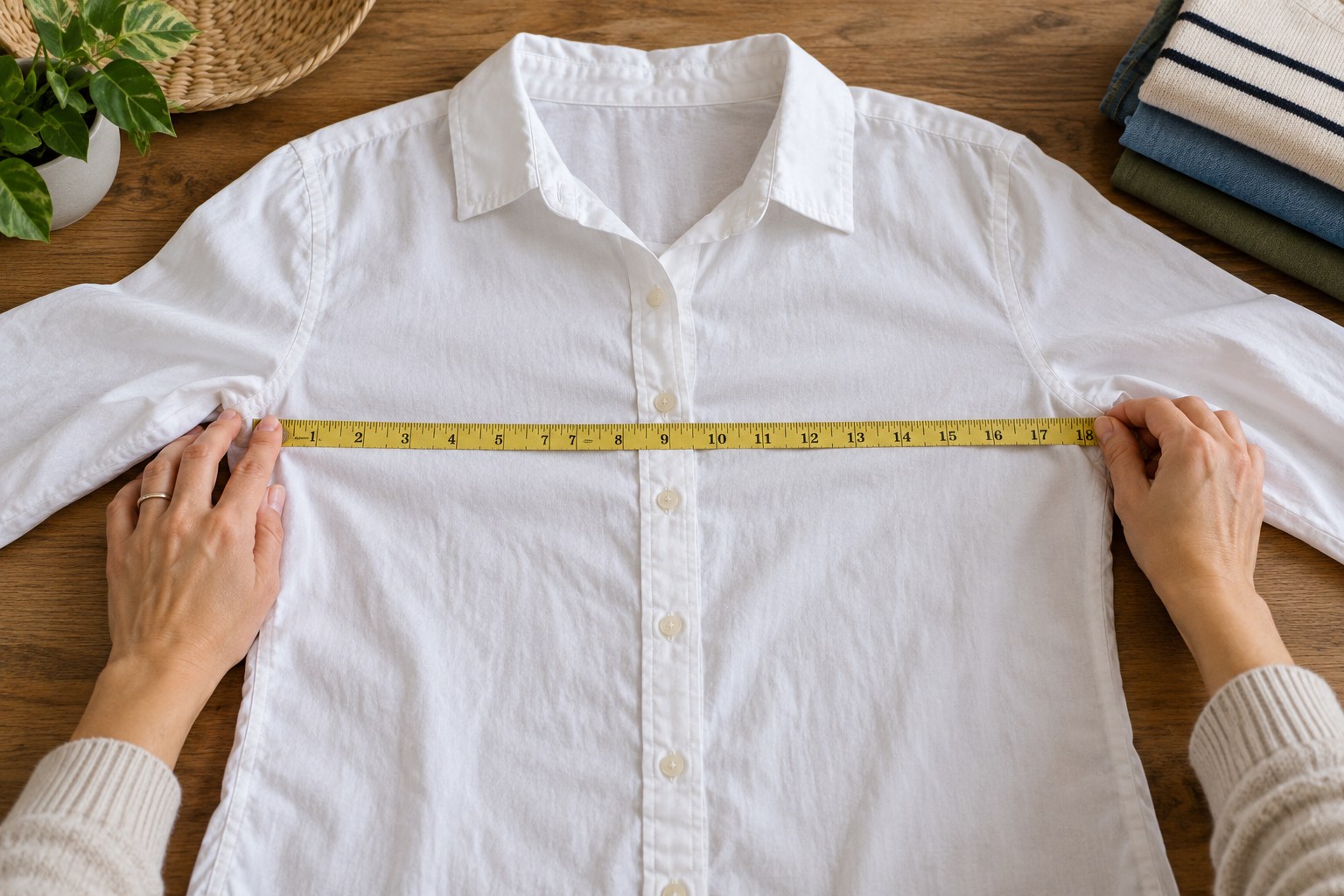
AI-generated illustration. Items shown are illustrative, not specific products for sale.
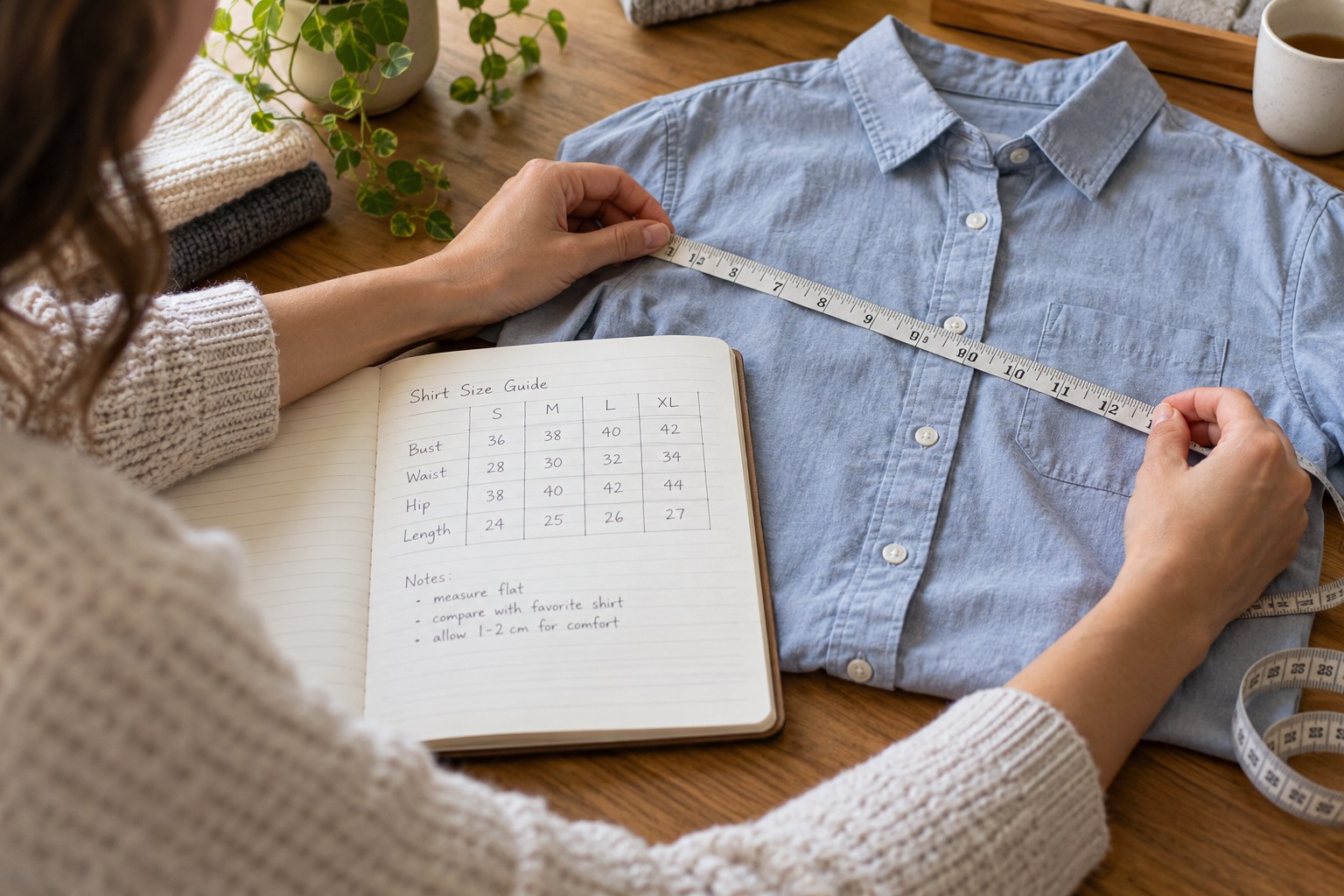
Measuring an existing garment can make a size choice more concrete, especially when the size label alone gives little guidance. Choose a reference that resembles the item you are considering in cut, fabric behaviour and intended fit. A stretchy fitted top is a poor reference for a loose woven shirt, even if both are comfortable in the same labelled size.
Check the reference garment's condition first. If it has stretched, shrunk or been altered, those changes are part of the measurement you will record. That may still be useful: you want to describe the fit you actually wear. Simply note the condition so that the number is not mistaken for an untouched manufacturer's measurement.
A body-size chart describes the person a size is intended to fit. A garment-measurement chart describes the finished item. They are not interchangeable. A shirt's chest circumference usually includes space beyond the body, while a stretchy garment may be designed differently. Look for the seller's measurement instructions and ask for clarification if the chart does not identify what its numbers represent.
Use the same measurement method where possible. If the seller lists a flat underarm-to-underarm width, measure that width on the reference garment. Do not compare it directly with a full body circumference. Doubling a flat width may provide a rough circumference for a simple, flat garment, but darts, gathers and shaped panels can make that conversion misleading. The named measurement and method are more important than a number that merely looks comparable.
Place it on a clean, flat surface and fasten buttons or zips as they are worn. Smooth obvious folds gently without stretching the fabric. Keep seams in their natural positions rather than pulling the garment into a perfectly symmetrical shape that it does not normally have. Use a flexible measuring tape and keep it straight along the intended line.
For a top, useful measurements may include the flat chest width, shoulder span, sleeve length and overall length, but select the ones relevant to the fit question. A top that feels tight during reaching may need attention around the shoulders or upper sleeve rather than only at the chest. Record the measurement endpoints: 'from shoulder seam to cuff' is more useful than simply writing 'sleeve'.
For trousers, compare the waistband, rise, hip area, inseam and leg opening only where the seller provides a compatible method. An elastic waistband has relaxed and stretched states; record which one you measured, and avoid stretching it forcefully to create a maximum number. The height where the waistband sits on the body also affects how its measurement relates to another pair.
Write one or two fit notes beside each reference. A pair of trousers might be comfortable while standing but restrictive when seated. A shirt might have the sleeve length you like but more volume than you want in a new style. These notes prevent the reference from becoming an unquestioned target for every future purchase.
Imagine comparing two shirts when the existing one has a flat chest width of 52 centimetres. A new shirt listed at 53 centimetres is not automatically a better fit: its shoulder position, sleeve shape and fabric can still change the result. The one-centimetre difference is information about one part of the garment, not a verdict on the whole item.
Take a photograph of the tape placement if you expect to repeat the comparison. This helps you measure at the same point later and makes a question to a seller more precise. Store the notes with the garment's name or description, not only its size label.
Use the comparison to narrow uncertainty, then review the seller's current fit description and applicable purchase conditions. Measurements cannot promise comfort in an unfamiliar cut, but they can reveal a clear mismatch before you buy and help you ask a more useful question than whether the item 'runs true to size'.
Wardrobe & care
When two body measurements point to different sizes, use the garment's construction and the seller's chart to identify which areas need room.
Wardrobe & care
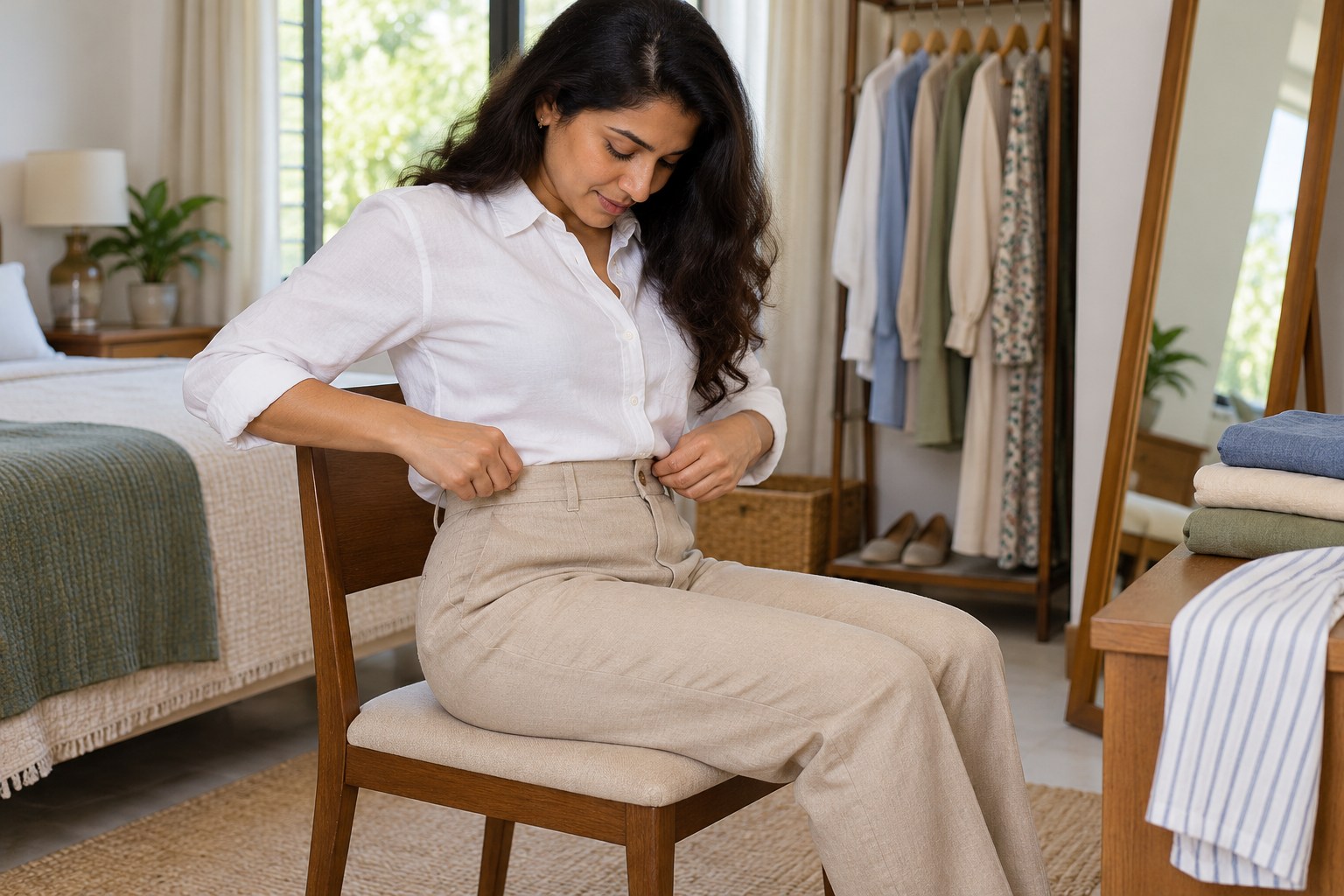
Assess trouser rise through the position of the waistband and crotch during sitting, walking and bending, not only through a front-view mirror check.
Wardrobe & care
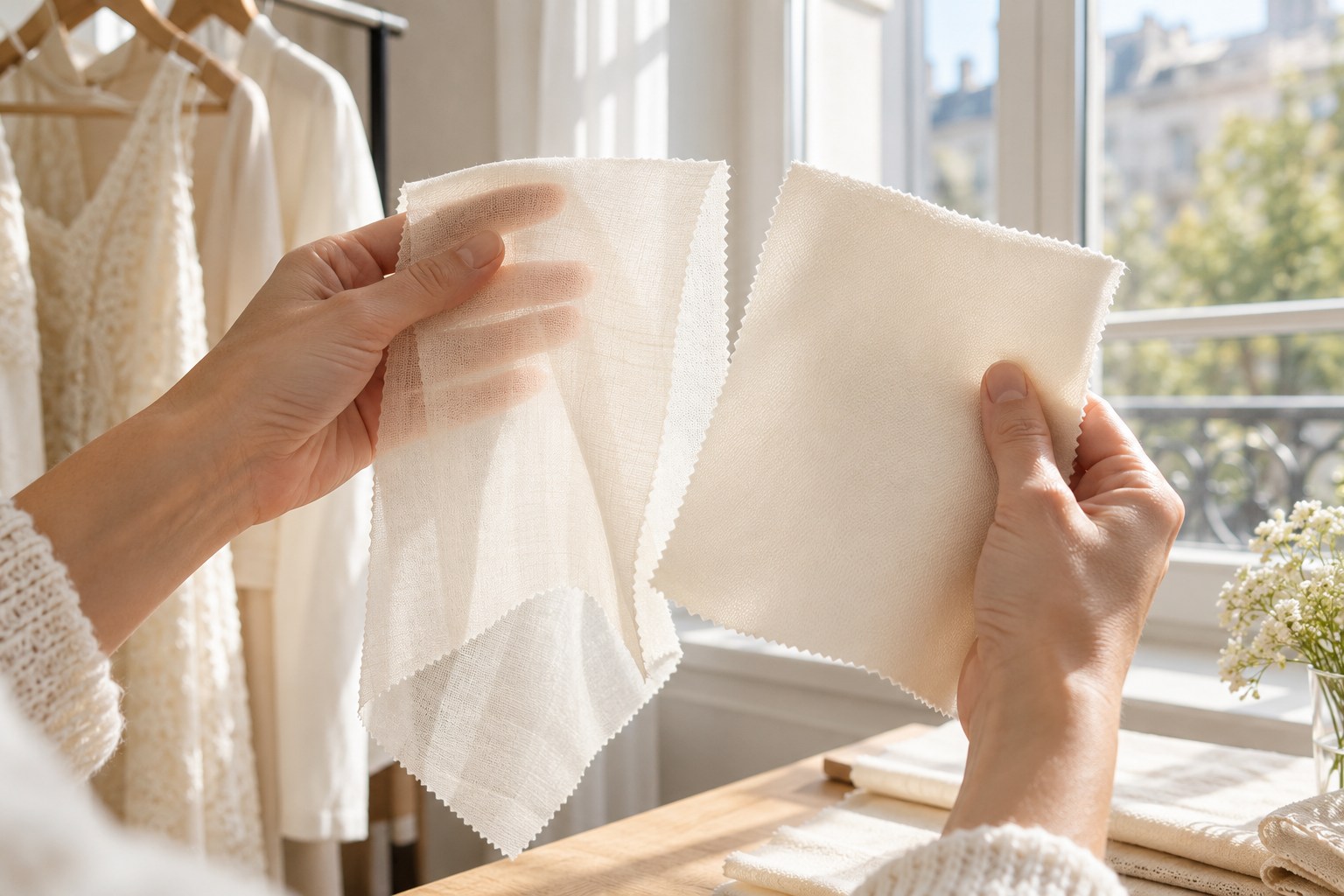
Compare light-coloured dress fabrics through opacity, drape and construction, rather than assuming that a heavier cloth is always the better choice.