Wardrobe & care
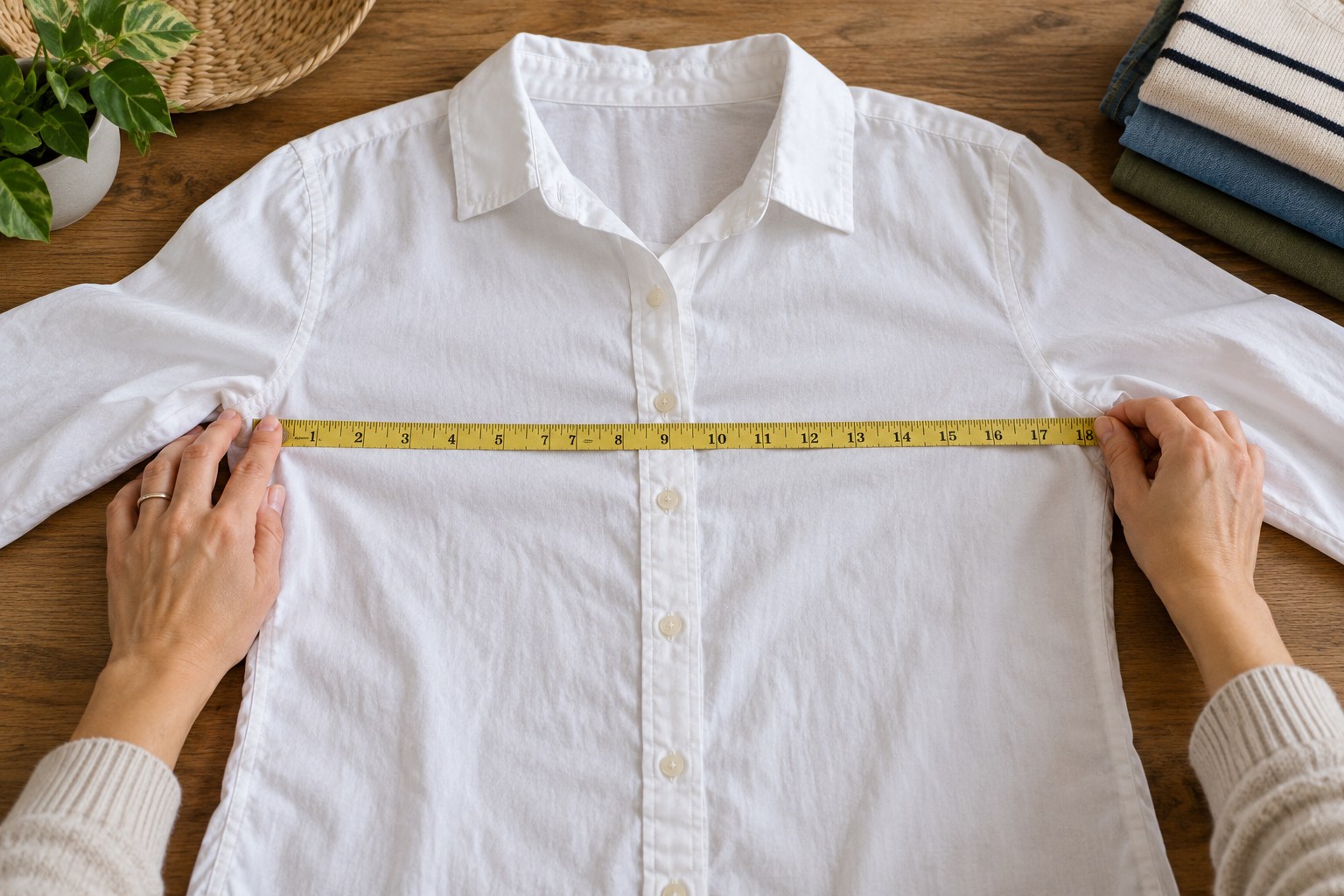
Measure an existing garment before buying another size
Use a garment that fits the way you want as a measurement reference, while keeping body measurements and garment measurements clearly separate.
Clothes, accessories & the ways to wear them
Wardrobe & care
Compare light-coloured dress fabrics through opacity, drape and construction, rather than assuming that a heavier cloth is always the better choice.
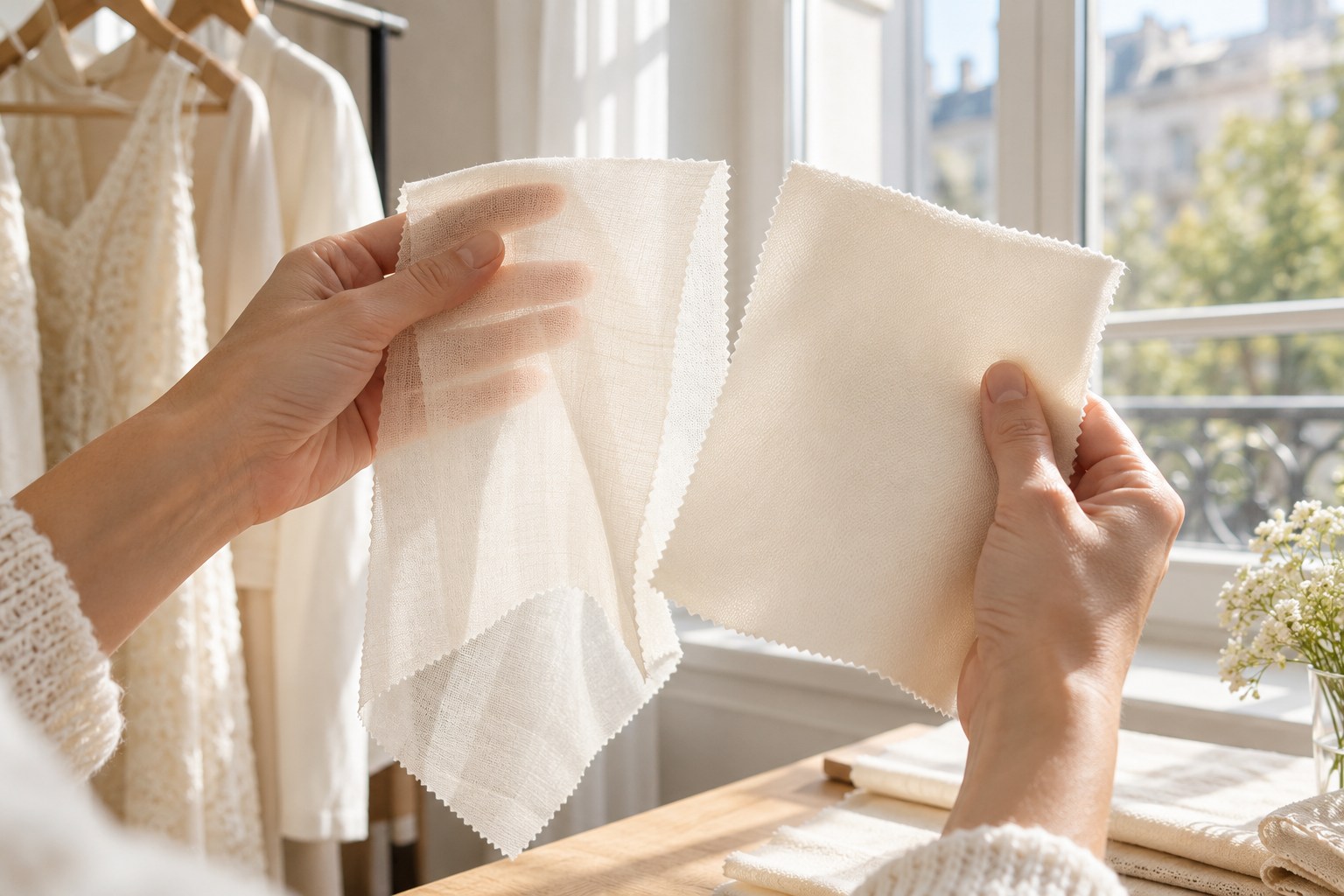
AI-generated illustration. Items shown are illustrative, not specific products for sale.
A pale dress can look opaque on a hanger and become more transparent when light passes through it. Fabric weight is part of that behaviour, but weave, colour, lining and fit also matter. Examine the actual garment in good light, including the areas where it stretches or falls away from the body.
Hold a section of the fabric in front of a contrasting background and then try the dress with the underlayer you plan to wear. The two checks answer different questions: the first reveals the cloth's openness, while the second shows the combination as worn. Look from the side and back as well as the front. A dense print or a carefully lit product photograph can hide differences that become clearer in person.
A lightweight cloth may move freely and gather into soft folds. A firmer cloth may hold the dress's outline more clearly. Neither behaviour is automatically more suitable for a pale colour. Decide whether the design relies on fluid movement, crisp shape or volume, then see whether the material supports it without creating a problem you must solve with extra layers.
Check seams, pockets and facing pieces. These can show through a light fabric even when the main area seems sufficiently opaque. A lining may reduce that contrast, but its own colour, length and attachment matter. Look for a lining hem that becomes visible through the outer layer or a pocket bag that forms a dark shape.
Sit and move in the dress. The cloth may become taut across the lap or back, changing its appearance. Choose the coverage you want in those positions, not only in the standing pose. If an additional slip is needed, include it in the comfort and care decision rather than treating it as an invisible afterthought.
Finally, read the care information. A dress that requires careful handling may still suit an occasional outing, but it may not fit the weekly routine you had in mind. Judge the complete garment—outer fabric, lining, fit and care—before deciding that its colour or weight alone makes it suitable for summer.
Wardrobe & care
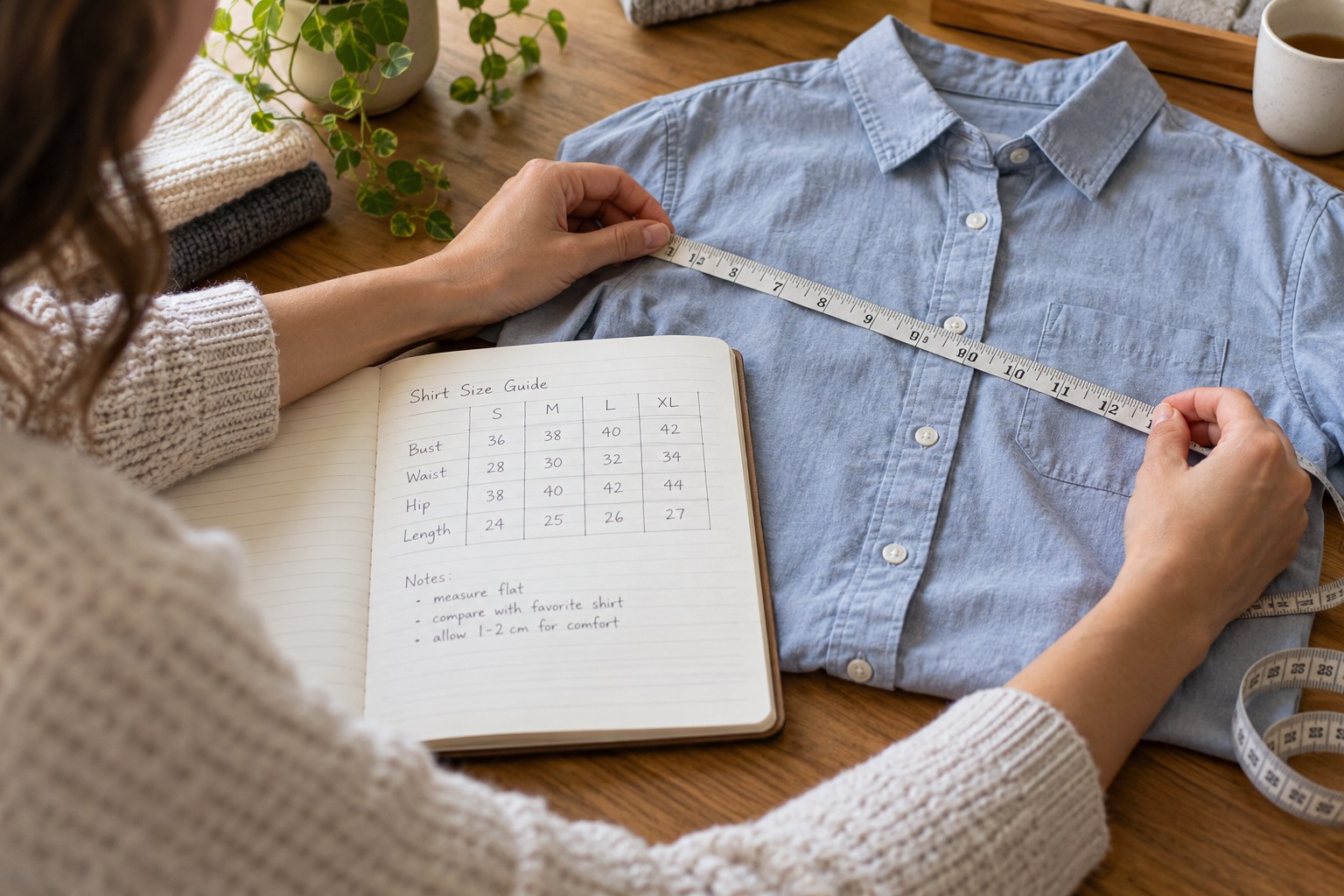
Use a garment that fits the way you want as a measurement reference, while keeping body measurements and garment measurements clearly separate.
Wardrobe & care
When two body measurements point to different sizes, use the garment's construction and the seller's chart to identify which areas need room.
Wardrobe & care
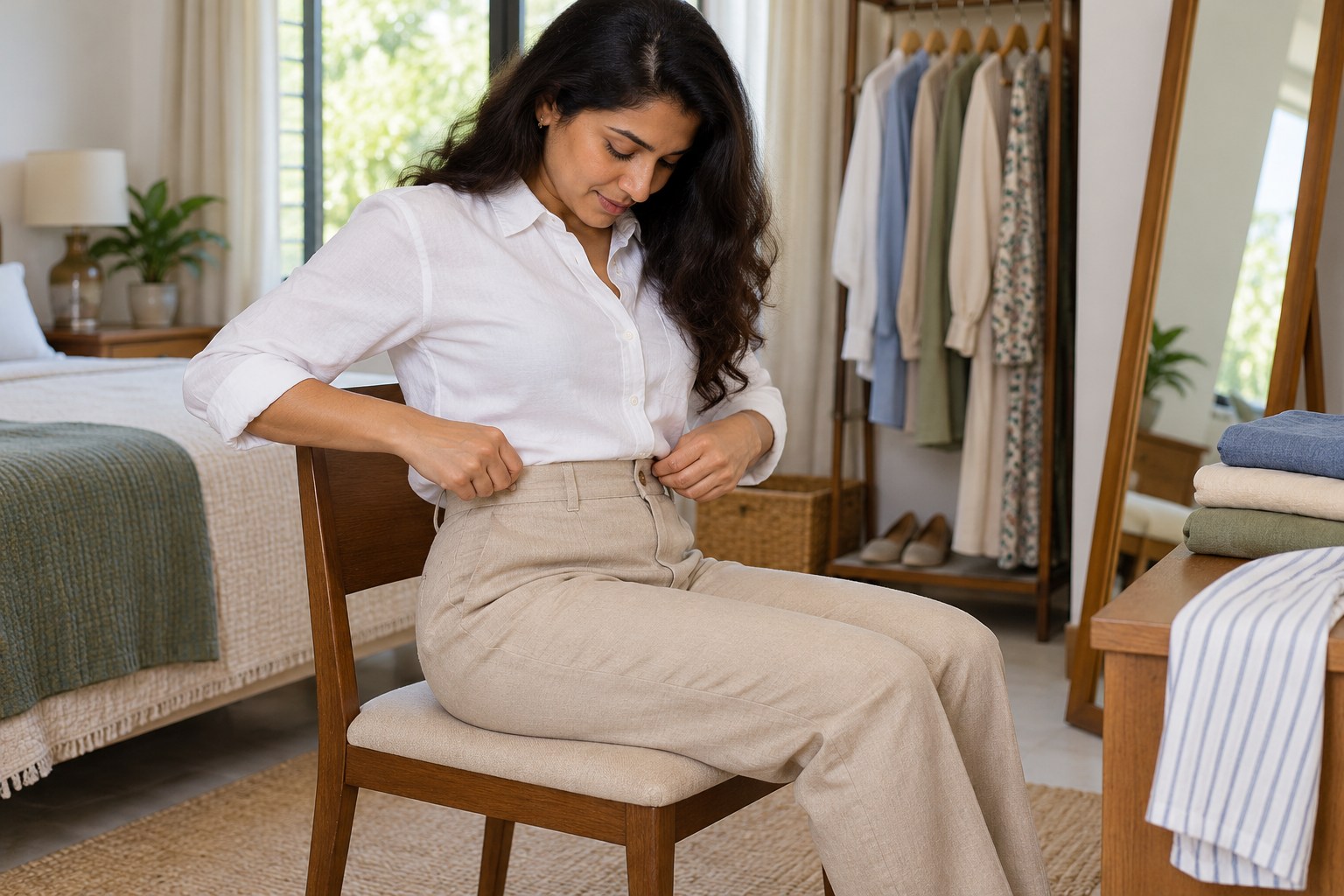
Assess trouser rise through the position of the waistband and crotch during sitting, walking and bending, not only through a front-view mirror check.