Wardrobe & care
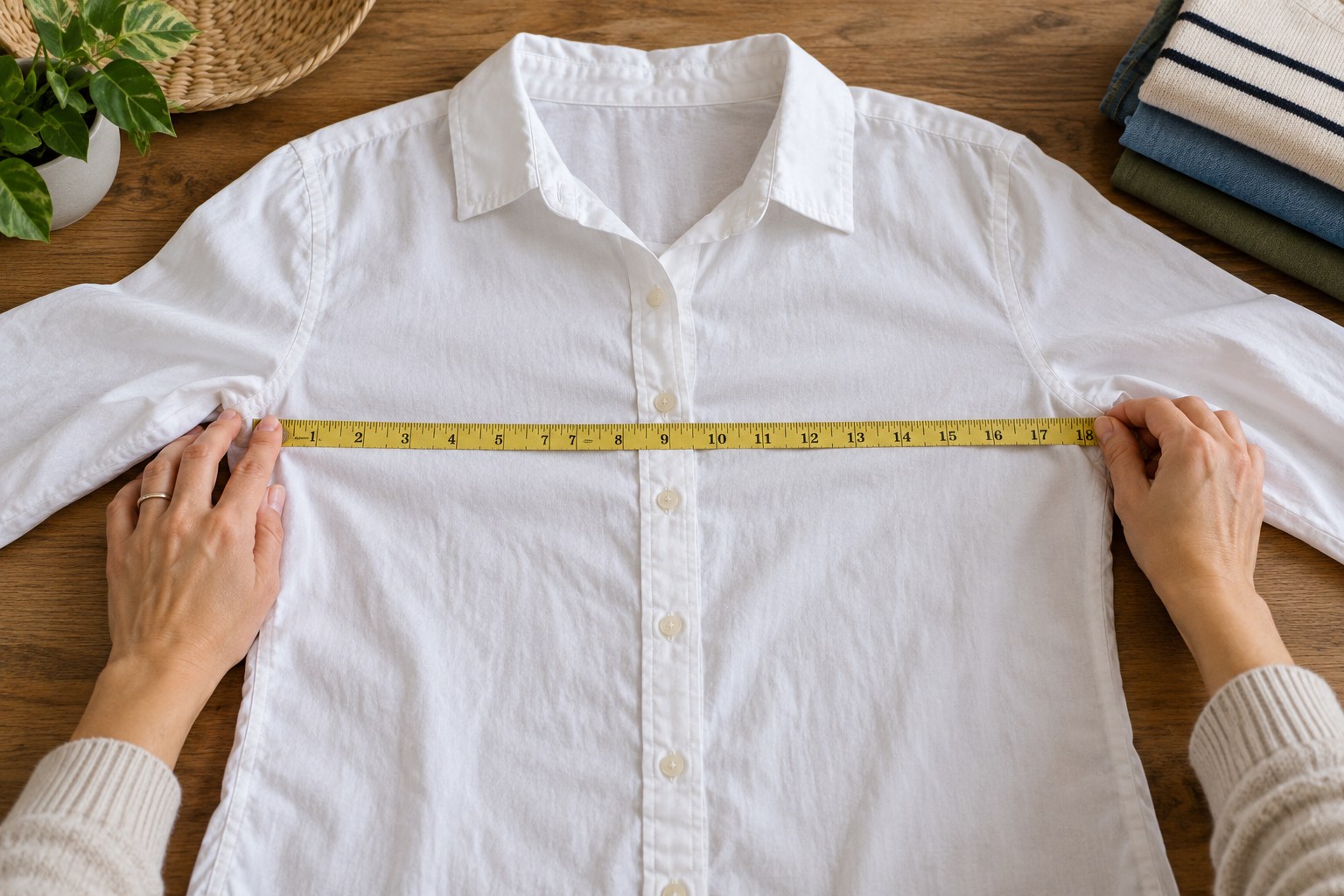
Measure an existing garment before buying another size
Use a garment that fits the way you want as a measurement reference, while keeping body measurements and garment measurements clearly separate.
Clothes, accessories & the ways to wear them
Wardrobe & care
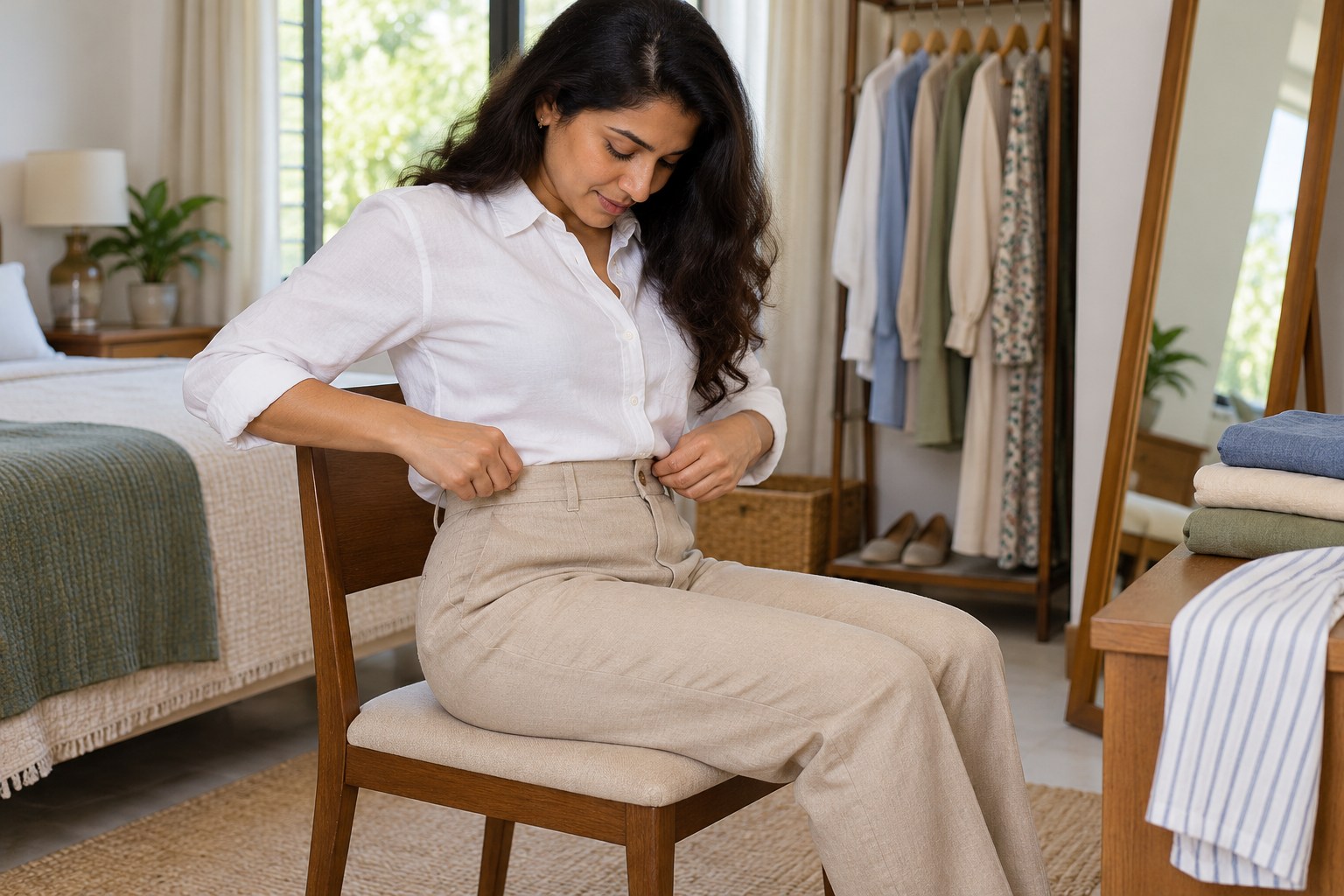
Assess trouser rise through the position of the waistband and crotch during sitting, walking and bending, not only through a front-view mirror check.
AI-generated illustration. Items shown are illustrative, not specific products for sale.
Trouser rise influences where the waistband sits and how much space the garment provides between the waist and the legs. A pair can look comfortable while standing and feel quite different in a chair. Try it with the underwear and top you intend to wear, and fasten it normally rather than holding it at an imagined position.
Stand in a relaxed posture and notice where the waistband settles. Then sit on an ordinary chair with your feet on the floor. Check whether the waistband digs in, pulls down at the back or shifts into a different position. A small movement in fabric is normal; the question is whether the change feels comfortable and preserves the coverage you want.
Discomfort around the crotch or waist does not always come from rise alone. The hip, thigh, waistband shape and fabric also affect the result. Pulling lines can show where the garment is under tension, but they are clues rather than a complete diagnosis. Avoid solving every issue by selecting a higher rise without comparing the rest of the cut.
Try leaning forward, standing up and taking a few steps after sitting. If you need to pull the trousers back into place each time, note where they moved. A belt can help hold some waistbands, but it should not be used to force a fundamentally uncomfortable fit into position. Tightening the belt may simply create another pressure point.
Compare a pair you already find comfortable. Lay both garments flat and examine the rise using a consistent method, but remember that equal measurements can behave differently with different shaping or stretch. Record what the comfortable pair does well: perhaps it stays in place when seated or leaves enough space through the upper thigh.
A tucked shirt adds fabric inside the waistband and may change the feel. A cropped top makes any movement at the waist more visible. Try the complete outfit so that the decision reflects how the trousers will actually be worn. You can choose more or less coverage according to preference; the important point is to see the effect before leaving home.
The hem also needs a second look after the waistband has settled into its natural position. If you have been holding the trousers higher during the fitting, their true length may only appear after walking and sitting. Check clearance in the planned shoes.
If two sizes solve different parts of the problem, a different cut may be more suitable than choosing the one that looks best only while standing. For possible alterations, explain the movement that causes discomfort to the tailor rather than requesting a change based only on the label 'high rise' or 'mid rise'.
Wardrobe & care
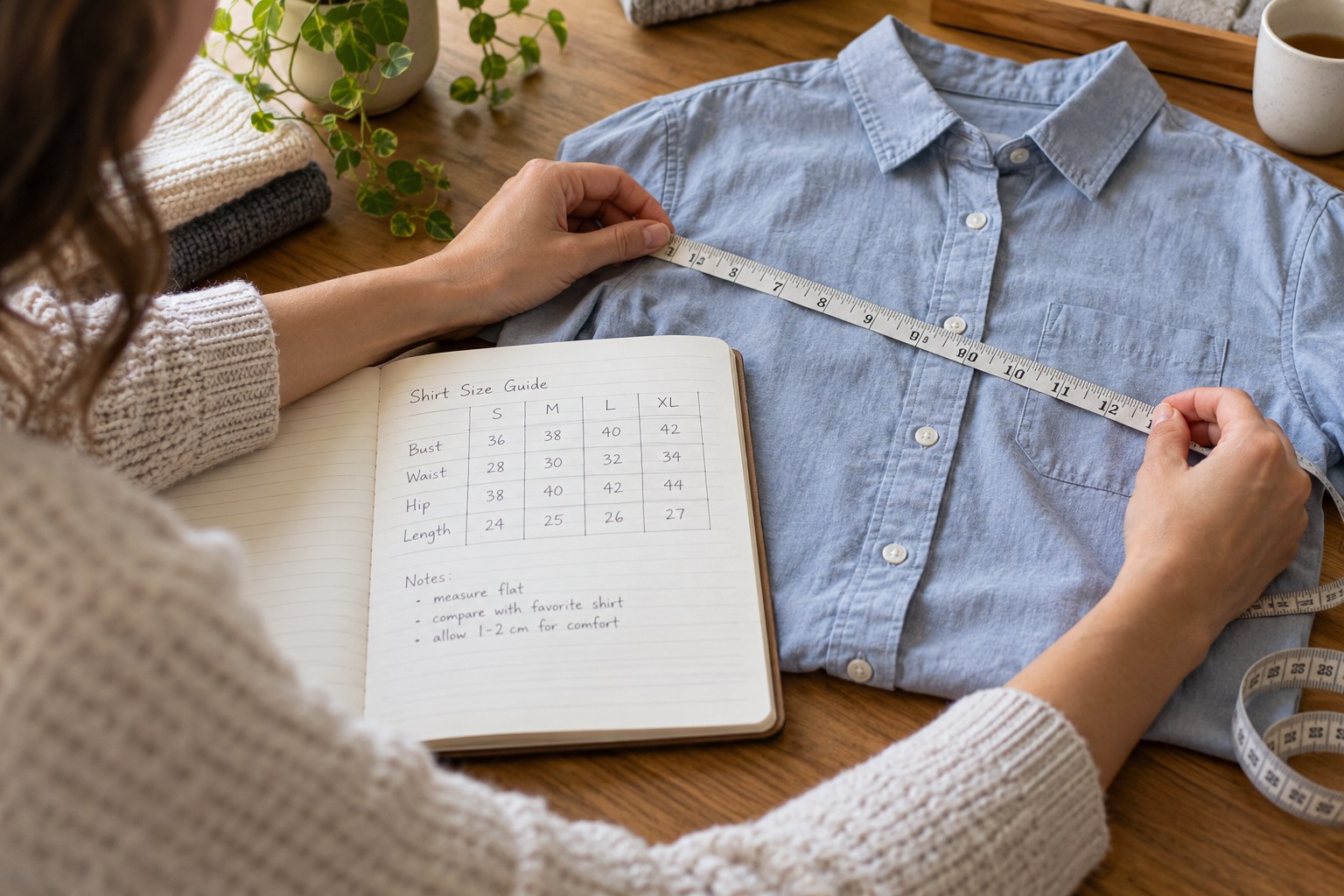
Use a garment that fits the way you want as a measurement reference, while keeping body measurements and garment measurements clearly separate.
Wardrobe & care
When two body measurements point to different sizes, use the garment's construction and the seller's chart to identify which areas need room.
Wardrobe & care
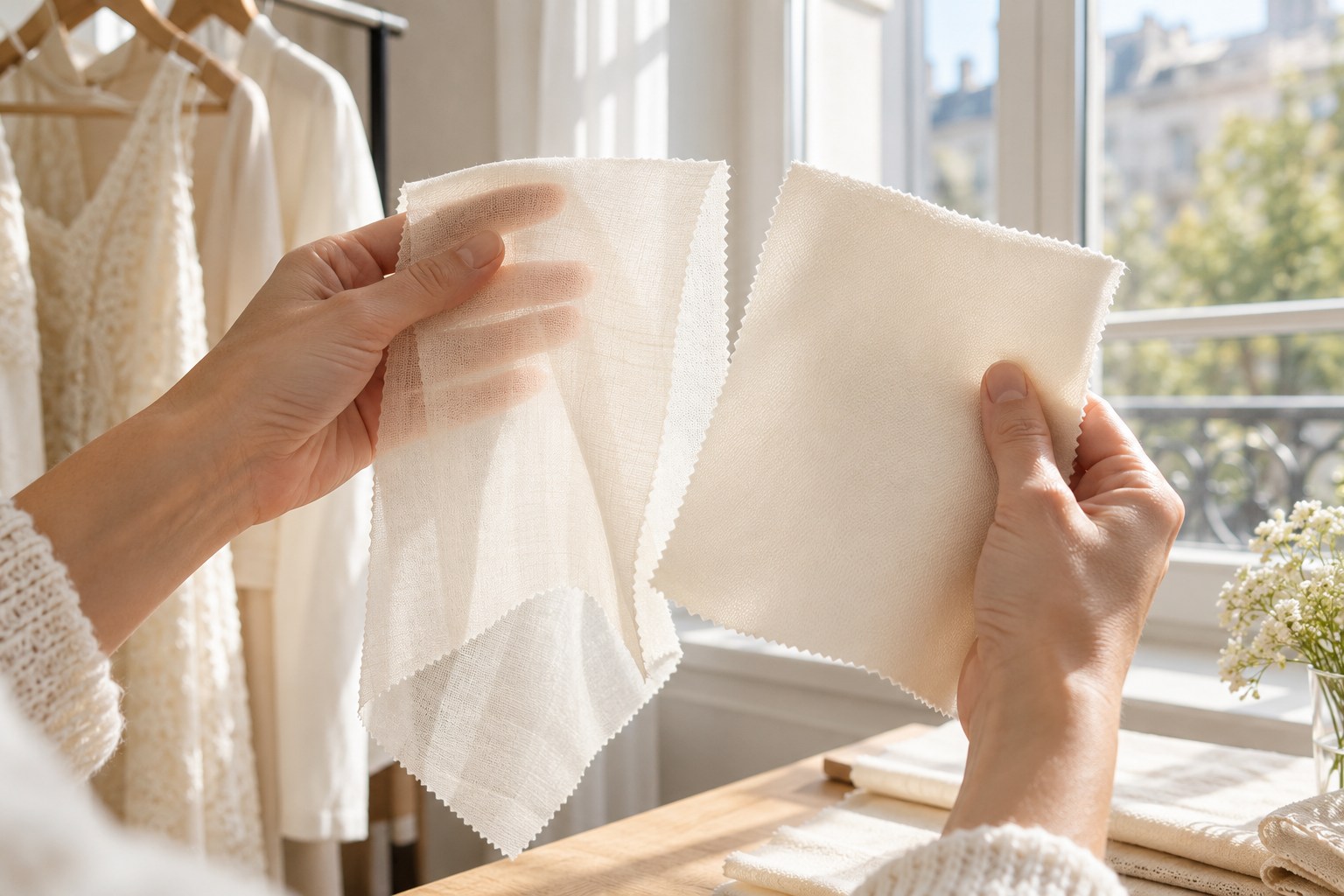
Compare light-coloured dress fabrics through opacity, drape and construction, rather than assuming that a heavier cloth is always the better choice.