Wardrobe & care
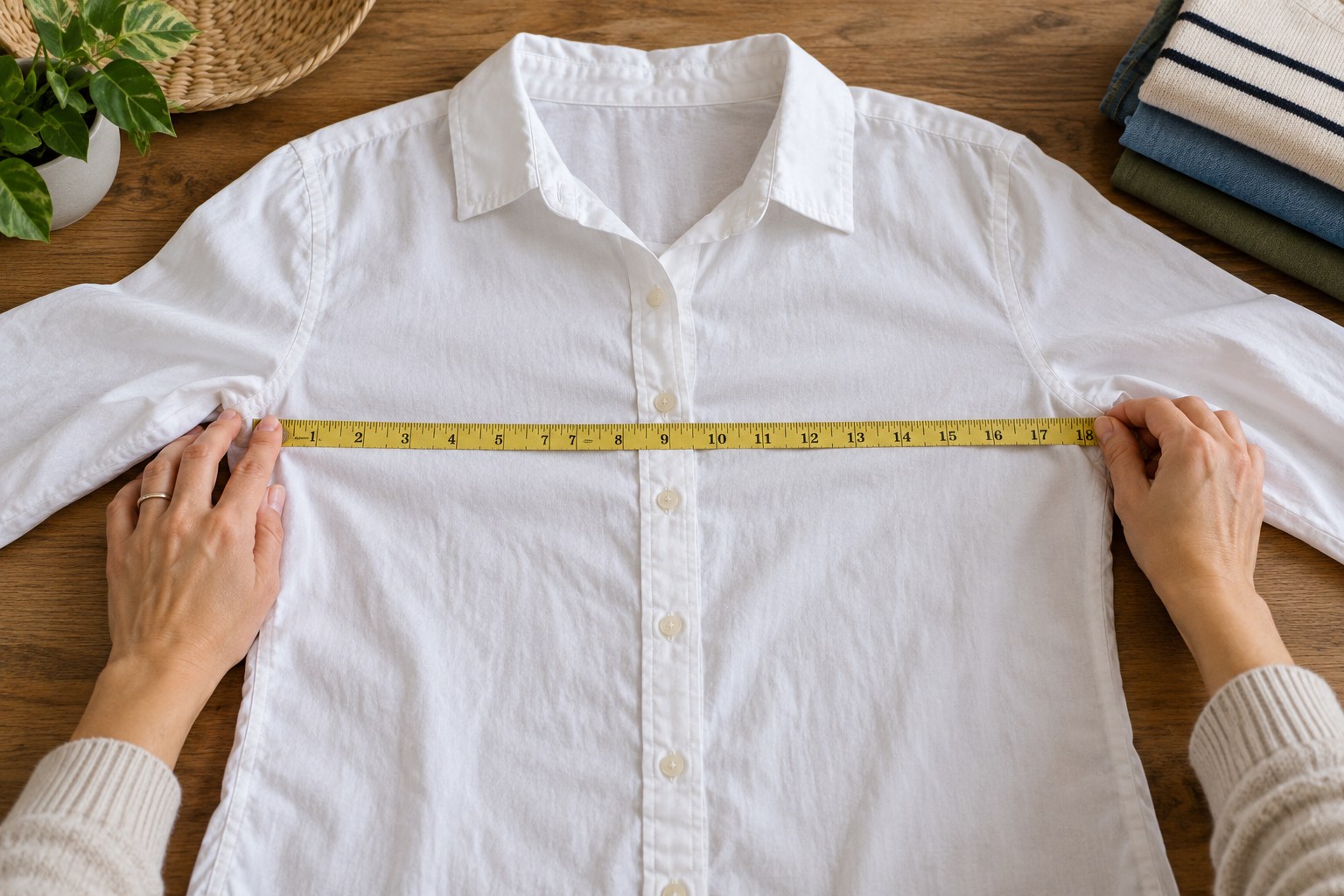
Measure an existing garment before buying another size
Use a garment that fits the way you want as a measurement reference, while keeping body measurements and garment measurements clearly separate.
Clothes, accessories & the ways to wear them
Wardrobe & care
Use care instructions when planning how often a garment can realistically return to your weekly wardrobe.
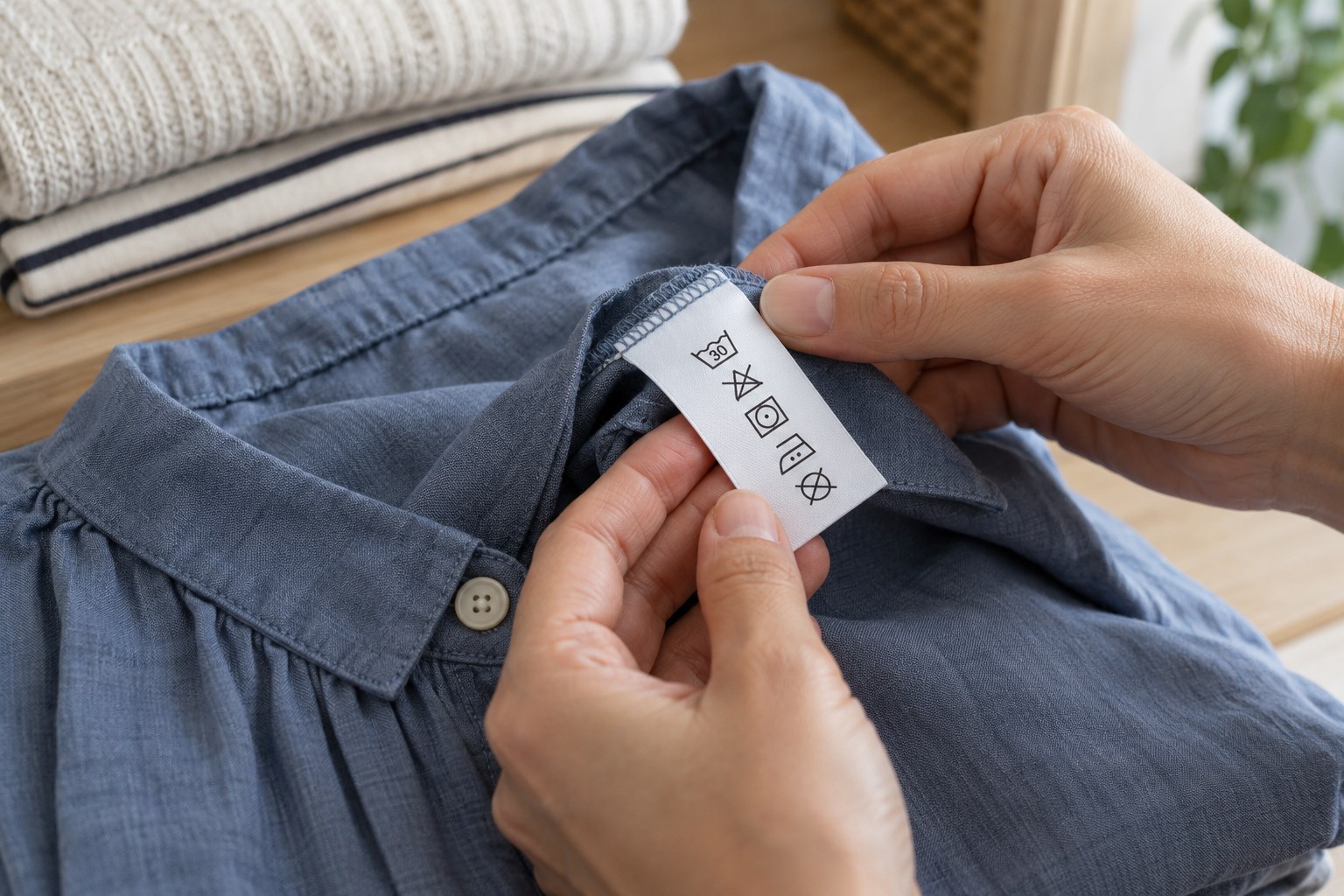
AI-generated illustration. The care symbols shown are illustrative; follow the label on your own garment.
A care label is useful before washing day. It can tell you whether a garment fits the time, equipment and handling available in your routine. A blouse worn once for a celebration may justify a different process from a shirt needed several times during a working week. Read the complete instructions before assigning either item a regular role.
Find all parts of the label, including written instructions as well as symbols. Check whether the garment has separate removable pieces with their own guidance. Keep a photograph for reference if the label is difficult to read while the item is laid out, but retain the original label where possible rather than relying on memory.
Identify the washing, drying, ironing and professional-care requirements that apply. GINETEX explains that its washing temperatures are maximum limits and that the iron setting should follow the care label rather than the fibre name alone. Use its linked reference for symbol meanings instead of guessing from a faint icon. This article does not reproduce a full symbol chart.
Now consider the sequence in your home. A garment that needs a particular drying arrangement cannot be ready merely because the wash cycle has finished. If you lack the space or time for that arrangement on a busy weekday, plan to wear the garment when you can complete the care process afterward. Do not replace a specified process with a faster one solely to meet an outfit plan.
A professional-care instruction also has practical consequences. Consider access to an appropriate service and the time needed to have the item returned. Ask the service about the complete garment, especially if it has decoration or previous damage. Avoid assuming that all pieces described as silk, cotton or wool should receive the same treatment.
Look at how the item is used. A garment worn for a short indoor event and one worn through a humid commute may return in different conditions. Assess the individual piece after wear and follow its care requirements. A fixed rule such as washing every garment after exactly the same number of wears ignores that difference.
For a weekly outfit plan, place the garment on the day you expect it to be ready, not on the day you hope to begin caring for it. If two planned outfits depend on the same blouse, leave enough time between them or choose an alternative. This is especially helpful before travel or consecutive celebrations, when care delays can affect more than one outfit.
Consider a dress that you enjoy wearing but only have time to care for at the weekend. It may still belong in the wardrobe as an occasional piece. The problem arises only if you expect it to function as an effortless weekday repeat while its instructions require a process your schedule does not accommodate.
When buying another garment, read the care information alongside fit and fabric details. If the online listing is unclear, ask before assuming the process. The label does not tell you whether the garment is stylish or worth owning; it helps you understand the work involved in keeping it available to wear.
Wardrobe & care
Use a garment that fits the way you want as a measurement reference, while keeping body measurements and garment measurements clearly separate.
Wardrobe & care
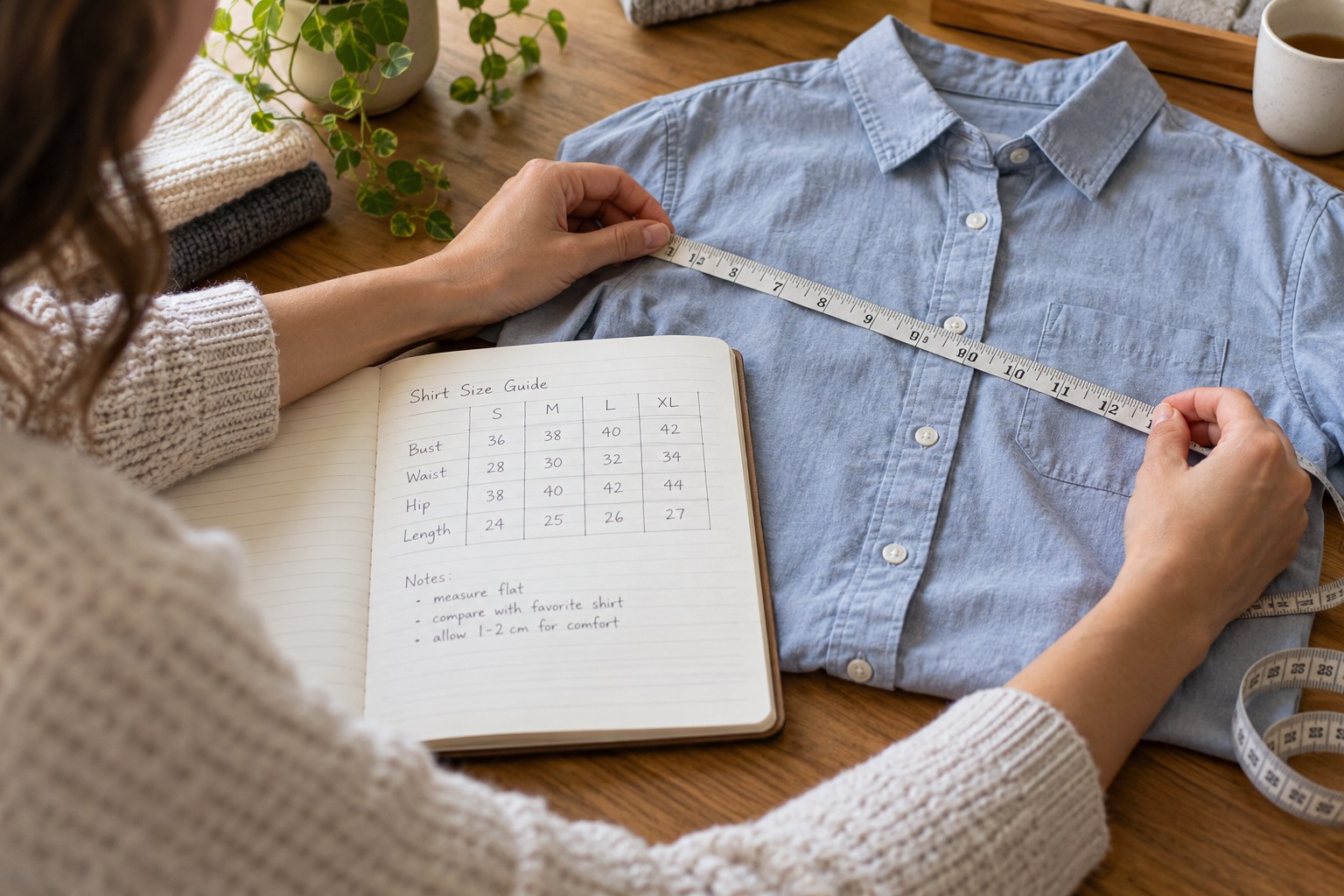
When two body measurements point to different sizes, use the garment's construction and the seller's chart to identify which areas need room.
Wardrobe & care
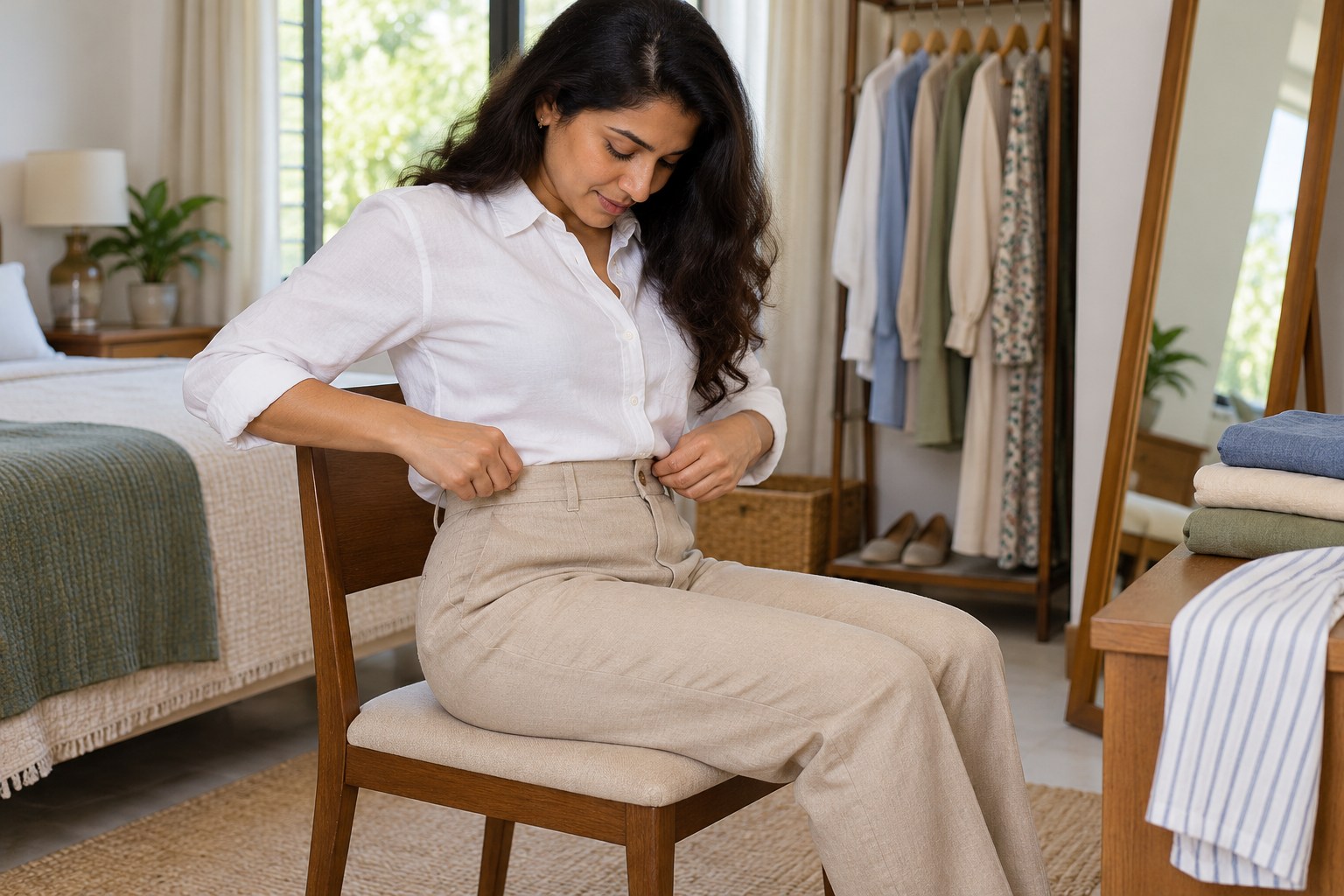
Assess trouser rise through the position of the waistband and crotch during sitting, walking and bending, not only through a front-view mirror check.