Wardrobe & care
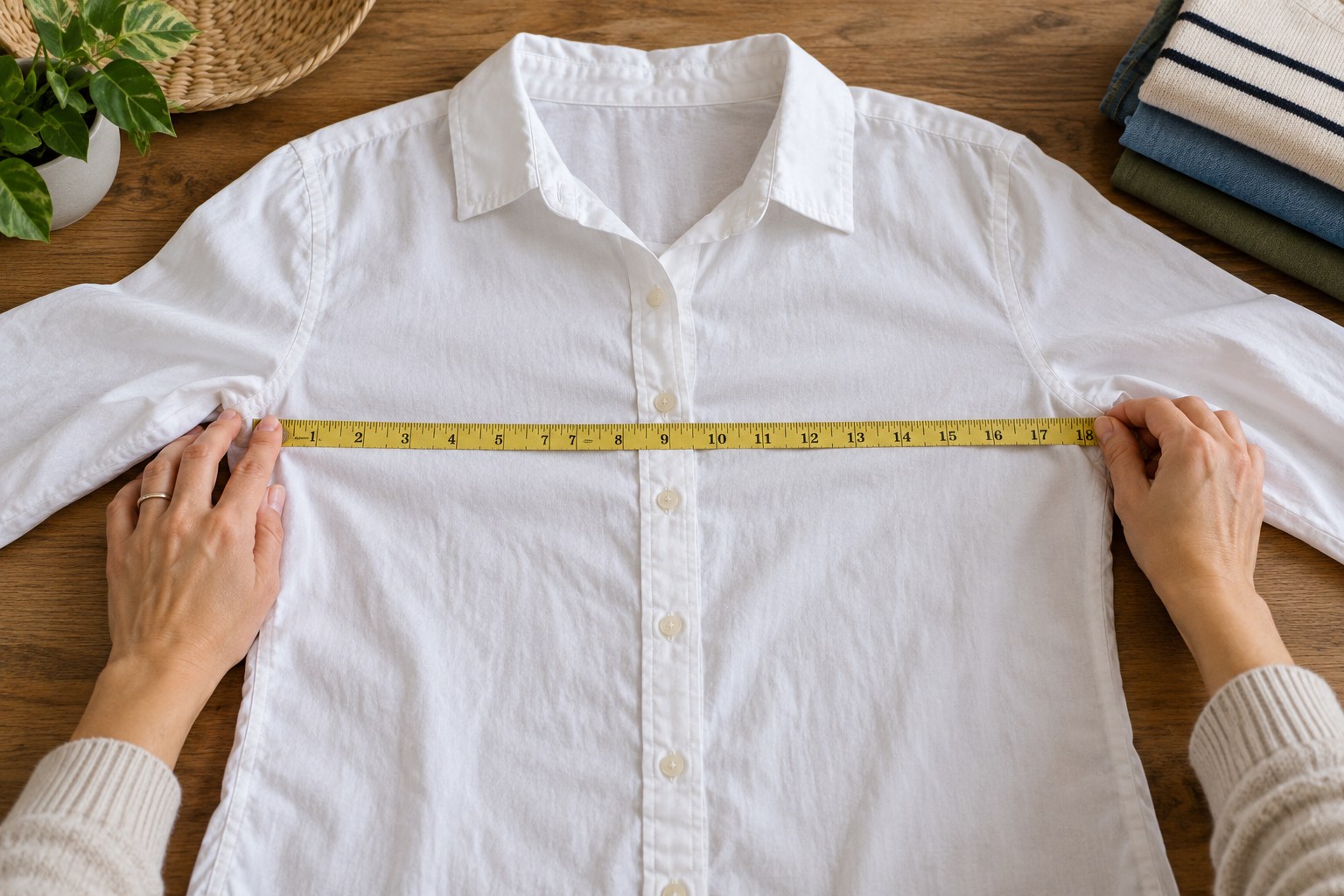
Measure an existing garment before buying another size
Use a garment that fits the way you want as a measurement reference, while keeping body measurements and garment measurements clearly separate.
Clothes, accessories & the ways to wear them
Wardrobe & care
Identify the exact repair, the condition of the surrounding fabric and the garment's future use before deciding whether to replace it.
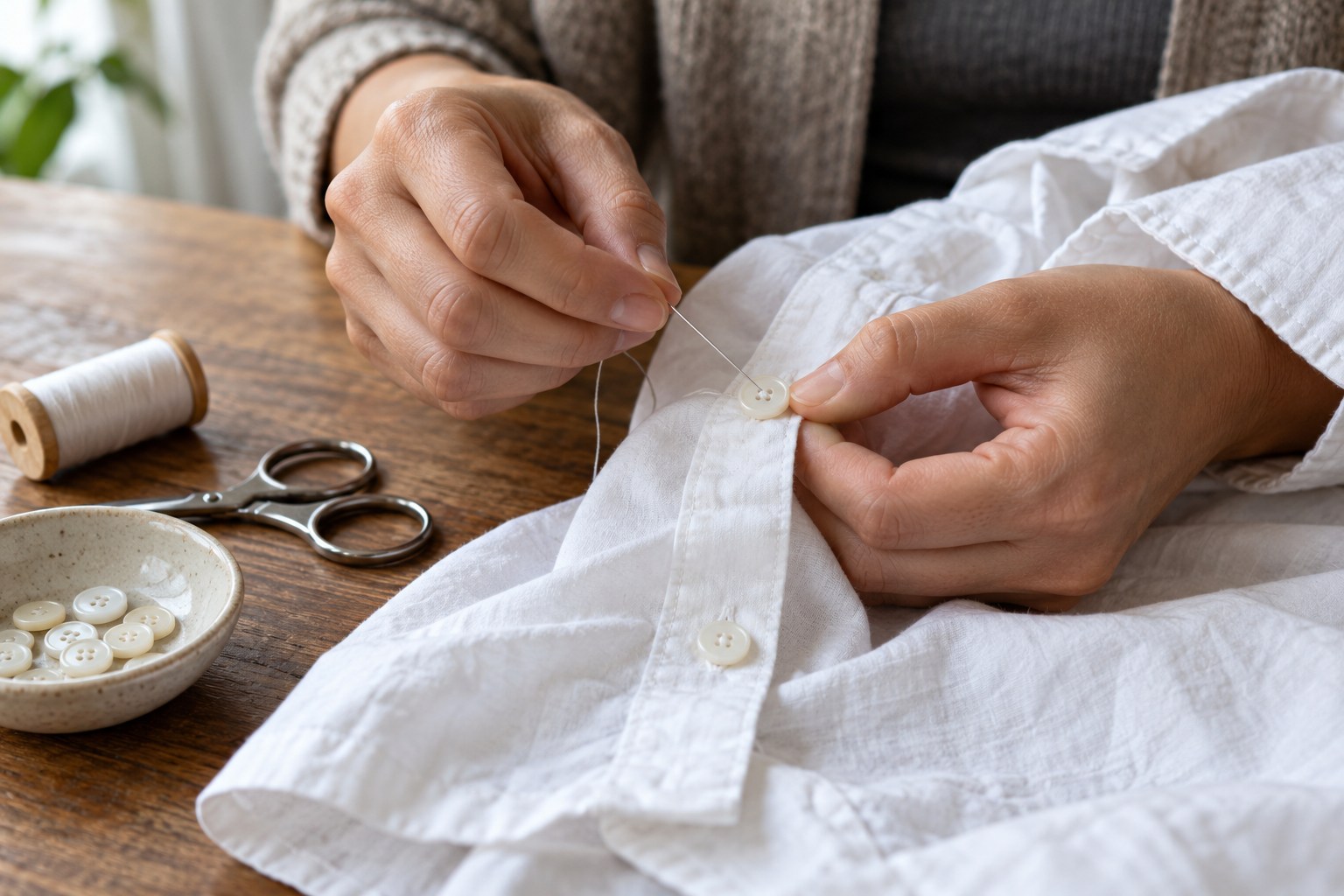
AI-generated illustration. Items shown are illustrative, not specific products for sale.
A missing button, an open seam and a damaged zip are different repair problems. Start by describing what has failed rather than deciding that the whole garment is worn out. Inspect it in good light, including the inside and the area around the damage. A small opening in otherwise sound fabric may call for a different response from a tear beside a weakened section.
Set the garment aside from regular wear until the problem has been assessed. Continuing to pull on a loose fastening or wear an opening under tension can make the affected area harder to deal with. Keep any detached button or trim with the garment so that it does not become a second, separate search later.
Think about how you would wear the garment after repair. If it already fits well and works in several outfits, restoring one function may bring it back into regular use. If it has not been worn because of an uncomfortable cut, fixing a button alone will not solve the reason it stays in the wardrobe. List the fit or design issue separately so that the repair is not credited with more than it can do.
For a small task you know how to perform, gather the appropriate materials and work within your skill. If you are unsure, ask a tailor or repair service to assess it. Decorative fabrics, linings and concealed closures can make an apparently simple repair more involved. A clear photograph may help describe the issue initially, but the person doing the work may need to inspect the garment itself.
Instead of asking only whether the item can be saved, explain the required function: 'This fastening needs to hold while I sit' or 'This seam opens when I raise my arm.' Ask whether the surrounding material can support the proposed work and whether the appearance or fit will change. An honest limitation is more useful than assuming every repair can be invisible.
Discuss the expected cost, timing and any matching difficulty before the work begins. A replacement button may be close rather than identical; changing a whole set could be another option if the design allows it. A visible repair may be acceptable or even appealing, but that should be a deliberate choice rather than an unexpected result.
Compare the repair with the garment's likely future use. Do not decide from its original purchase price alone. A modestly priced piece that fits well and is worn often can deserve attention, while an expensive item that remains unsuitable may need a different decision. Sentimental value can also matter, provided you distinguish keeping the item from restoring it for regular wear.
Once repaired, test the relevant movement gently before returning the garment to a full day of use. Check the fastening, seam or area that was worked on without applying an artificial stress test. Update any care instructions supplied by the repairer and note the change if it affects how the garment is worn.
The repair plan is complete when it has a defined next step: materials ready for a familiar small task, an appointment or agreed work with a repairer, or a decision that replacement is more appropriate. A vague pile labelled 'to fix' can keep useful clothing out of circulation for longer than the actual work would take.
Wardrobe & care
Use a garment that fits the way you want as a measurement reference, while keeping body measurements and garment measurements clearly separate.

Wardrobe & care
When two body measurements point to different sizes, use the garment's construction and the seller's chart to identify which areas need room.
Wardrobe & care
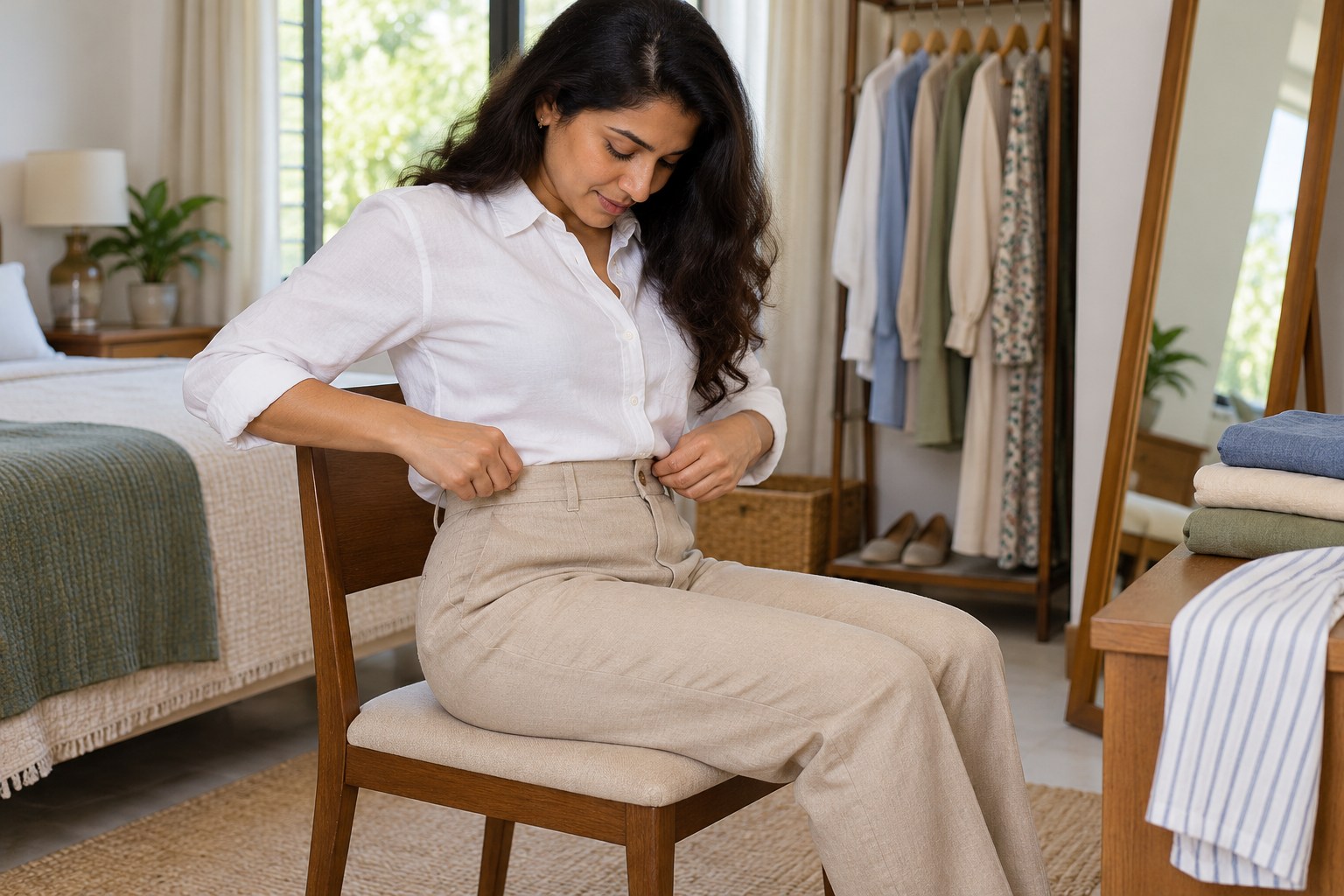
Assess trouser rise through the position of the waistband and crotch during sitting, walking and bending, not only through a front-view mirror check.