Wardrobe & care
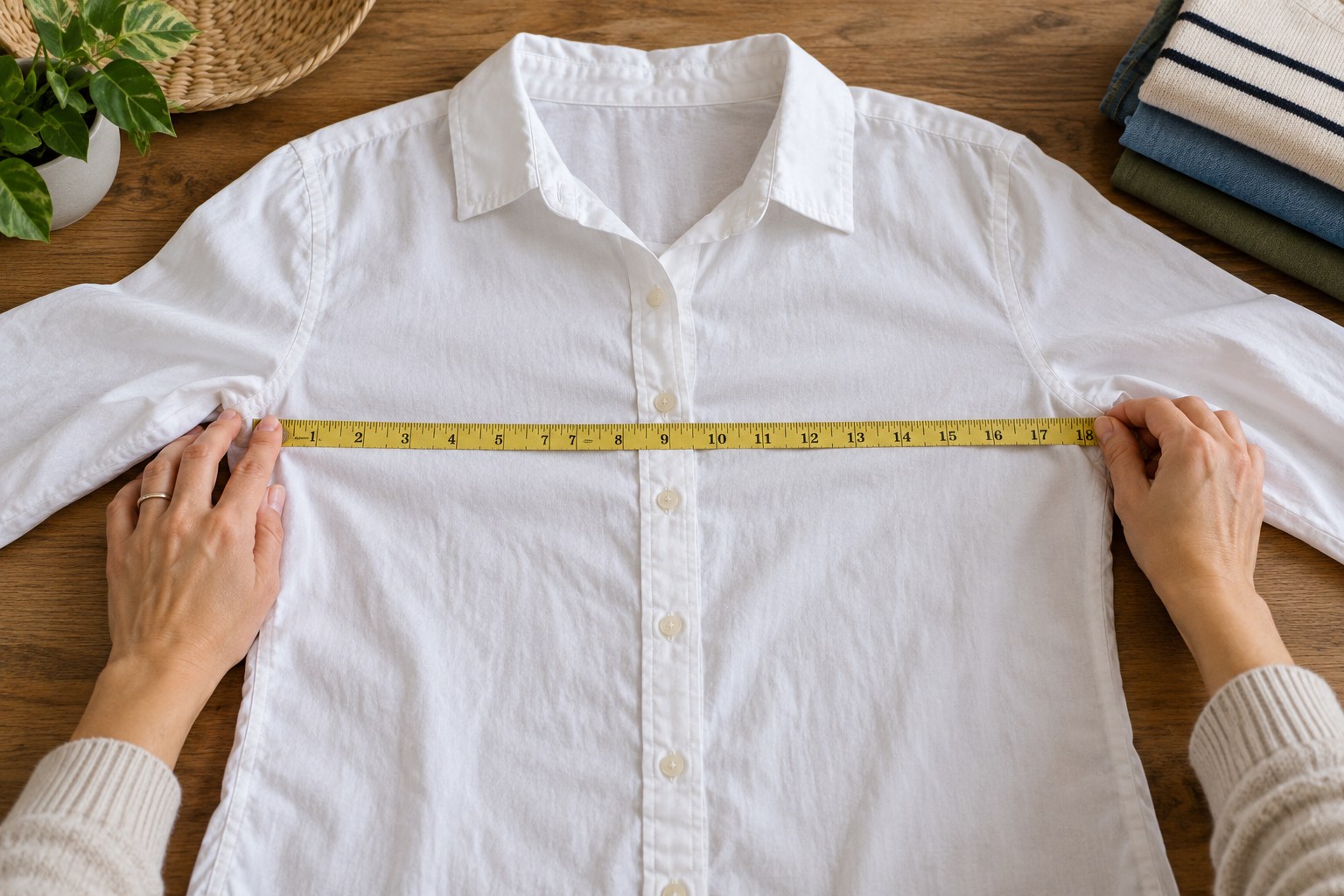
Measure an existing garment before buying another size
Use a garment that fits the way you want as a measurement reference, while keeping body measurements and garment measurements clearly separate.
Clothes, accessories & the ways to wear them
Wardrobe & care
Build a small clothing-care kit around the garments and tasks on your trip, leaving out products you cannot use confidently on those materials.
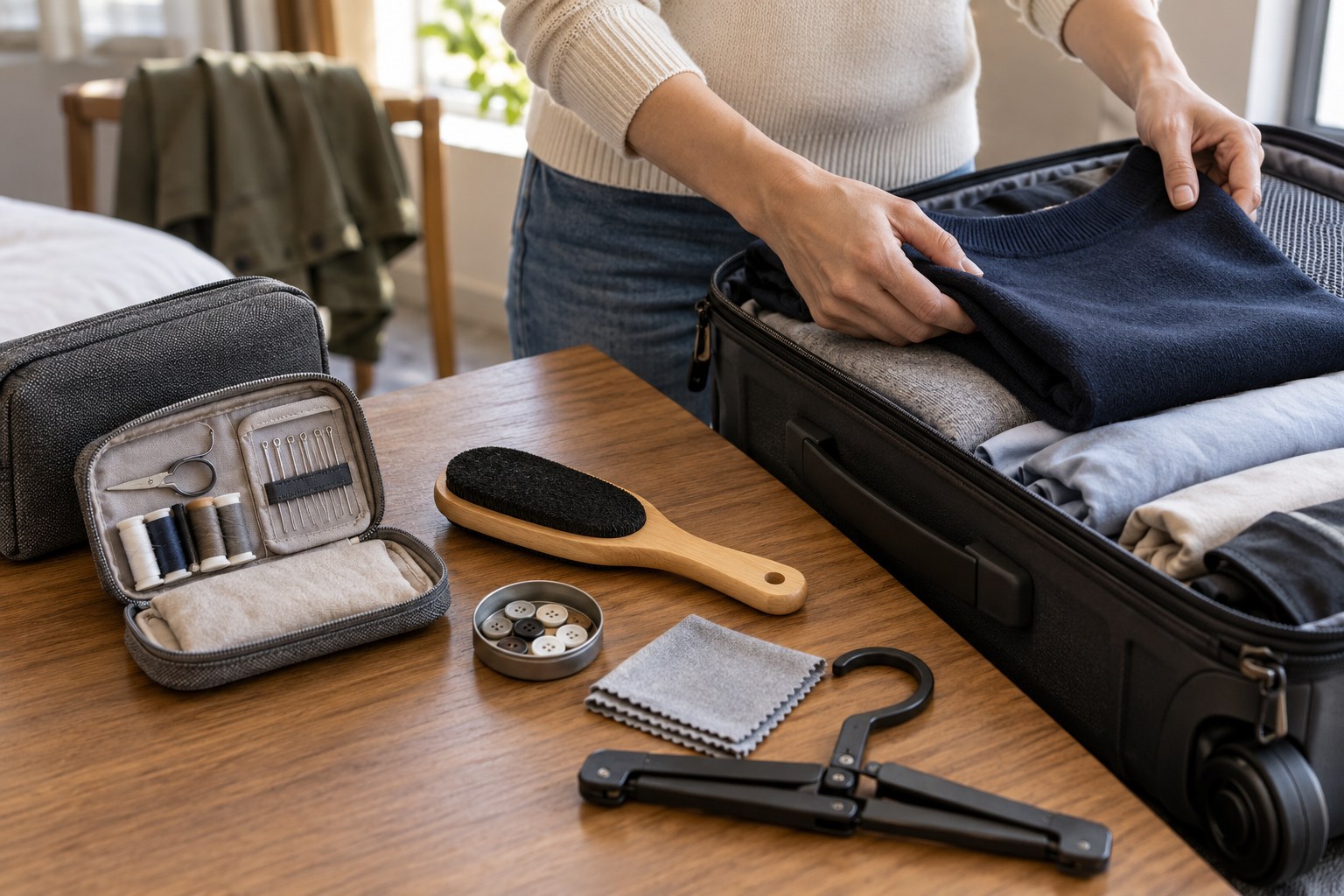
AI-generated illustration. Items shown are illustrative, not specific products for sale.
A travel clothing-care kit is most useful when it answers a few predictable problems. Start with the packed clothes and their care instructions, not with a ready-made list of miniature products. A week of simple separates may need a different kit from a trip involving embroidery, delicate fabrics or a formal outfit.
Identify what you can reasonably do away from home. Removing loose lint, replacing a familiar button or separating worn clothes from clean ones may be manageable. Cleaning an unfamiliar stain on a delicate garment may not be. The kit should support the tasks you understand rather than encourage experiments because a small bottle happens to be available.
A suitable lint brush or roller can help with surface debris, but check that it is appropriate for the fabric and decoration. A small sewing kit may be useful if you already know how to make the minor repair you expect; keep needles and other sharp parts securely enclosed. A spare button supplied with a garment is more useful when it is identified than when it is loose among unrelated fastenings.
Include a way to separate clothing that needs care. A clean bag or organiser can keep it from mixing with ready-to-wear pieces, provided damp items are dealt with appropriately rather than left sealed indefinitely. If shoes travel in the same luggage, give them their own covers so the clothing-care kit is not compensating for avoidable contact.
Do not assume a generic stain product is suitable for every packed garment. Follow the product and garment instructions, and avoid treating an important item with an unfamiliar method shortly before wearing it. It can be more useful to record the nature of a mark and seek appropriate care than to attempt several incompatible fixes.
Check what is actually available at the destination if the outfit depends on it. A garment that needs a particular pressing or cleaning process may require advance arrangements. Heat and steam are not interchangeable solutions for all fabrics, linings or embellishments. If you cannot carry out the specified care, choose another garment or arrange suitable help.
Keep the kit compact enough to find quickly. Separate sharp items from loose threads and make sure liquid containers, if any, cannot leak onto clothes. Check the current rules of the transport provider for items you intend to carry; do not rely on a universal packing assumption for tools or liquids.
Before leaving, remove anything with no clear role in the planned outfits. After the trip, note which item was useful and which problem remained unsolved. The next kit can then be based on experience with your own clothes, rather than growing into a collection of products carried just in case.
Wardrobe & care
Use a garment that fits the way you want as a measurement reference, while keeping body measurements and garment measurements clearly separate.
Wardrobe & care
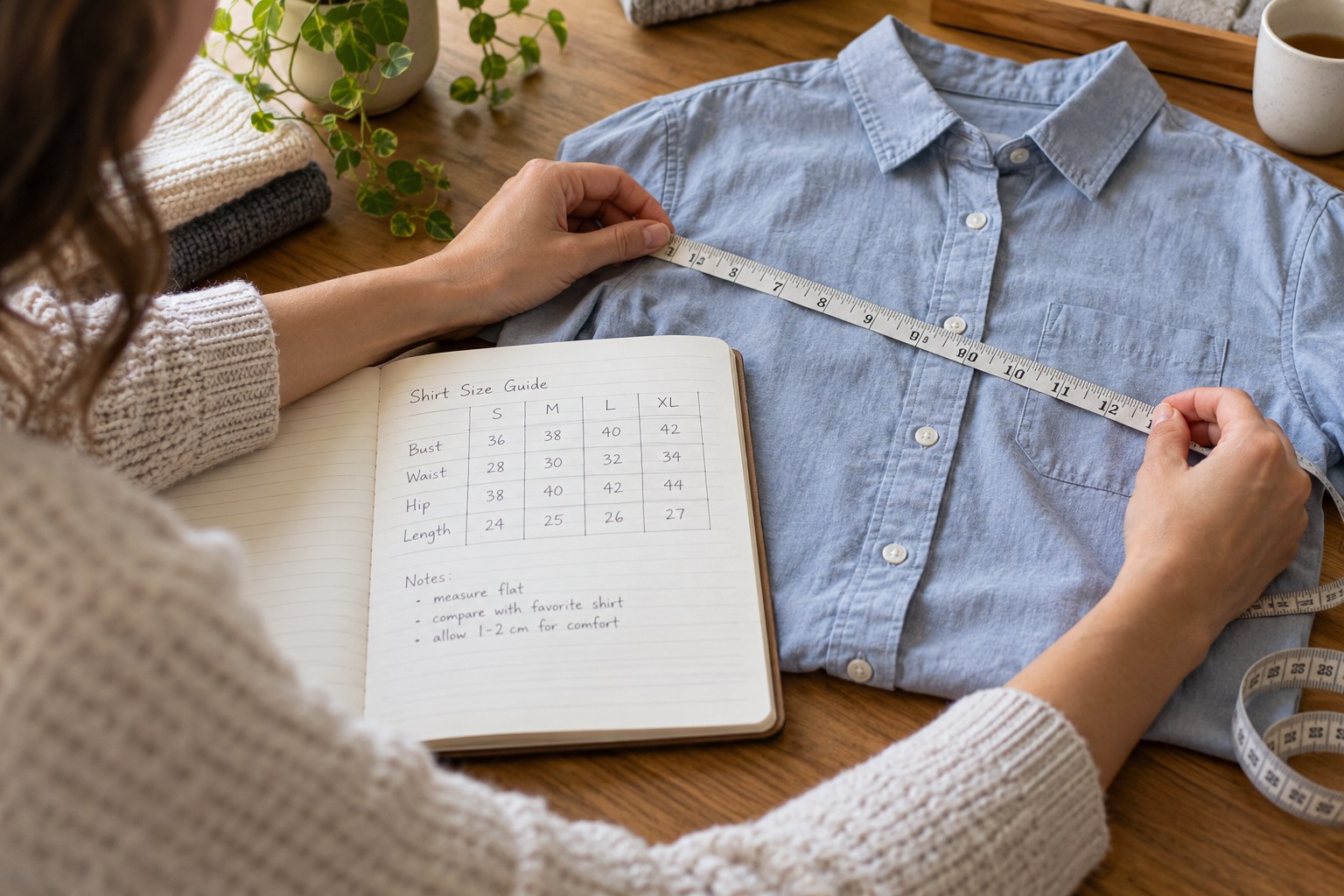
When two body measurements point to different sizes, use the garment's construction and the seller's chart to identify which areas need room.
Wardrobe & care
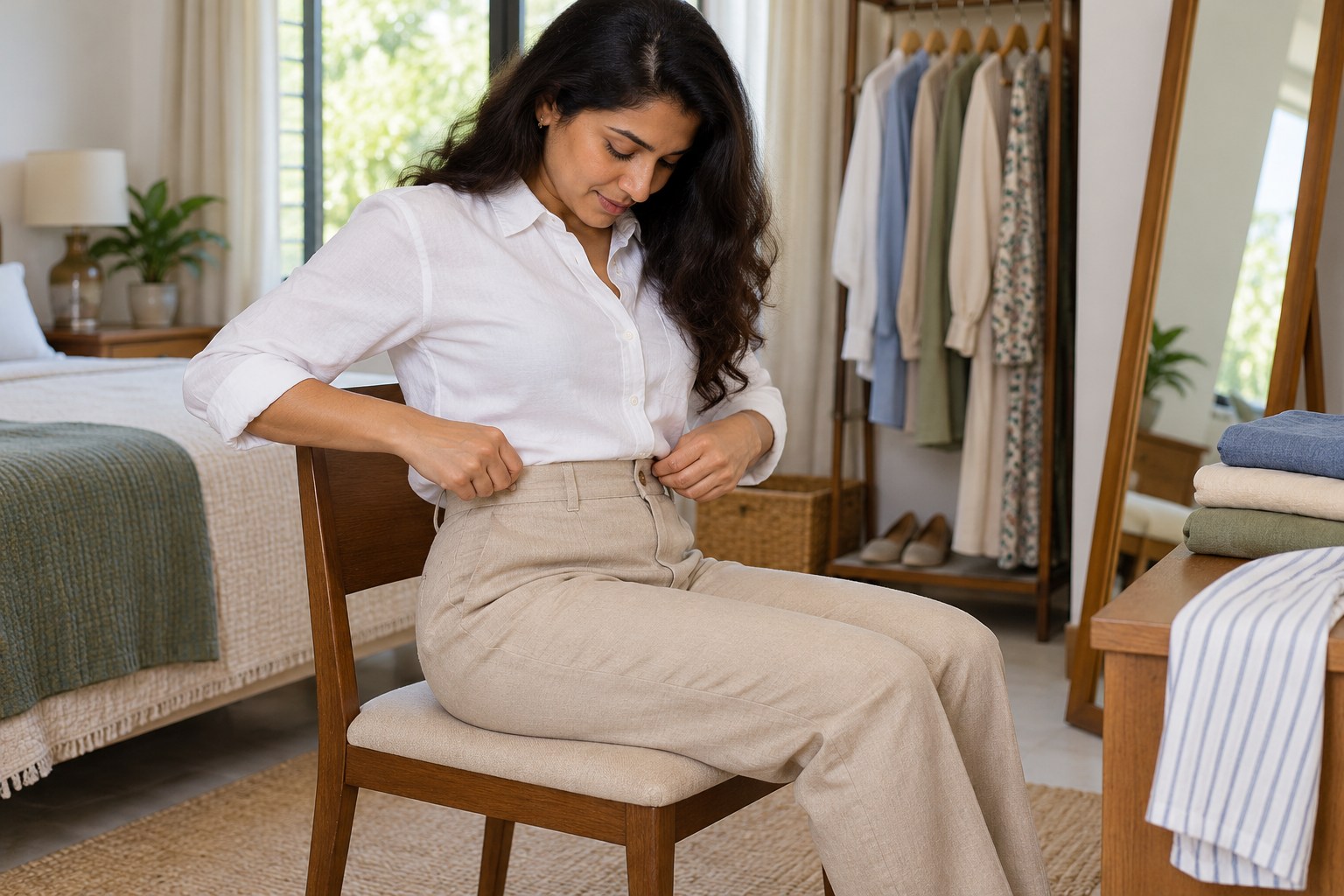
Assess trouser rise through the position of the waistband and crotch during sitting, walking and bending, not only through a front-view mirror check.