Wardrobe & care
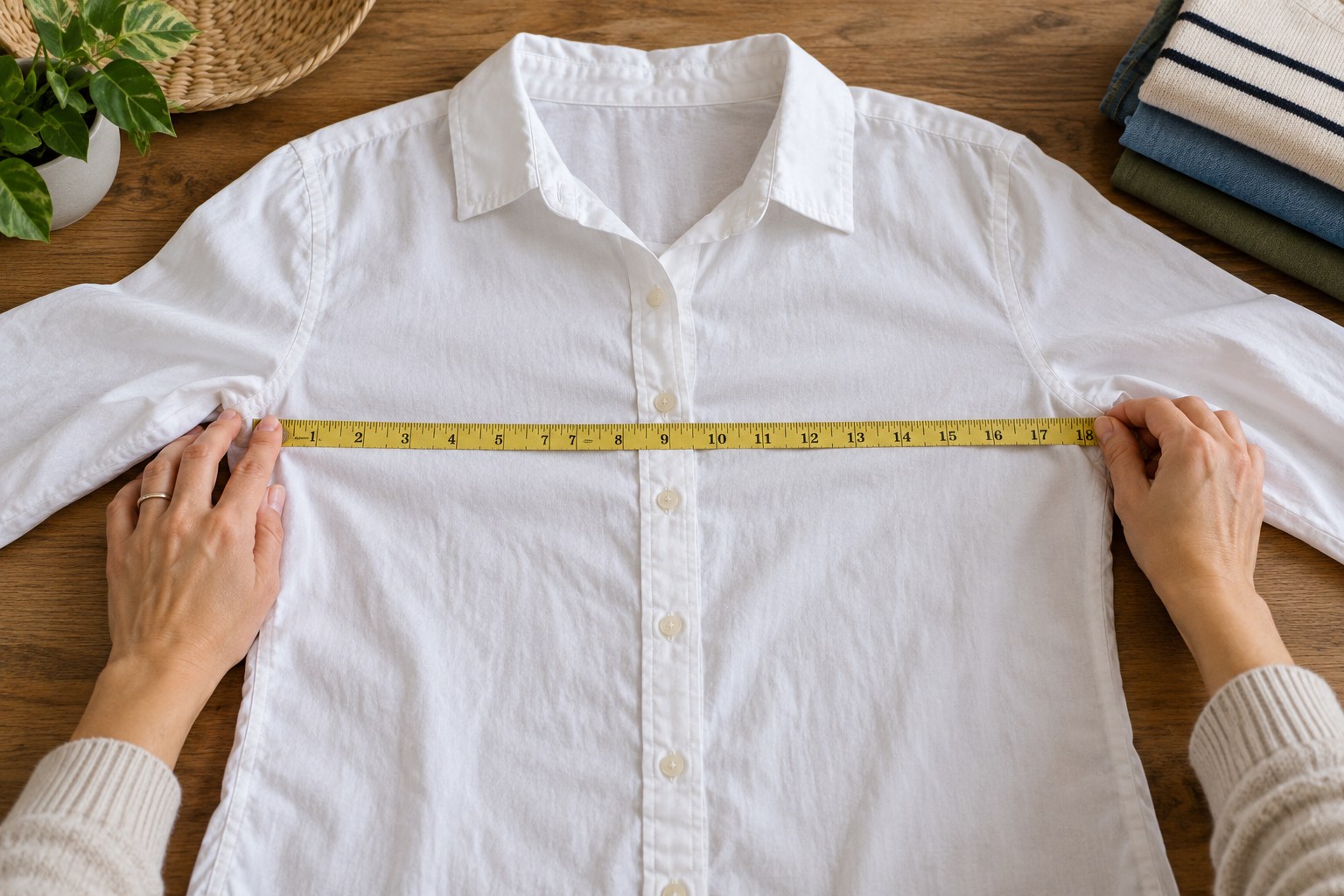
Measure an existing garment before buying another size
Use a garment that fits the way you want as a measurement reference, while keeping body measurements and garment measurements clearly separate.
Clothes, accessories & the ways to wear them
Wardrobe & care
Organise scarves by how you choose and wear them, while giving delicate surfaces enough separation to avoid snagging.
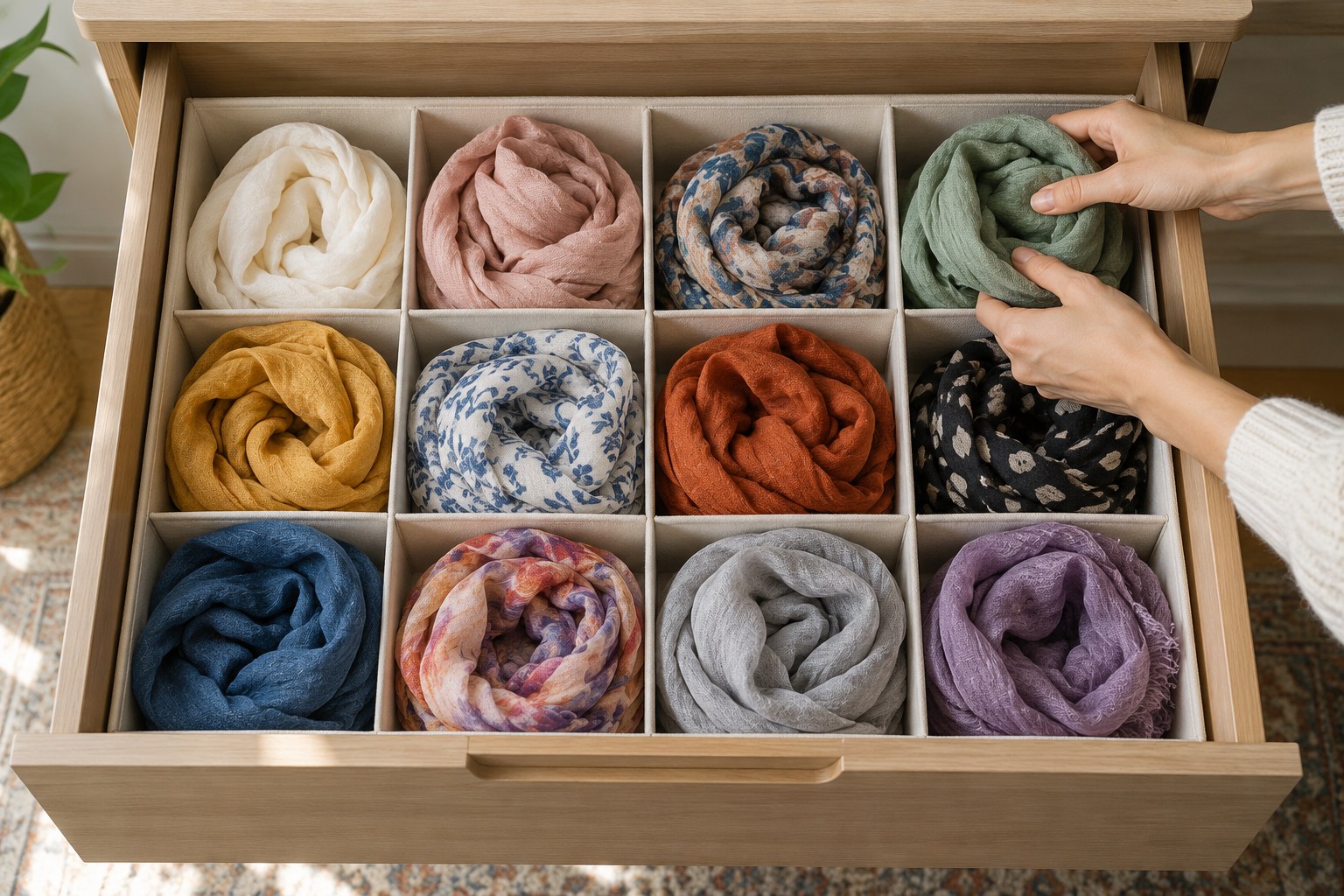
AI-generated illustration. Items shown are illustrative, not specific products for sale.
A scarf collection becomes difficult to use when every piece is folded beneath another or tangled on one hook. Start by gathering the scarves you actually wear and identifying the differences that affect your choice: size, warmth, colour, pattern and the way the fabric drapes. These are more useful organising clues than trying to make every scarf occupy an identical space.
Separate pieces that need special support or care. A delicate embellished scarf may not belong on the same ring as an everyday woven one. Follow the item's instructions and inspect hooks, dividers or organiser edges before placing fabric against them. A storage accessory should not create the snagging problem it is meant to prevent.
For scarves stored in a drawer, fold them so that a recognisable section of colour or pattern can be seen. If several are similar, keep a short description or photograph rather than unfolding the entire collection whenever you need one. Avoid packing them so tightly that pulling out one disturbs all the others.
For suitable pieces stored on a rail, allow enough space that their weight and length do not pull against one another. Long ends should not trail where they can catch in a drawer or door. If a scarf repeatedly slips or becomes sharply creased around the support, reconsider the method rather than tying it more tightly for storage.
Group by the question you usually ask while dressing. You might reach first for light daytime scarves, warmer wraps or pieces that work with particular kurta sets. Colour sorting can help if colour is your main decision, but it is less useful if the scarves of one colour serve completely different temperatures and occasions.
Keep worn pieces that need assessment or care separate from the ready-to-wear group. After use, return a scarf only when its condition is suitable for storage. Revisit the arrangement if the most-used pieces keep ending up outside it; that is evidence that the system is inconvenient. The aim is to see and retrieve a scarf without creating a second task of reorganising the collection every time.
Wardrobe & care
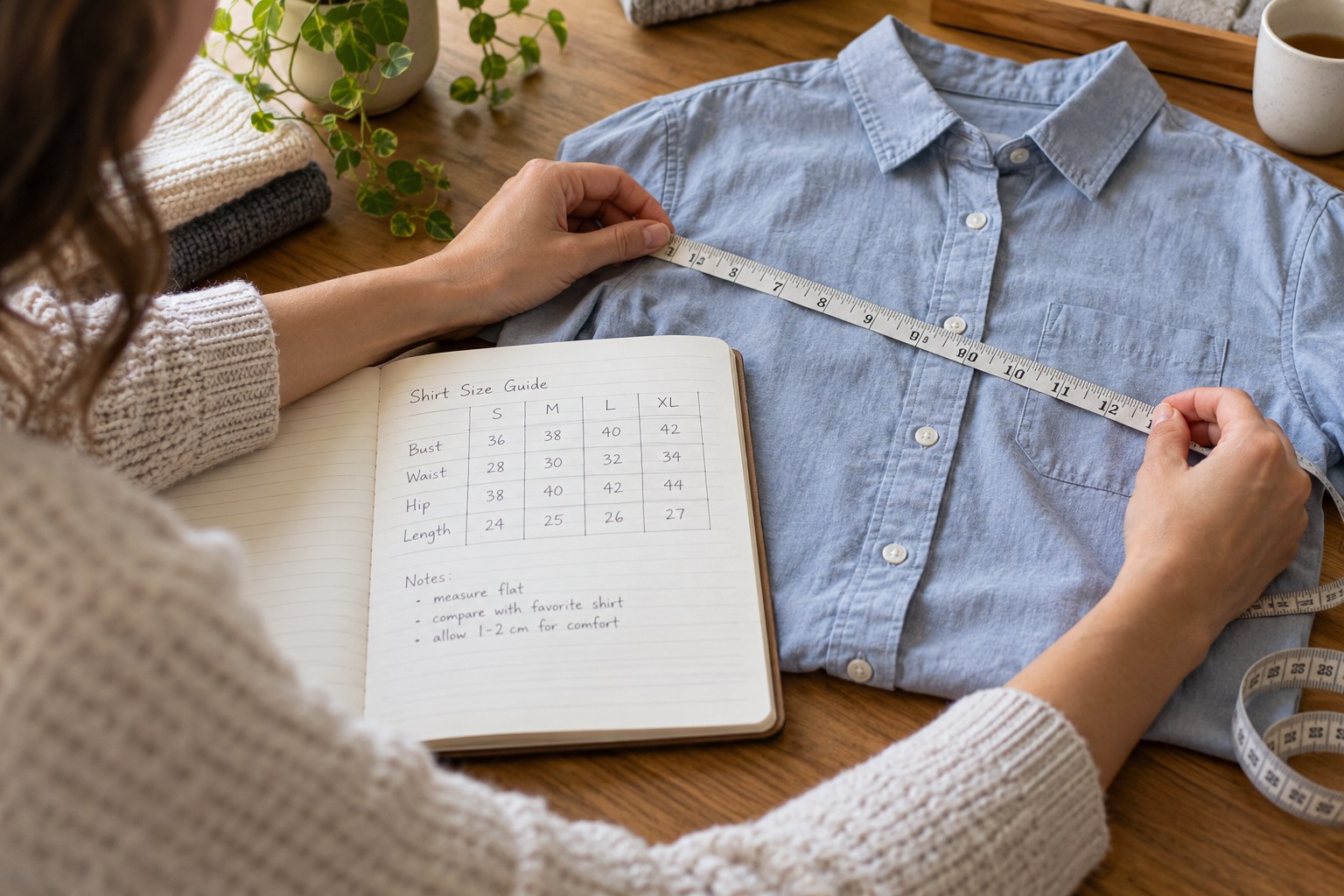
Use a garment that fits the way you want as a measurement reference, while keeping body measurements and garment measurements clearly separate.
Wardrobe & care
When two body measurements point to different sizes, use the garment's construction and the seller's chart to identify which areas need room.
Wardrobe & care
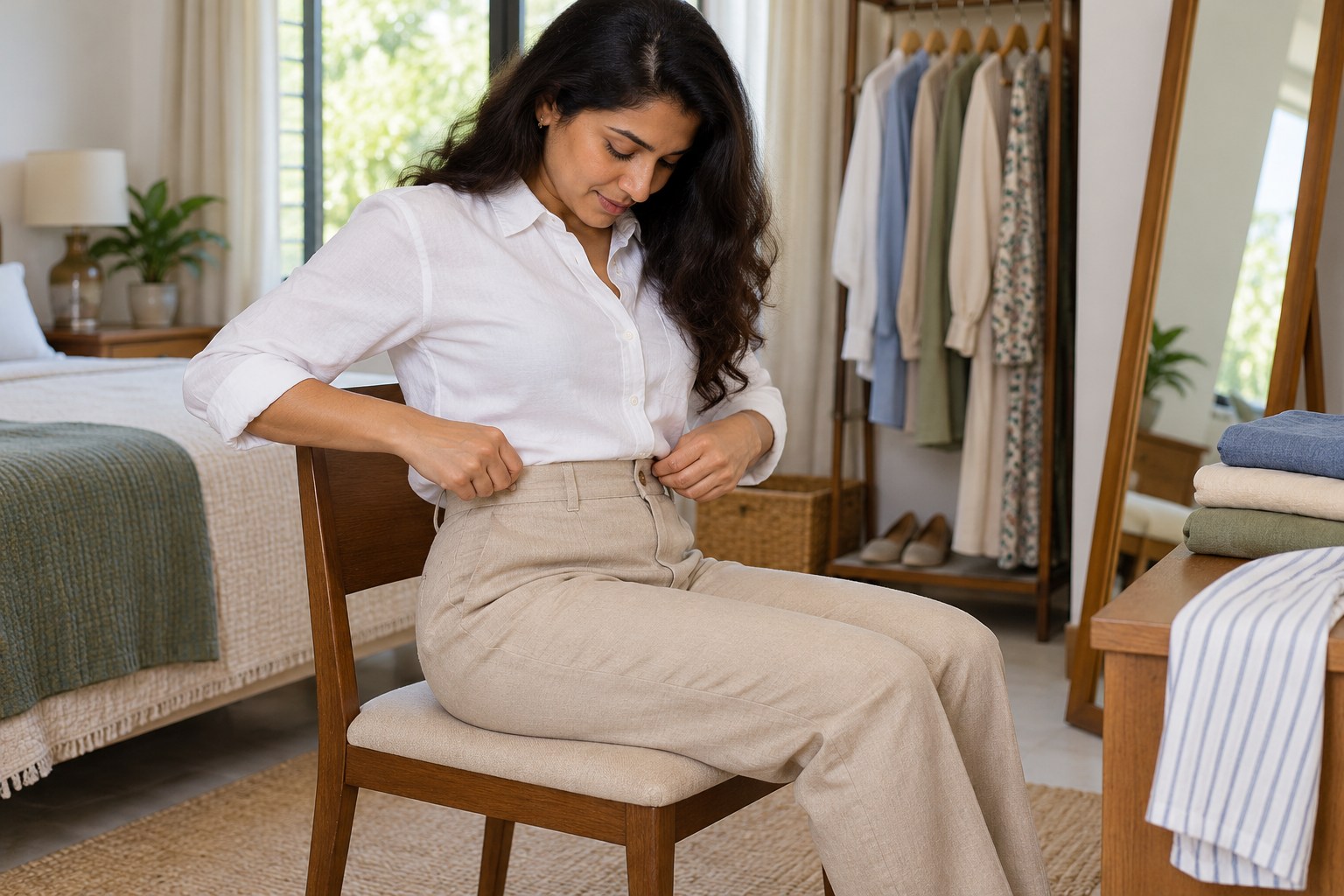
Assess trouser rise through the position of the waistband and crotch during sitting, walking and bending, not only through a front-view mirror check.