Wardrobe & care
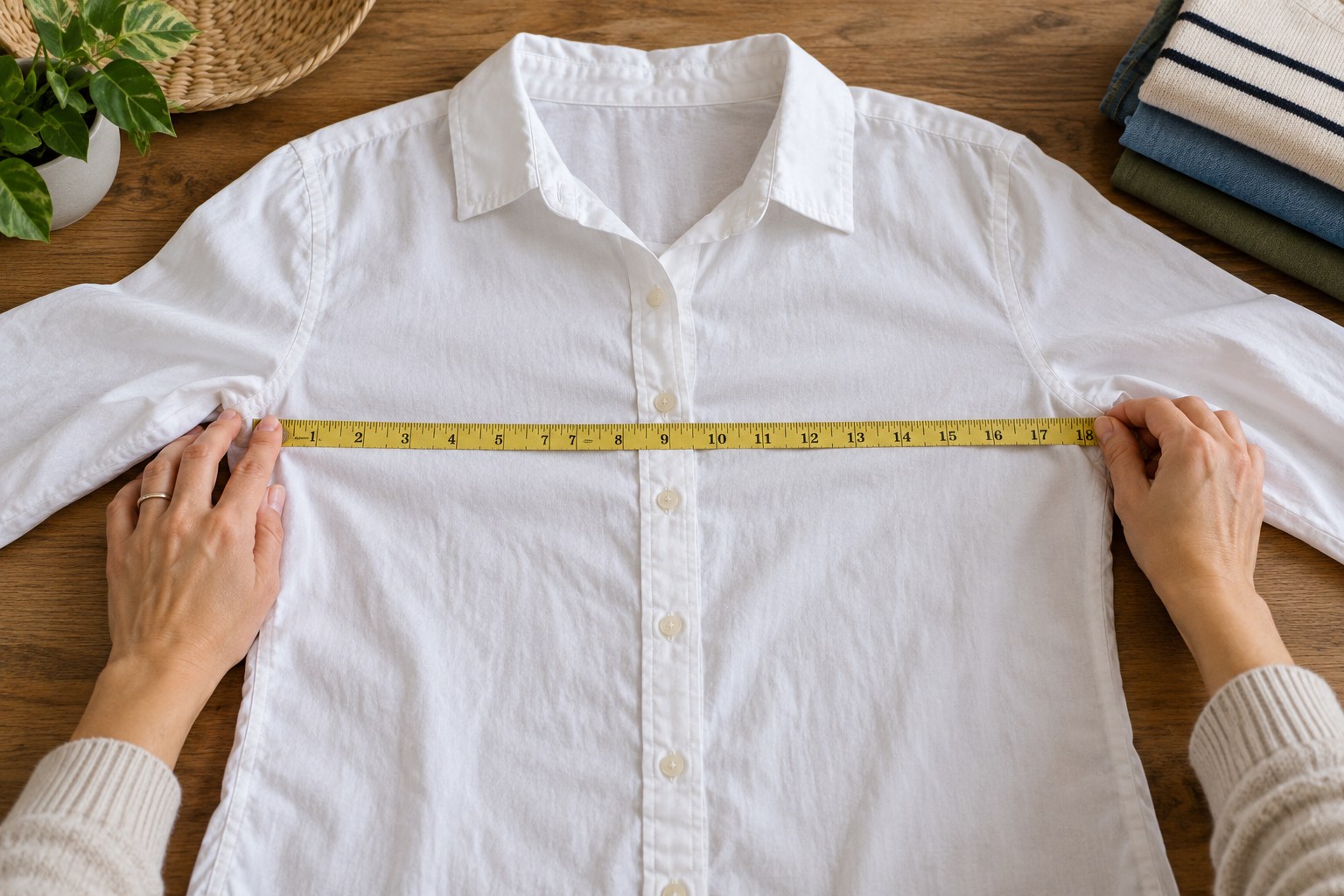
Measure an existing garment before buying another size
Use a garment that fits the way you want as a measurement reference, while keeping body measurements and garment measurements clearly separate.
Clothes, accessories & the ways to wear them
Wardrobe & care
Record outfits in a simple format that captures the combination and the conditions in which it worked, using tools you already have.
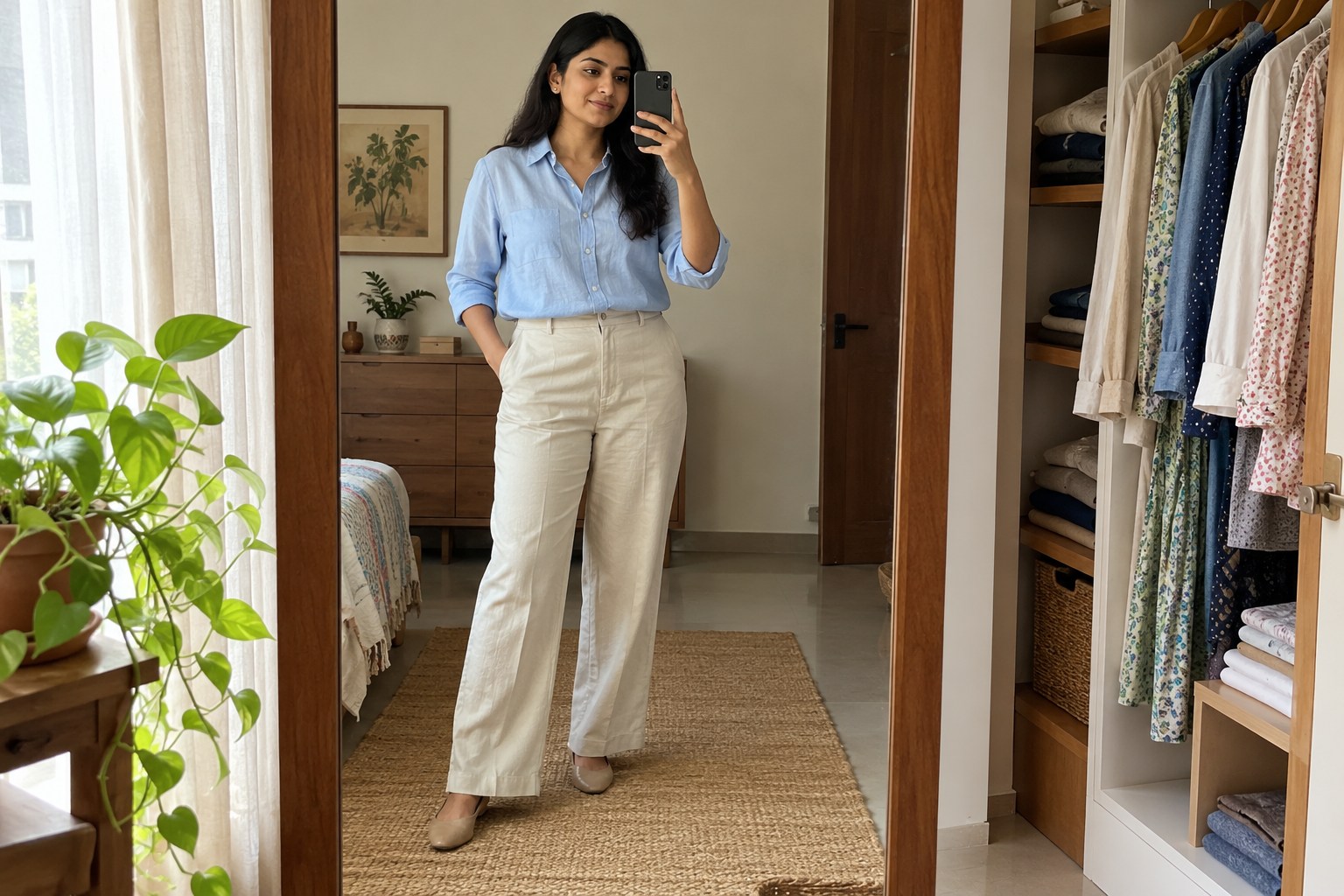
AI-generated illustration. Items shown are illustrative, not specific products for sale.
An outfit record can save the effort of reconstructing a combination you liked. It does not need a public account, a dedicated wardrobe app or a new camera. A private photo folder, a note on your phone or a paper list can all work if the record is easy to make and easy to find when getting dressed.
Start with one complete outfit that you have actually worn. Include the shoes, bag and outer layer rather than recording only the top and trousers. A photograph can show the relationship between those pieces, but a written list may be enough if the garments have clear names. Choose the method you are likely to repeat on an ordinary day.
If using photographs, stand where the main pieces are visible and the light lets you distinguish their colours and shapes. The image does not need to be flattering or shareable; it needs to be informative to you. A full-length view can preserve hem and shoe relationships, while a second detail image may help with an accessory arrangement that is otherwise hard to see.
Keep personal information outside the frame if it is not needed. Store the record somewhere appropriate for your own privacy preferences, and check the settings of any service you choose to use. The clothing task does not require posting images publicly or giving another person access to the collection.
Add a short description that identifies the pieces. 'Blue striped shirt, cream trousers, brown flats' is easier to search later than a filename with only a date. If two garments are similar, include a distinguishing detail rather than inventing a complicated naming system.
A note such as 'worked for an indoor dinner; bring a layer for the journey' explains more than a star rating. You might record that the bag held the day's essentials, that a sleeve caught on a bracelet or that the outfit was comfortable for sitting. These observations tell you what to repeat or change next time.
If the outfit did not work, record the specific problem without turning it into a judgement about your body or taste. A hem that drags needs attention to length or footwear; a neckline that shifts may need a different combination or fit. The record should help solve the clothing problem rather than become a collection of self-criticism.
Use a small number of labels that reflect how you choose clothes: work, family visit, travel or celebration, for example. An outfit can have more than one use. Avoid creating so many folders that deciding where to save a picture becomes harder than choosing the outfit itself.
When a garment changes, is repaired or leaves the wardrobe, update only the affected records. Keep an old photograph if it remains useful inspiration, but distinguish it from an outfit you can put on today. This keeps the collection from suggesting combinations whose key piece is no longer available.
After a few weeks, review the records you actually used. You may discover that a small group of combinations covers many days, or that one repeated difficulty needs a specific adjustment. Let those observations guide the next step. The record has done its job when it makes familiar clothes easier to wear again, without requiring another purchase to keep the system going.
Wardrobe & care
Use a garment that fits the way you want as a measurement reference, while keeping body measurements and garment measurements clearly separate.
Wardrobe & care
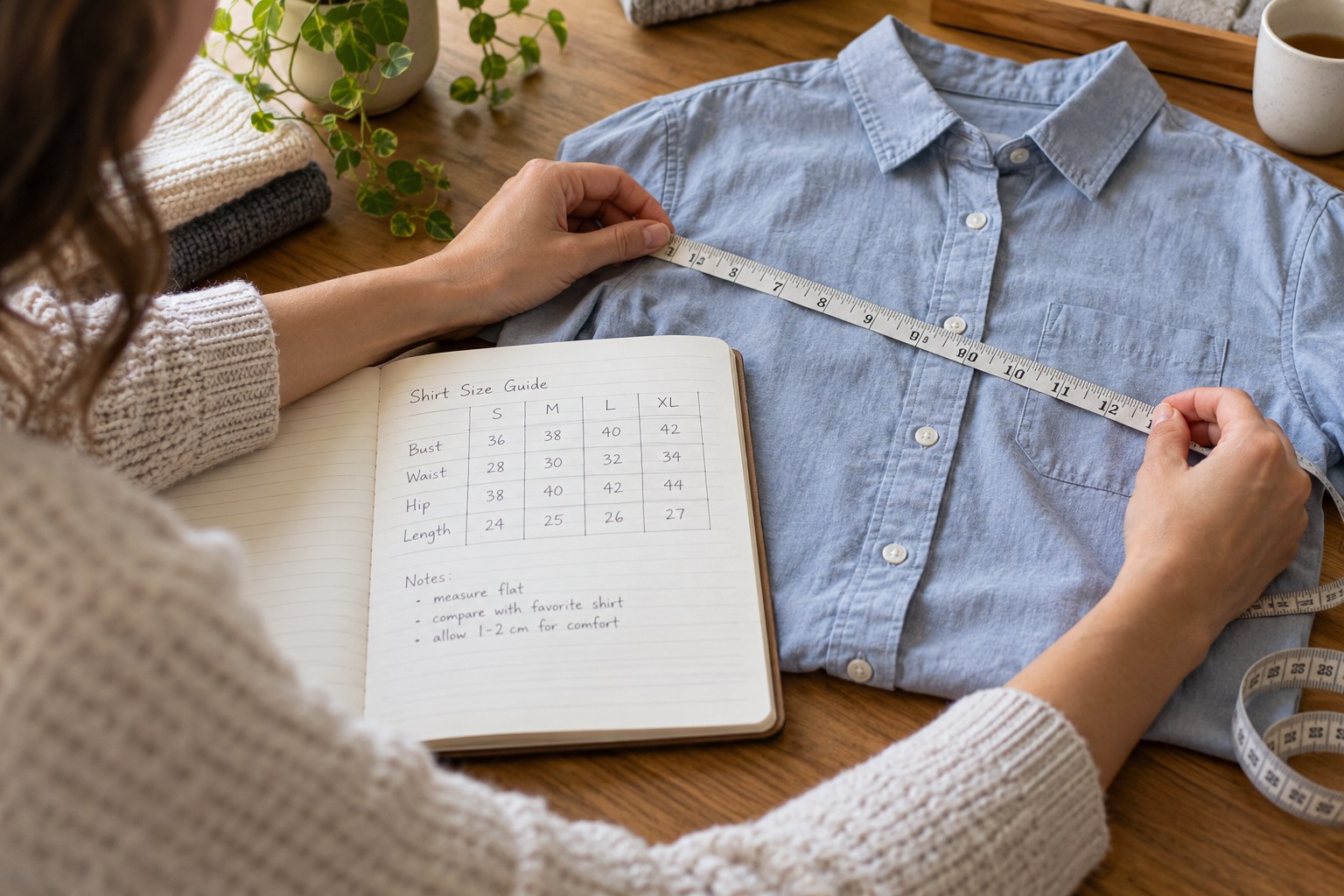
When two body measurements point to different sizes, use the garment's construction and the seller's chart to identify which areas need room.
Wardrobe & care
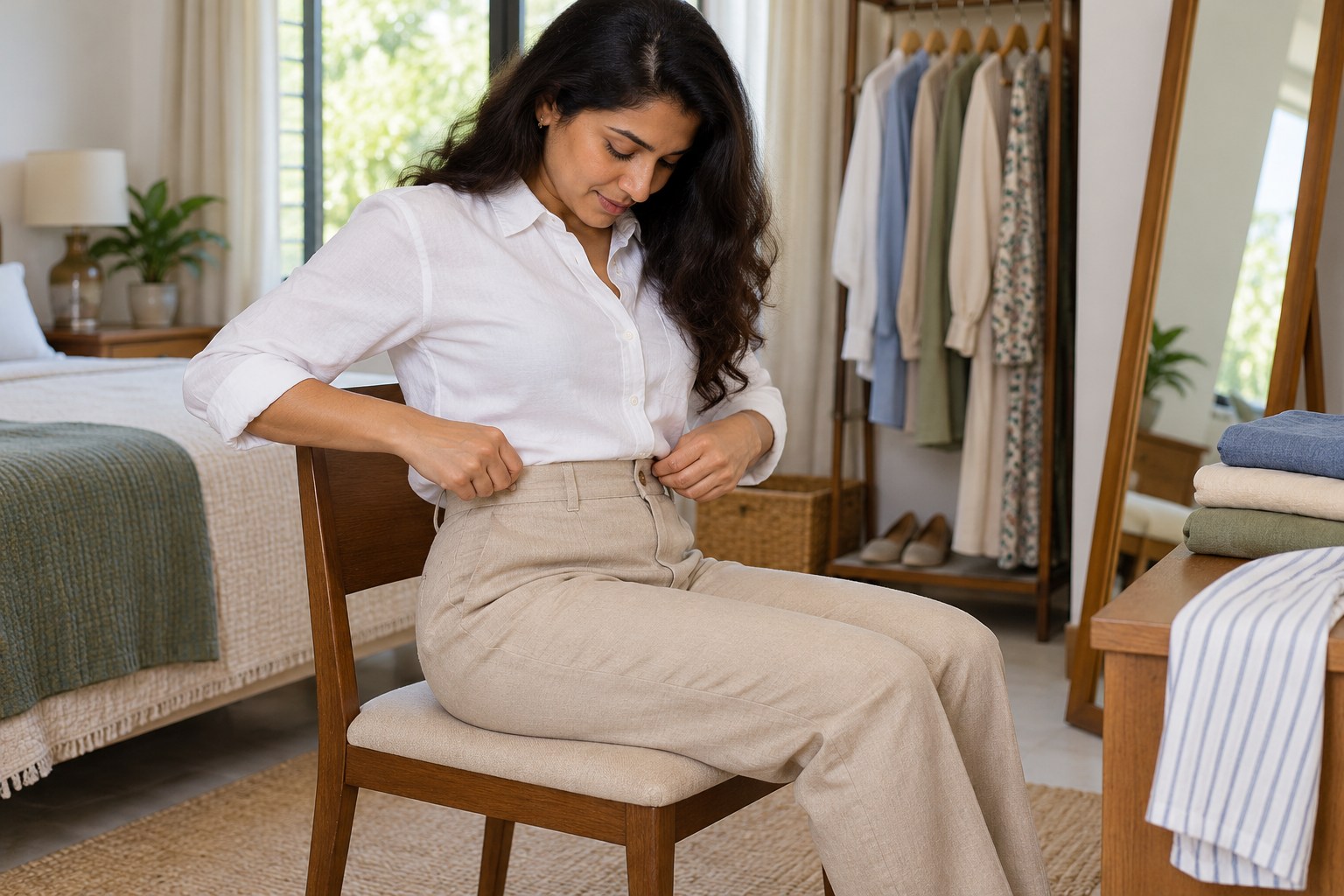
Assess trouser rise through the position of the waistband and crotch during sitting, walking and bending, not only through a front-view mirror check.