Wardrobe & care
Measure an existing garment before buying another size
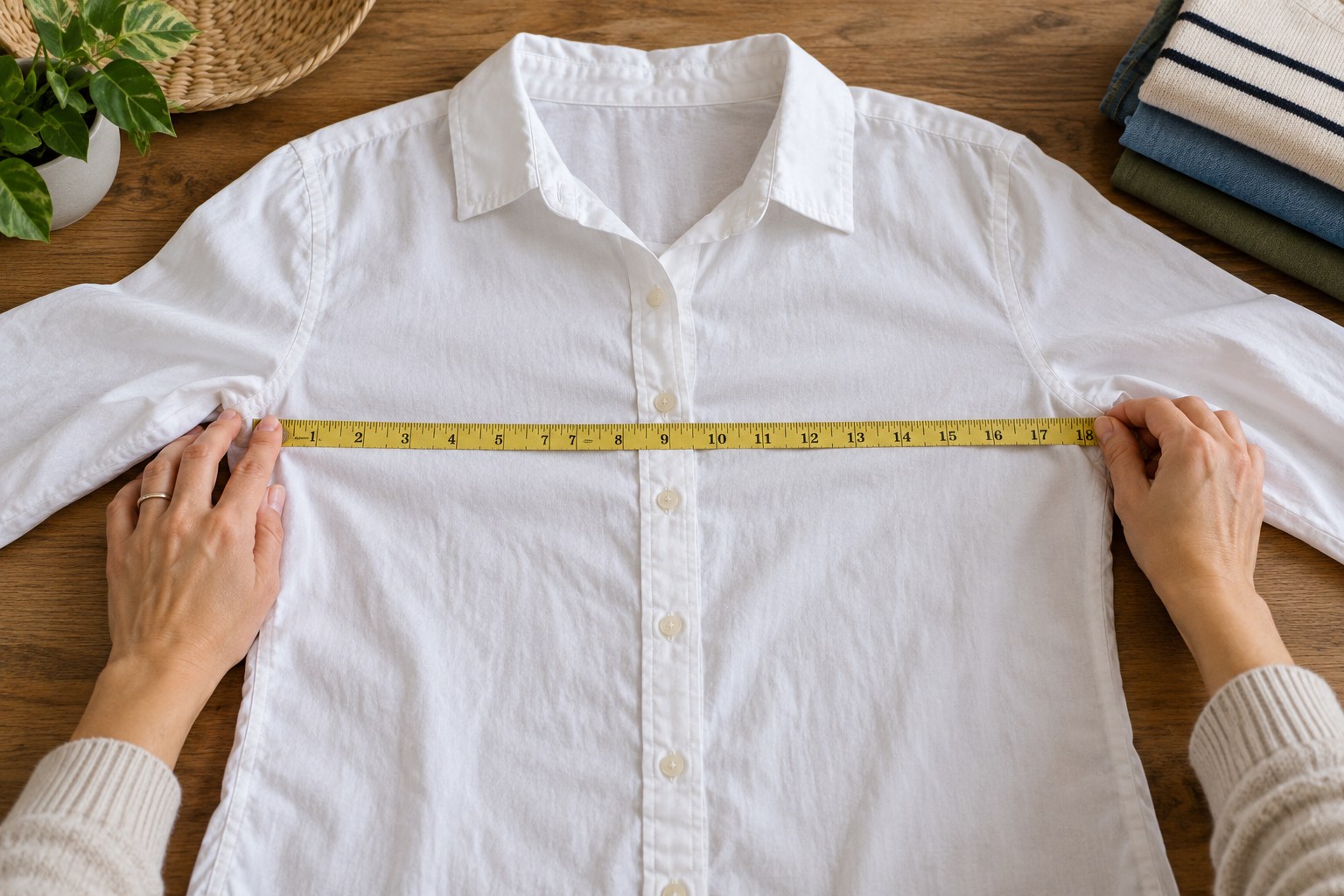
Use a garment that fits the way you want as a measurement reference, while keeping body measurements and garment measurements clearly separate.
Clothes, accessories & the ways to wear them
Wardrobe & care
Use online garment photographs to understand shape and construction, then compare the written measurements using the seller's stated method.
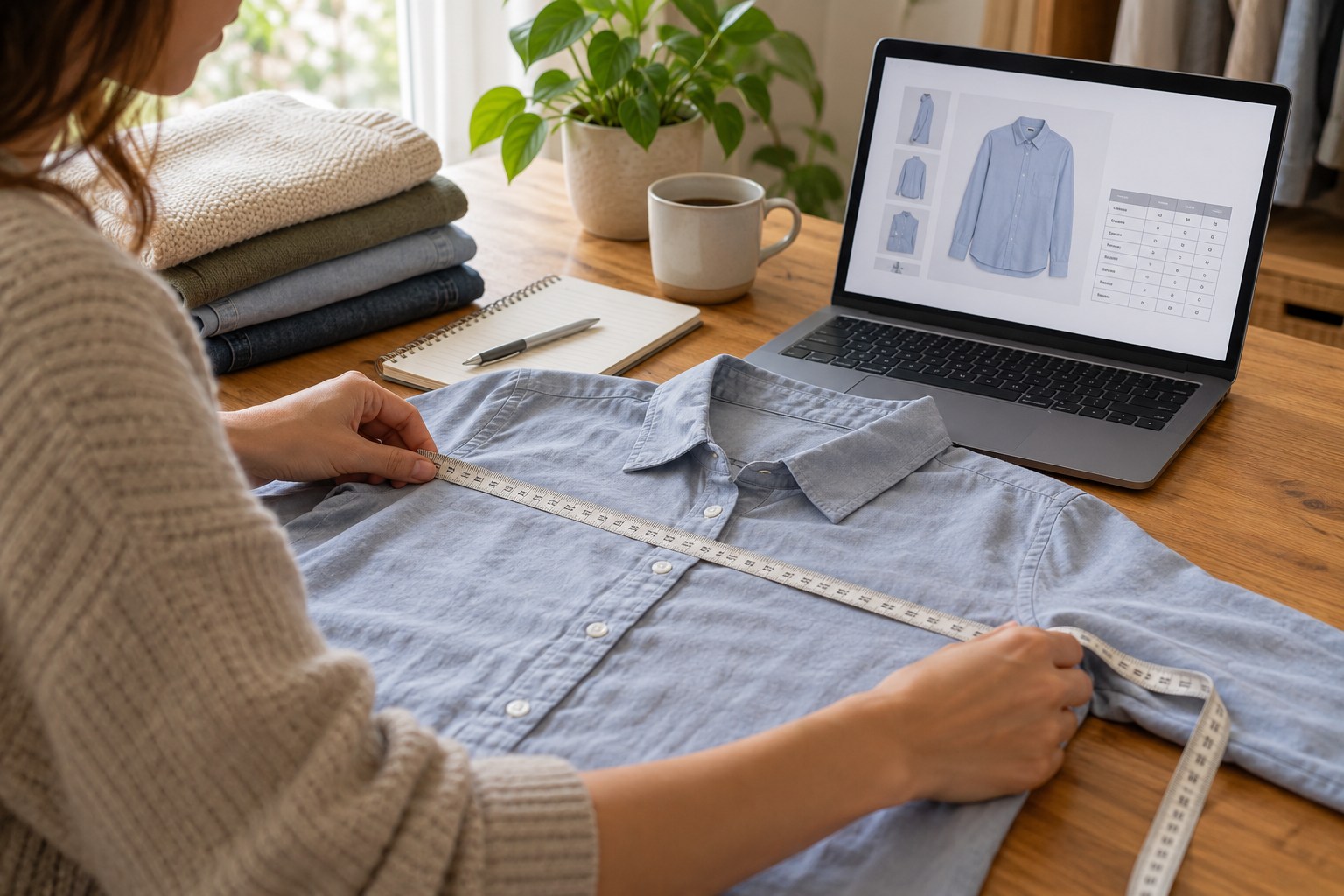
AI-generated illustration. Items shown are illustrative, not specific products for sale.
An online photograph shows one garment arranged on one person, mannequin or surface. It can help explain proportion, but it cannot tell you how the same item will fit you by itself. Read the image and the measurements as different kinds of evidence: one shows a visual result, while the other describes particular dimensions or a sizing range.
Begin with the listing's distinction between body measurements and finished garment measurements. Check units and any instructions for measuring. If the chart is only a general brand guide, look for garment-specific dimensions elsewhere in the listing or ask the seller. A photograph does not resolve an unclear chart simply because the item looks roomy.
Look for front, back and side views. Notice where shoulder seams sit, how sleeves join the body, whether there are darts or gathers and how the hem changes around the garment. These details help explain why two items with similar listed widths may produce different shapes.
Check whether the garment is shown tucked, belted, pinned, layered or held in a pose that changes its outline. A hand in a pocket can pull fabric away from the body; a raised arm can lift the hem. Those images can still be useful, but they should not be treated as a neutral measurement view. Seek an unposed or flat image if the feature you need to assess remains hidden.
Look inside where images allow it. A lining, facing or internal fastening can affect how the garment behaves even when it is not prominent from the front. If a construction detail matters to the purchase and is not shown, ask directly rather than assuming it matches a similar item you own.
Measure a suitable reference garment using the seller's method when possible. Record the endpoints as well as the number. A sleeve measured from the centre back cannot be compared directly with one measured from the shoulder seam. A flat waistband width and a body waist circumference require different interpretation.
Consider the fabric and intended fit alongside the dimensions. A stretchy fitted piece and a loose woven garment are not expected to contain the same amount of space around the body. Product wording can help identify that intention, but if the practical amount of room is unclear, ask for the relevant measurement rather than relying only on a label such as oversized.
For example, a tunic may look long in a photograph because of the model's proportions, the camera angle or the position of the waistband underneath. Compare the listed garment length with a tunic you wear, measuring from the same point. Then check side slits and any curved hem, which may make the shortest and longest sections different. The image explains the design; the measurement helps place it in your own wardrobe.
Colour can appear different across lighting and screens. Close-up images may help show texture, but they cannot establish exactly how the material feels or behaves in your conditions. Treat those as uncertainties rather than filling them with assumptions based on a polished photograph.
Before ordering, review the current seller's information and the applicable purchase and return conditions. If an essential dimension remains unknown, a concise question may save a less useful purchase. When the garment arrives, compare it with the information used to choose it and try the movements that matter to you within the seller's conditions. The online comparison is a way to make a better-informed choice, not a guarantee that every aspect of fit can be known from a screen.
Wardrobe & care
Use a garment that fits the way you want as a measurement reference, while keeping body measurements and garment measurements clearly separate.
Wardrobe & care
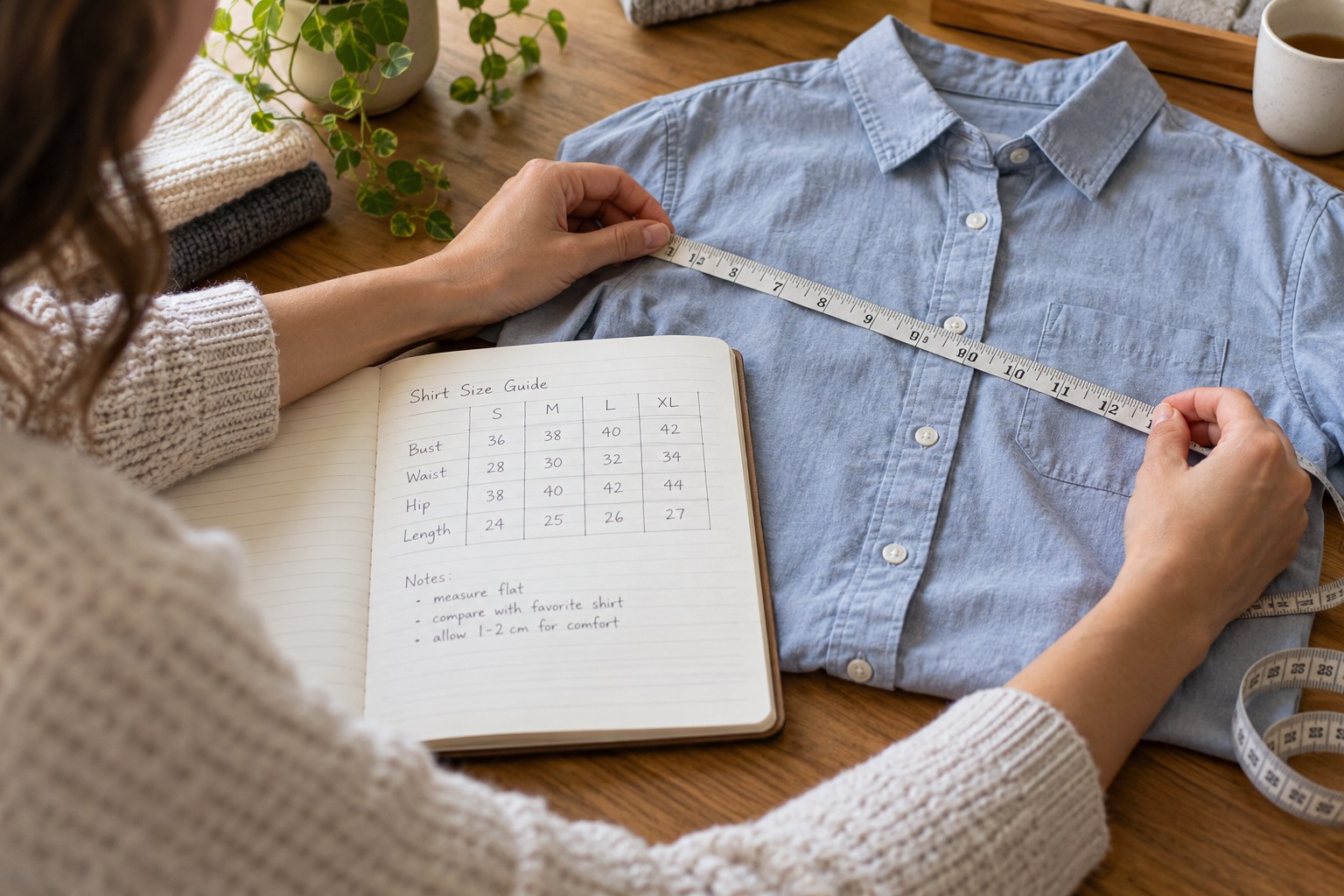
When two body measurements point to different sizes, use the garment's construction and the seller's chart to identify which areas need room.
Wardrobe & care
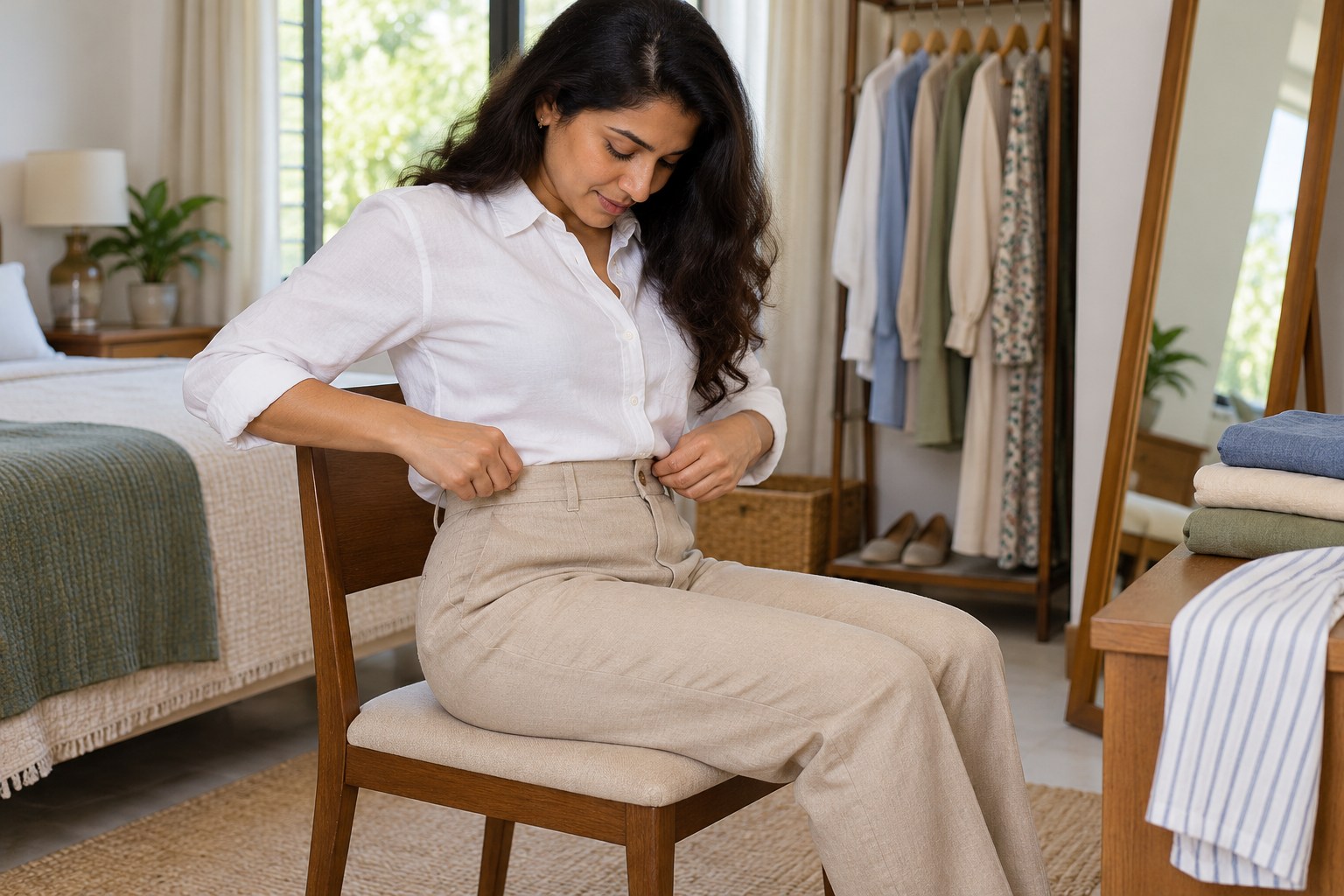
Assess trouser rise through the position of the waistband and crotch during sitting, walking and bending, not only through a front-view mirror check.