Occasions & travel
Choose an outfit for a daytime wedding as a guest
Let the invitation, venue and length of the day guide the fabric, footwear and amount of detail in a wedding guest outfit.
Clothes, accessories & the ways to wear them
Occasions & travel
Test a Navratri dance outfit through the movements you plan to make, including the way the skirt, sleeves and dupatta travel.
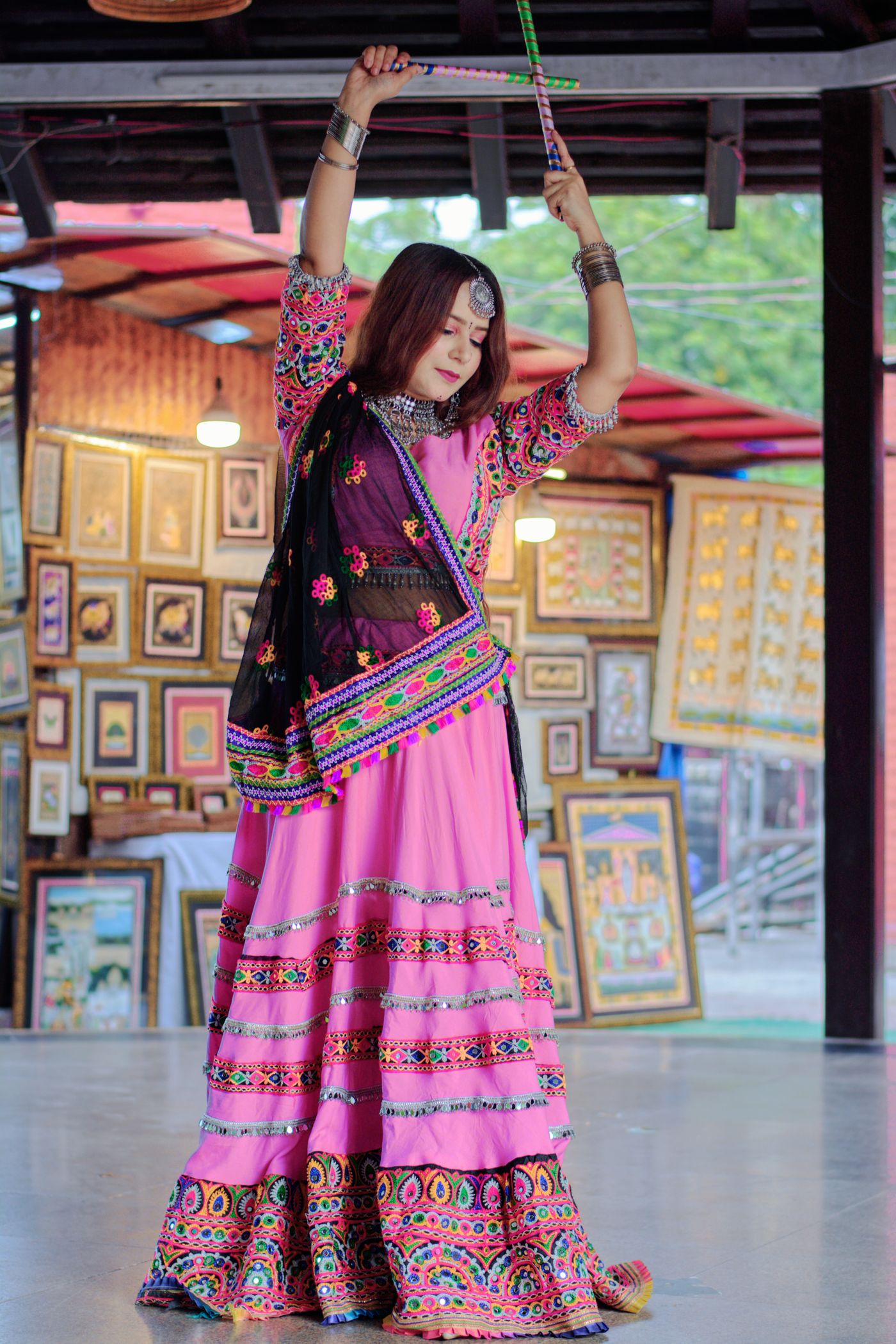
An evening involving garba, dandiya or another organised dance needs more than a standing fitting. Check the event's format and any clothing guidance, then practise the movements you expect in the complete outfit. Different venues and groups have different arrangements, and you may choose to dance for a short time or most of the evening. Dress around that actual plan.
The skirt or lower garment should allow your normal steps without requiring you to hold it up continually. Turn, step sideways and move backwards carefully in a clear space. Watch the hem and lining separately. A flowing outer skirt can conceal a tighter lining, while a decorative border may fold under the shoe when you change direction. Set the length with the footwear you will wear at the venue.
Check every fastening before a rehearsal. A waistband should stay in place without being tightened to the point of discomfort. Ties, hooks and zips need to be in sound condition. If the garment shifts, investigate the fit rather than adding more tension to one tie. Leave time for an alteration and another test if necessary.
Move your arms through the expected range. The blouse should not pull at the shoulder or neckline, and any sleeve detail should remain clear of your hands. A tie-back blouse may behave differently once you turn or reach forward. Try it with the intended underlayer so you are checking the actual outfit, not a simplified version that omits the difficult parts.
Arrange the dupatta for movement. Long loose ends can swing much farther than they appear to in a mirror. A contained drape may be easier to manage, but make sure securing it does not connect two areas so tightly that your arm movement pulls the fabric. Use suitable, fully closed fastenings where needed and check for strain after the rehearsal. Avoid relying on a delicate border as the sole attachment point for a heavy drape.
Long earrings, stacked bangles and layered necklaces may look balanced while still. During movement they can strike, twist or catch. Wear the proposed pieces for the rehearsal and notice which ones require attention. You might keep the earrings and simplify the wrist area, or choose a shorter necklace that remains clear of the blouse detail. The goal is to preserve the accessories you enjoy without making them a distraction.
If the dance involves sticks, check that bracelets and sleeve edges do not interfere with your grip. Follow the event's guidance and give other participants space. A decorative bag is usually inconvenient while dancing, so plan a suitable place for it rather than assuming you can keep it in one hand. Carry only what you need and consider how you will retrieve essentials between dances.
The venue's surface matters to footwear. Familiar shoes with a secure fit are a better starting point than an untested pair chosen only to match embroidery, but inspect the actual sole and condition. A flat shoe is not automatically suitable for every floor. If you bring a spare pair, check the garment hem with both before leaving.
Plan what you will wear for arriving, waiting and travelling home as well. A light outer layer may be useful if the evening cools, but it needs somewhere to go while you dance. Keep the outfit manageable as a whole. A rehearsal that includes the shoes, drape and jewellery gives you time to make changes while you still have alternatives in the wardrobe.
Occasions & travel
Let the invitation, venue and length of the day guide the fabric, footwear and amount of detail in a wedding guest outfit.
Occasions & travel
Spend on the missing function in your reception outfit, rather than buying a complete new set of accessories.
Occasions & travel
A sangeet outfit should pass the movements you expect to make, from sitting at dinner to raising your arms on a dance floor.