Occasions & travel
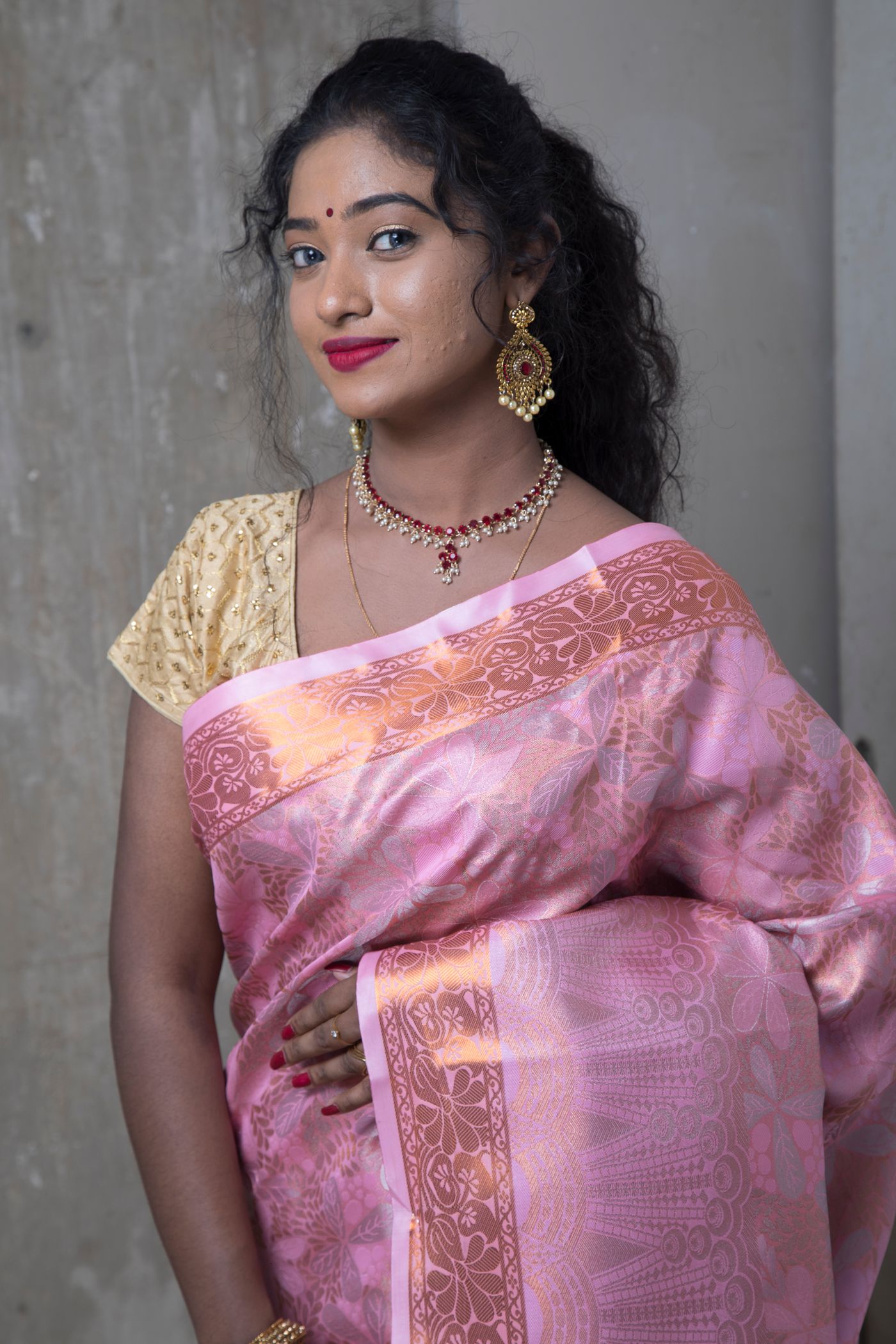
Choose an outfit for a daytime wedding as a guest
Let the invitation, venue and length of the day guide the fabric, footwear and amount of detail in a wedding guest outfit.
Clothes, accessories & the ways to wear them
Occasions & travel
Protect the raised surfaces of a festive outfit in transit, while avoiding pressure on the parts that hold its shape.
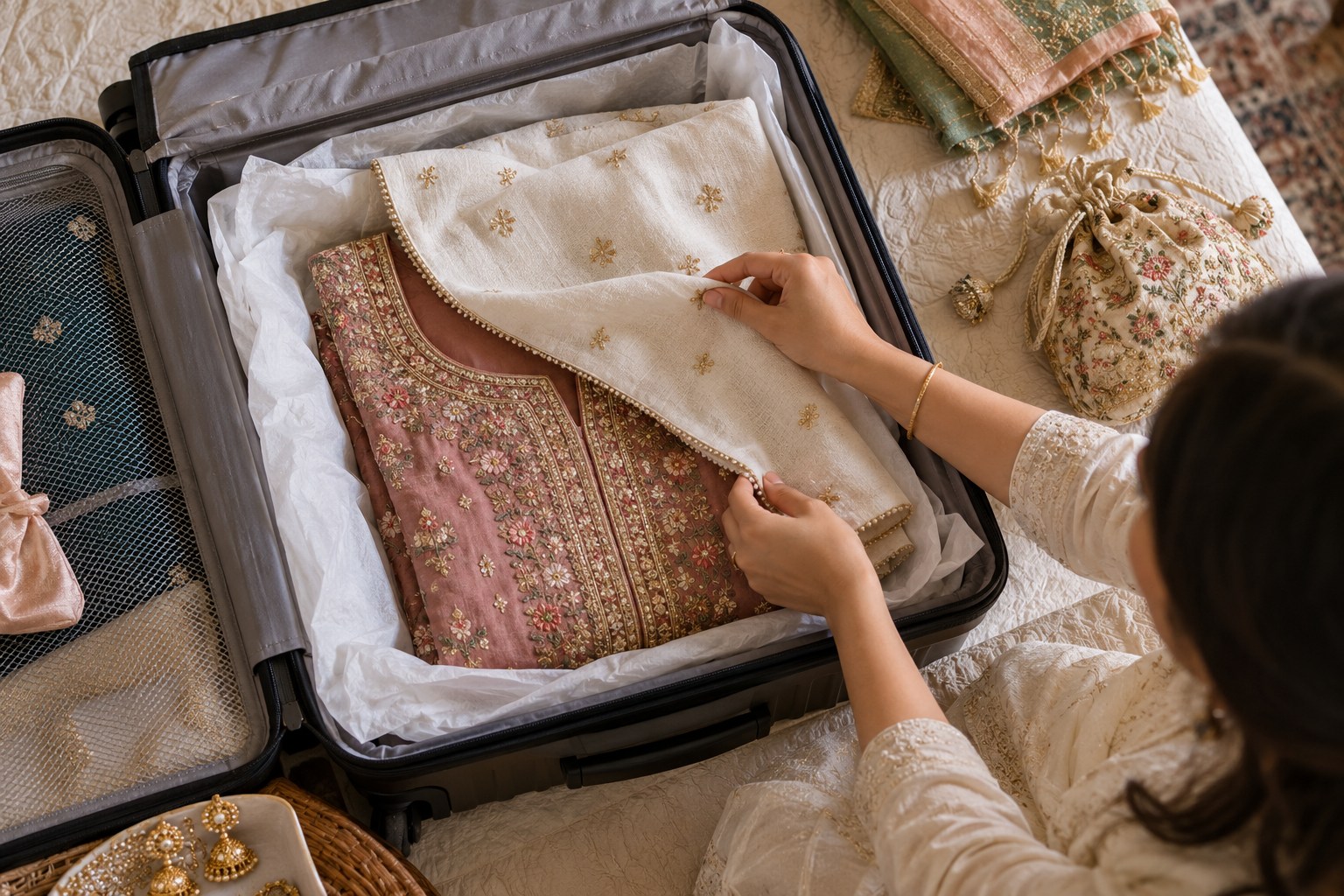
AI-generated illustration. Items shown are illustrative, not specific products for sale.
Packing embellished clothing begins with identifying what can catch, crush or transfer onto another surface. Sequins, beads, metallic threads, hooks and zips create different contact points. Lay the outfit out in good light and inspect it before packing. Secure any loose fastening and deal with damage early; a small loose thread can become harder to notice once the garment is folded into luggage.
Read the care information and any packing advice supplied with the garment. A heavily worked blouse and a soft embroidered dupatta may need different treatment even when they belong to one set. If the piece is particularly valuable or fragile, ask its maker or an appropriate textile-care professional about transport. Do not assume that turning every decorated item inside out is always the best solution; some constructions can catch internally or distort when reversed.
Place clean, smooth, colourfast protective material between embellished areas and neighbouring garments. Avoid rough tissue, printed paper or a fabric that may shed colour or fibres. Check that hooks and zip pulls are not left against delicate work. Pack jewellery separately rather than placing it inside the folds because it belongs to the same outfit.
Reduce sharp folds through dense decoration where possible. Support a fold gently rather than pressing a beaded panel flat under heavy items. A structured blouse may need room to keep its shape, while a long skirt may be folded around its less decorated areas. The exact arrangement depends on the garment, so work with its construction rather than following one universal rolling method.
Keep the outfit away from shoes, liquids and anything with a hard edge that can press into the surface. A garment bag or separate packing area can help organise it, but the bag itself should not be so tight that it compresses the decoration. Test the luggage closed without forcing the zip. If you need to sit on the case to shut it, the outfit is not protected from pressure simply because it is inside a fabric cover.
For travel with several stops, pack the outfit where it can remain undisturbed until needed. Repeatedly pulling it out to reach other items increases handling. Keep the accessories, underlayers and appropriate shoes nearby in separate compartments so you can find the complete outfit without searching through every fold.
On arrival, remove the garment carefully and inspect it in good light. Follow its care instructions for any creases; do not apply direct heat or steam to decoration without knowing it is suitable. Hang or lay it according to its weight and construction, making sure the support does not stretch a heavy area. A flimsy hanger can distort a substantial skirt or blouse.
Try the outfit with enough time to address a displaced fastening or an unexpected crease. Pack a small repair item only if you know how to use it appropriately; travel is not a good moment for an improvised treatment on delicate work. Protecting the garment is a sequence of gentle handling, separation and suitable support, not a promise that one packing trick prevents every problem.
Keep the protective separators and garment cover together after unpacking so they are available for the journey home. Used clothing may need different handling from the clean outfit that travelled out. Inspect it for marks, loose embellishment or moisture before folding it back into the case. Follow the care requirements and avoid packing it tightly while damp simply because the return flight is soon.
If a fastening or decoration has come loose, keep any detached piece in a small labelled container rather than leaving it inside the folds. Do not pull an attached thread to remove an unwanted loose end; that may disturb more of the work. Arrange an appropriate repair once you are home if you cannot address it safely before travelling.
Separate worn footwear and jewellery again, even if the luggage is fuller on the return trip. Purchases and gifts can add hard edges or pressure that were not present on departure. Rebuild the protected space around the garment instead of assuming its original position is still suitable. The return journey deserves the same contact and pressure checks as the outward one.
Occasions & travel
Let the invitation, venue and length of the day guide the fabric, footwear and amount of detail in a wedding guest outfit.

Occasions & travel
Spend on the missing function in your reception outfit, rather than buying a complete new set of accessories.
Occasions & travel
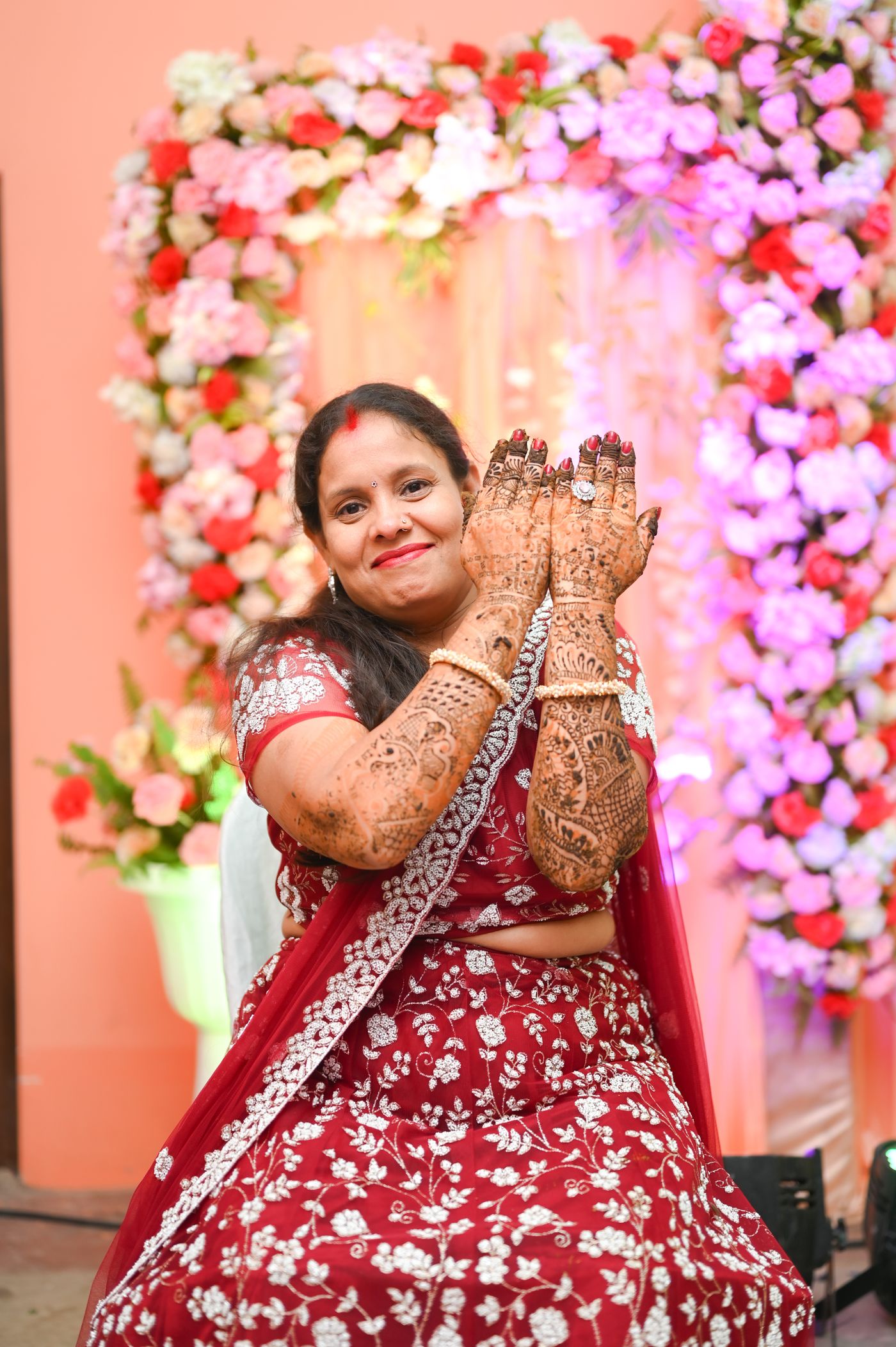
A sangeet outfit should pass the movements you expect to make, from sitting at dinner to raising your arms on a dance floor.