
Jewellery & finishing
Choose earrings for a high-neck blouse
Choose earrings alongside the actual height and texture of the blouse collar, leaving room for movement near the jaw and shoulders.
Clothes, accessories & the ways to wear them
Jewellery & finishing
Give two necklaces distinct positions, then check their movement and clasps so both pieces remain visible during wear.
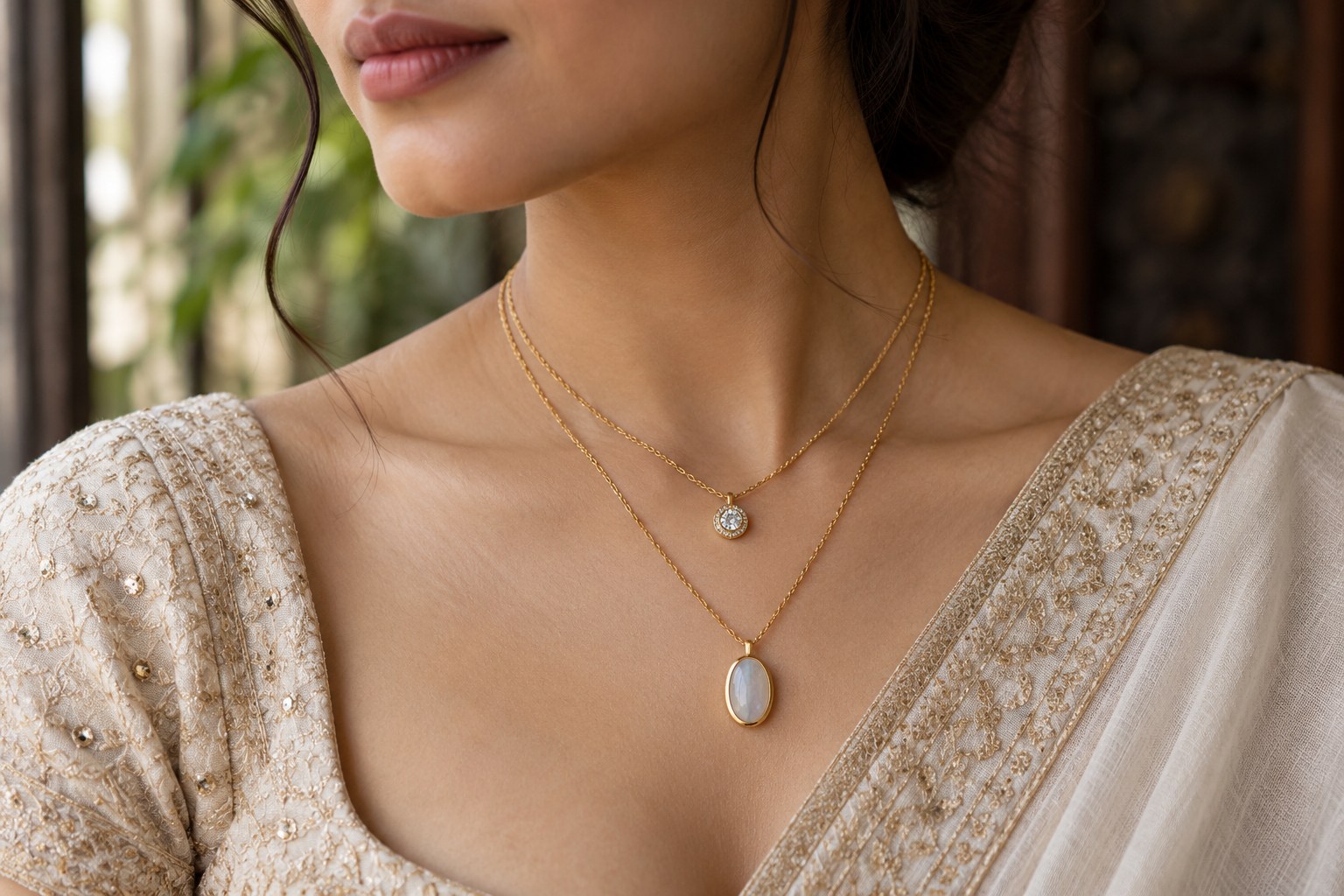
AI-generated illustration. Items shown are illustrative, not specific products for sale.
Two necklaces can look well separated when held in your hands and merge into one cluster once worn. Their pendants may settle at the same point, their chains may cross or one may disappear beneath the neckline. Begin with the top or dress you will wear, because the available space is part of the arrangement.
Lay the necklaces beside each other and compare their actual lengths, including any extender and pendant drop. Two chains of different lengths can still place their pendants at a similar level if one pendant is much longer. The visual distance between the pendants matters more than the difference between the chain measurements alone.
Put on the shorter piece first and locate it relative to the neckline. Then add the longer necklace and see whether it has a separate area of plain fabric or skin behind it. If the lower pendant rests exactly on the edge of a neckline, it may repeatedly slip inside. Adjust the length if the design allows, or use a different top rather than forcing the pendant to stay on an unstable boundary.
A small pendant above a longer, simpler chain creates a different effect from two equally prominent pendants. To keep both legible, try changing their scale as well as their height. A broad flat pendant and a small rounded charm can be easier to distinguish than two similarly sized discs stacked closely together. They can share a metal tone without sharing an identical shape.
Move as you would during the day: turn your head, lean forward and sit back. Notice whether the chains migrate around each other or the pendants collide. Some combinations simply move together in a way that tangles easily. More separation may help, but there is no adjustment that guarantees every pair of necklaces will remain apart.
Look at the clasps and extenders. A long unused extender can meet the other necklace behind the neck, where you may not notice the tangle until later. Arrange the closures without pulling either chain tight. If an extender cannot be positioned comfortably, choose a different length or have an appropriate adjustment discussed with a jeweller rather than improvising a fastening that may open.
Keep other details quiet during the first trial. With large earrings and a patterned neckline already in place, it becomes harder to tell whether the layered necklaces are contributing anything distinct. You can add those details back once you understand the relationship between the two chains.
For a concrete starting point, try a short fine chain with a small pendant above a longer plain chain over an open-collar shirt. Then compare it with two pendants at clearly separated heights. Take a photograph at conversational distance, not only a close-up. If one piece is invisible in both arrangements, it may work better worn alone another day. Layering should allow you to enjoy the pieces, rather than making one serve as a hidden support for the other.
Jewellery & finishing
Choose earrings alongside the actual height and texture of the blouse collar, leaving room for movement near the jaw and shoulders.
Jewellery & finishing
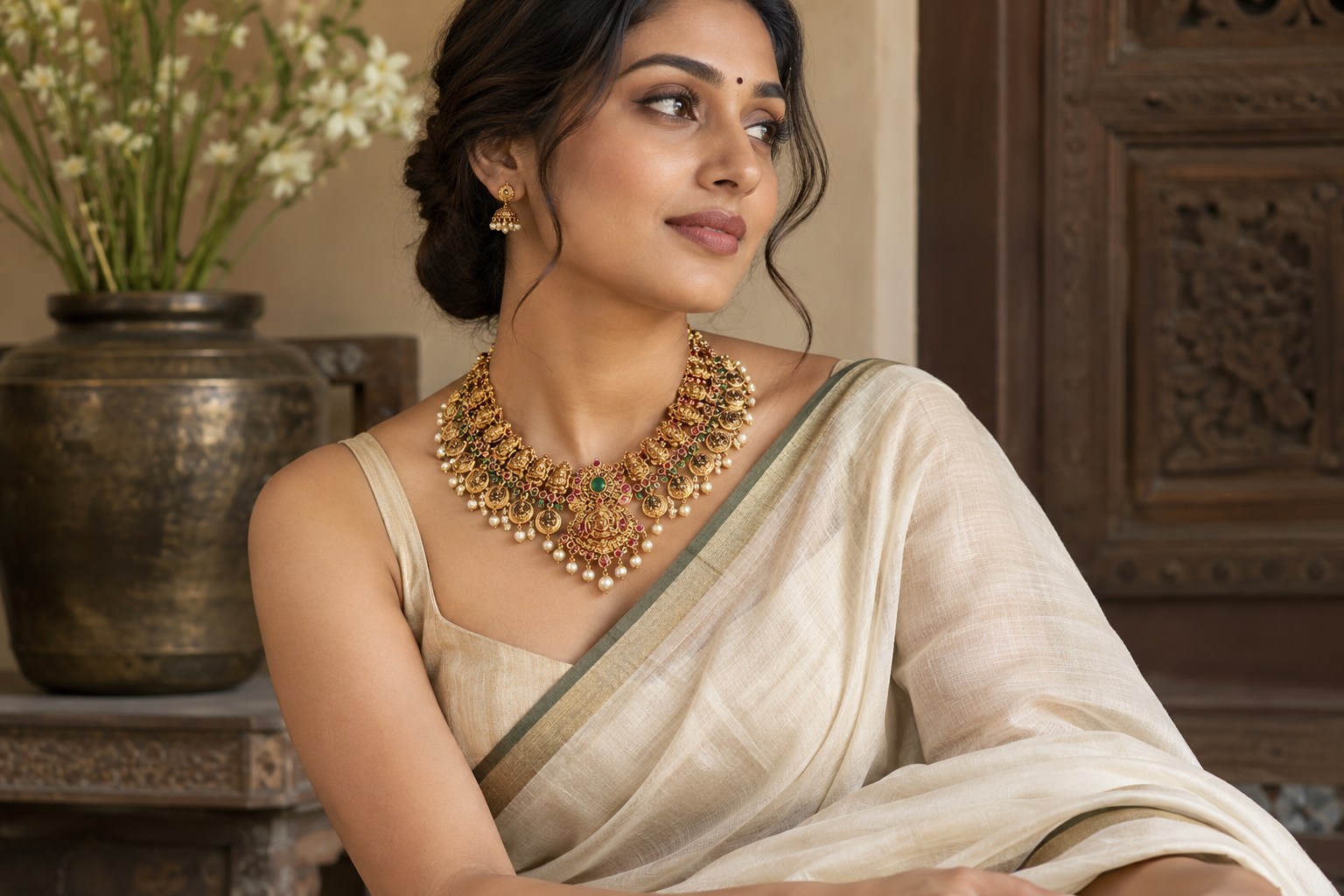
Place a statement necklace against the saree as it will be draped, then decide whether it should echo the border or stand apart from it.
Jewellery & finishing
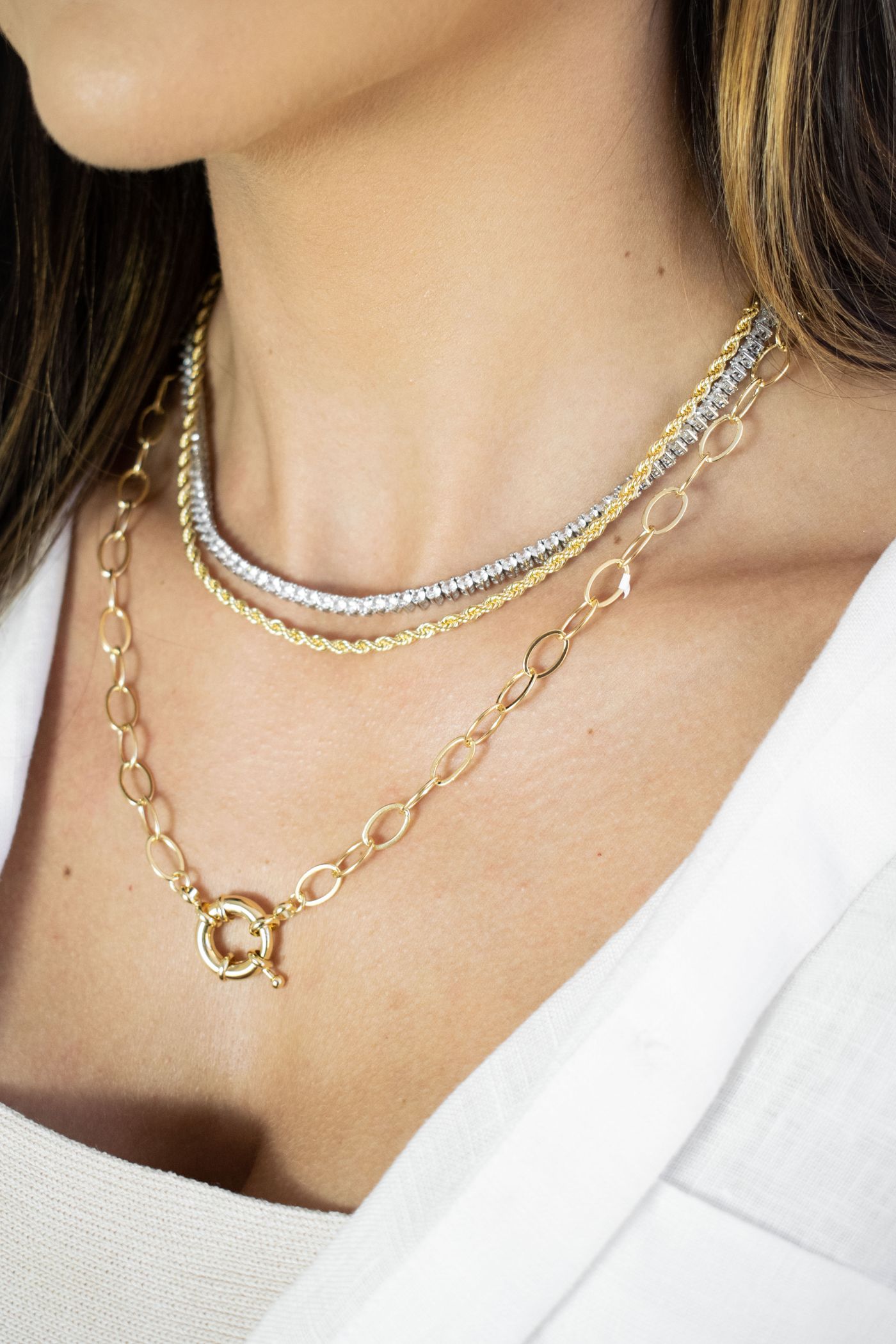
Mix metal tones by giving each a visible role, using repetition only where it helps the outfit feel connected.