
Jewellery & finishing
Choose earrings for a high-neck blouse
Choose earrings alongside the actual height and texture of the blouse collar, leaving room for movement near the jaw and shoulders.
Clothes, accessories & the ways to wear them
Jewellery & finishing
Place a statement necklace against the saree as it will be draped, then decide whether it should echo the border or stand apart from it.
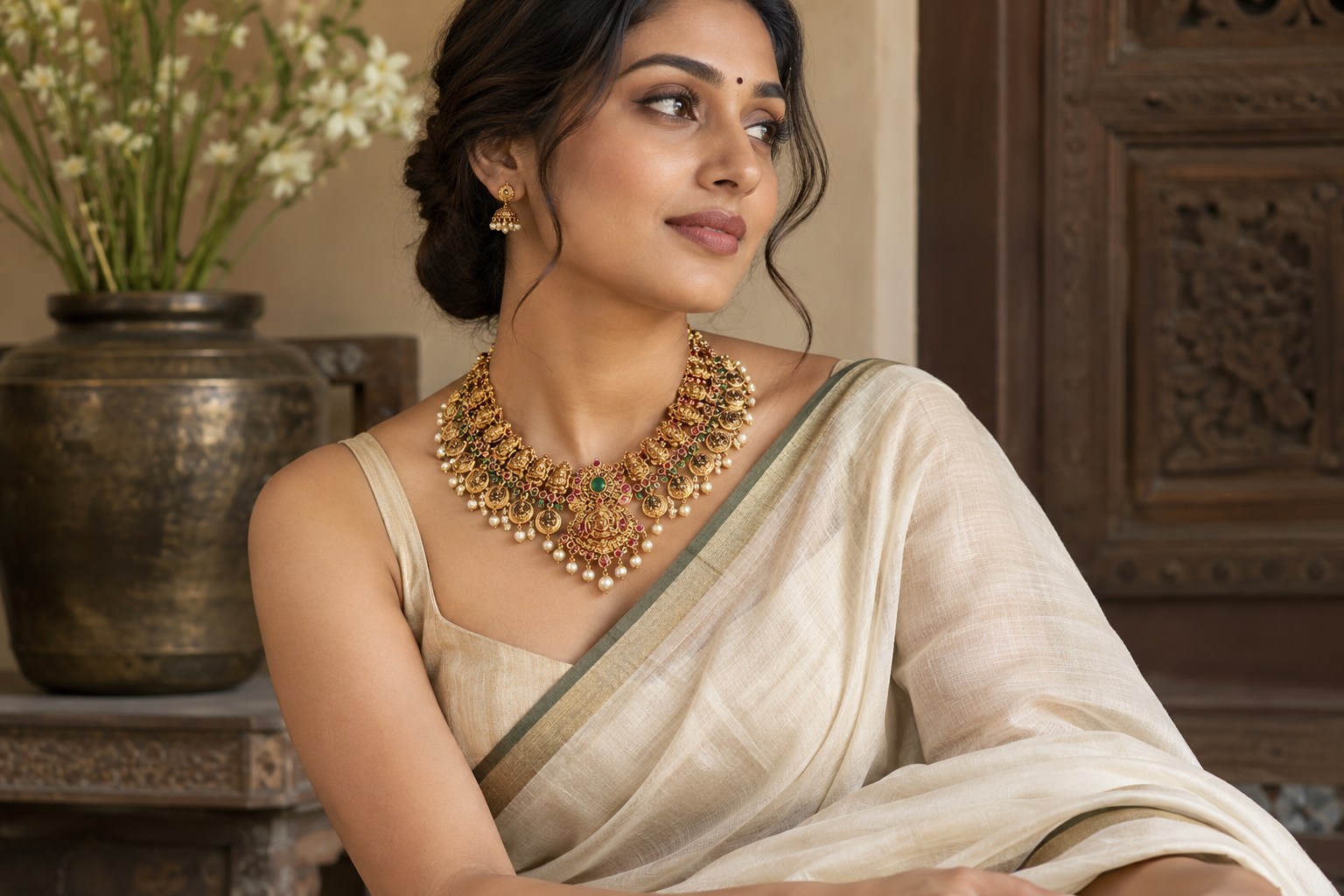
AI-generated illustration. Items shown are illustrative, not specific products for sale.
A saree border can run close to the neckline, cross the shoulder and continue diagonally across the body. A statement necklace adds another strong line in the same area. Before judging them together, arrange the pallu as you intend to wear it. The visible amount of border can change the necklace's effect more than switching between two similar jewellery pieces.
Look at the shape of the blouse neckline and the area left open by the drape. A necklace might sit inside that area, rest across plain fabric or overlap the border. Each arrangement is possible, but an accidental overlap can hide the pendant or make two detailed edges difficult to distinguish. Move the necklace and drape slightly to find a relationship you can maintain comfortably.
If the saree has a broad, richly patterned border, try a necklace with a clear shape and less surface detail. Its outline can remain visible without reproducing every motif in the fabric. A plain saree with a narrow border may give a more intricate necklace room to lead. These are starting points for comparison, not limits on how much decoration an outfit may contain.
Colour repetition can connect the pieces. One stone colour might pick up a small thread in the border, or a metal tone might relate to its woven shine. Avoid assuming that the necklace must match the dominant colour exactly. A quieter connection can leave the saree's pattern easier to read.
Try the outfit with the earrings you plan to wear. If necklace, border and earrings all create strong detail near the face, decide whether that richness is intentional. If it feels crowded, change one element at a time. Smaller earrings may solve the problem without giving up the necklace you wanted to wear.
Check contact as well as appearance. Raised settings or a rough clasp can catch fabric, especially if the necklace shifts beneath the pallu. Move your arms and sit down during the trial. If the arrangement only works while you remain still, simplify the overlap or choose a smoother jewellery shape. A statement necklace should be visible through the evening without requiring constant attention to its position.
Jewellery & finishing
Choose earrings alongside the actual height and texture of the blouse collar, leaving room for movement near the jaw and shoulders.
Jewellery & finishing
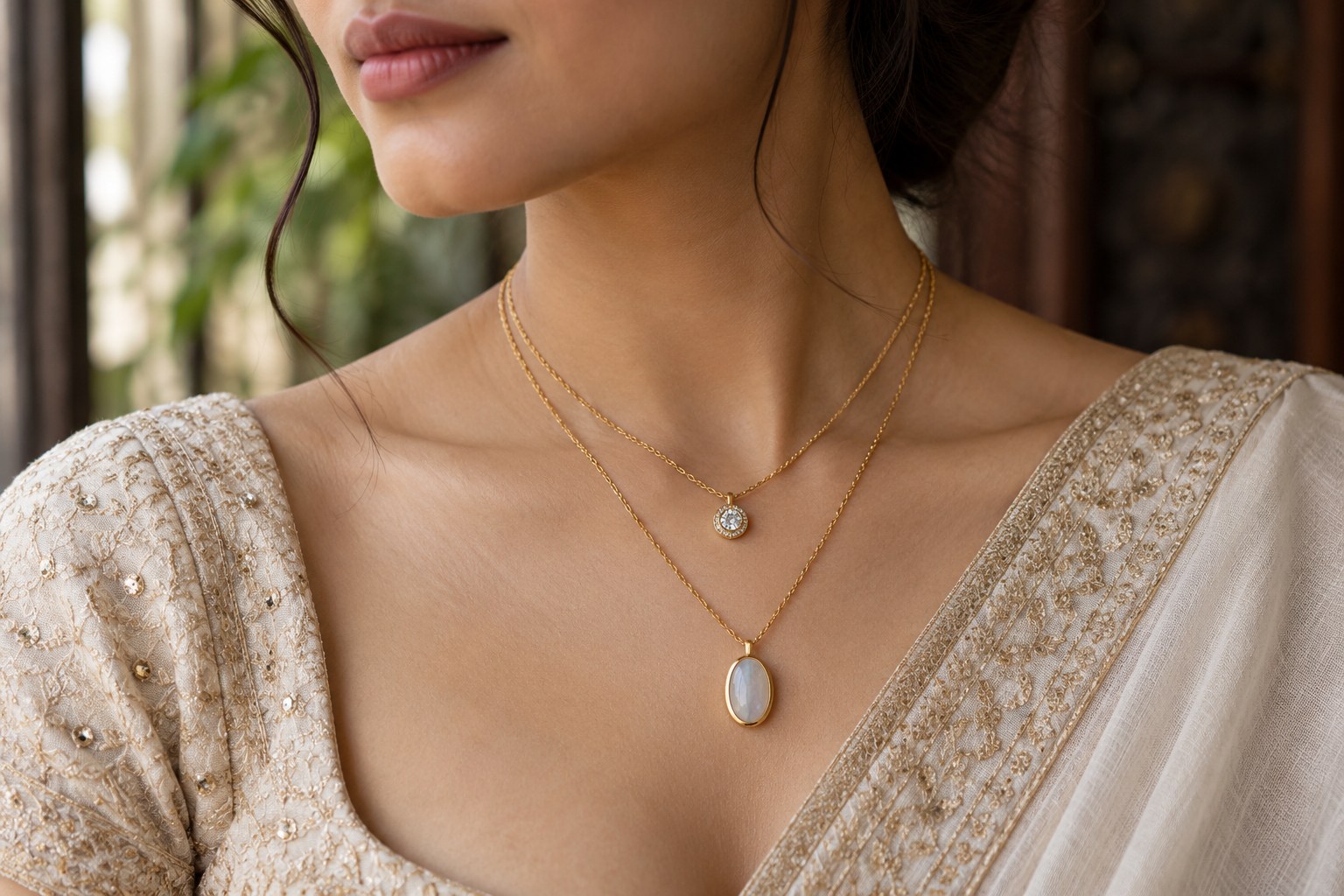
Give two necklaces distinct positions, then check their movement and clasps so both pieces remain visible during wear.
Jewellery & finishing
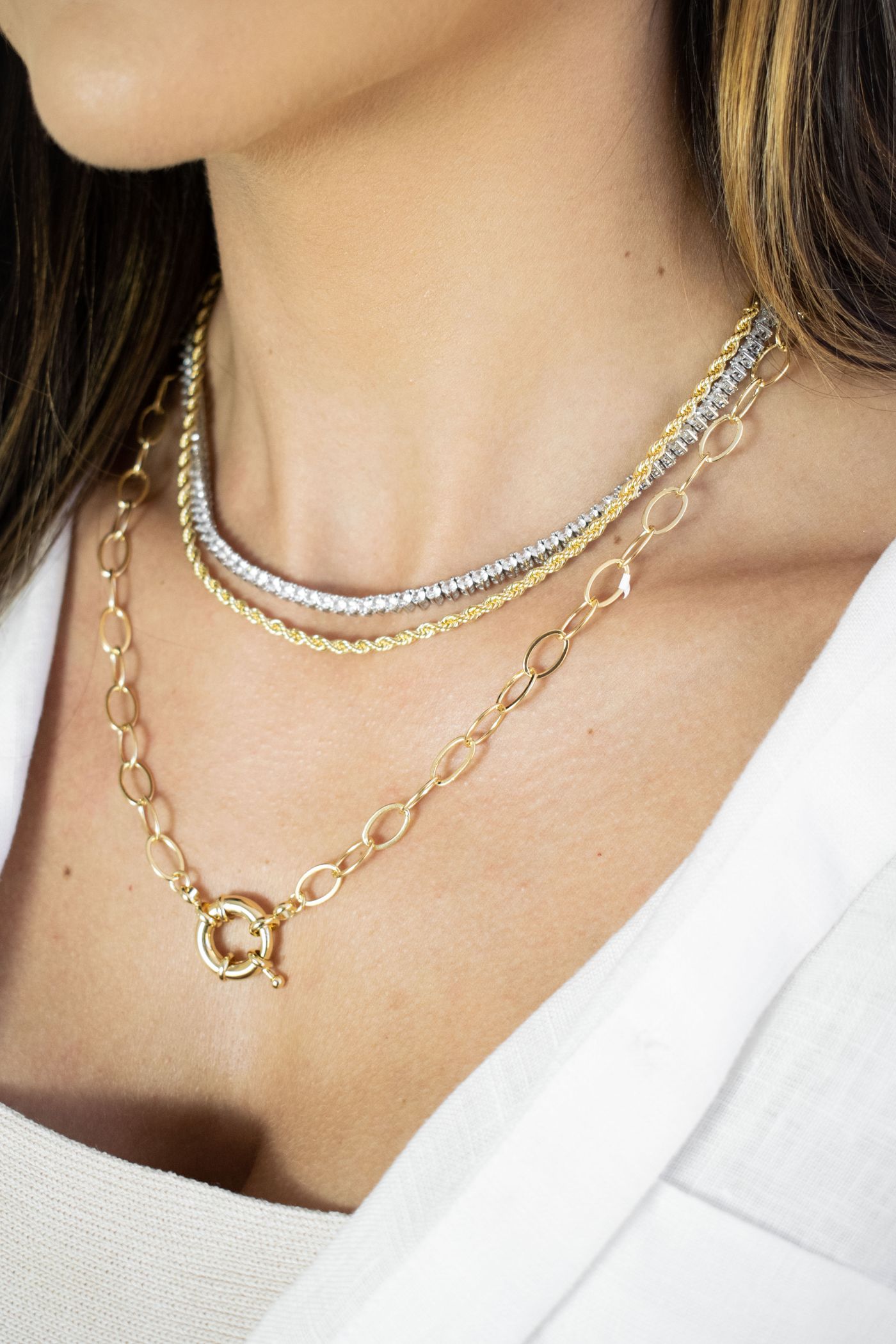
Mix metal tones by giving each a visible role, using repetition only where it helps the outfit feel connected.