Indian wear & mixing
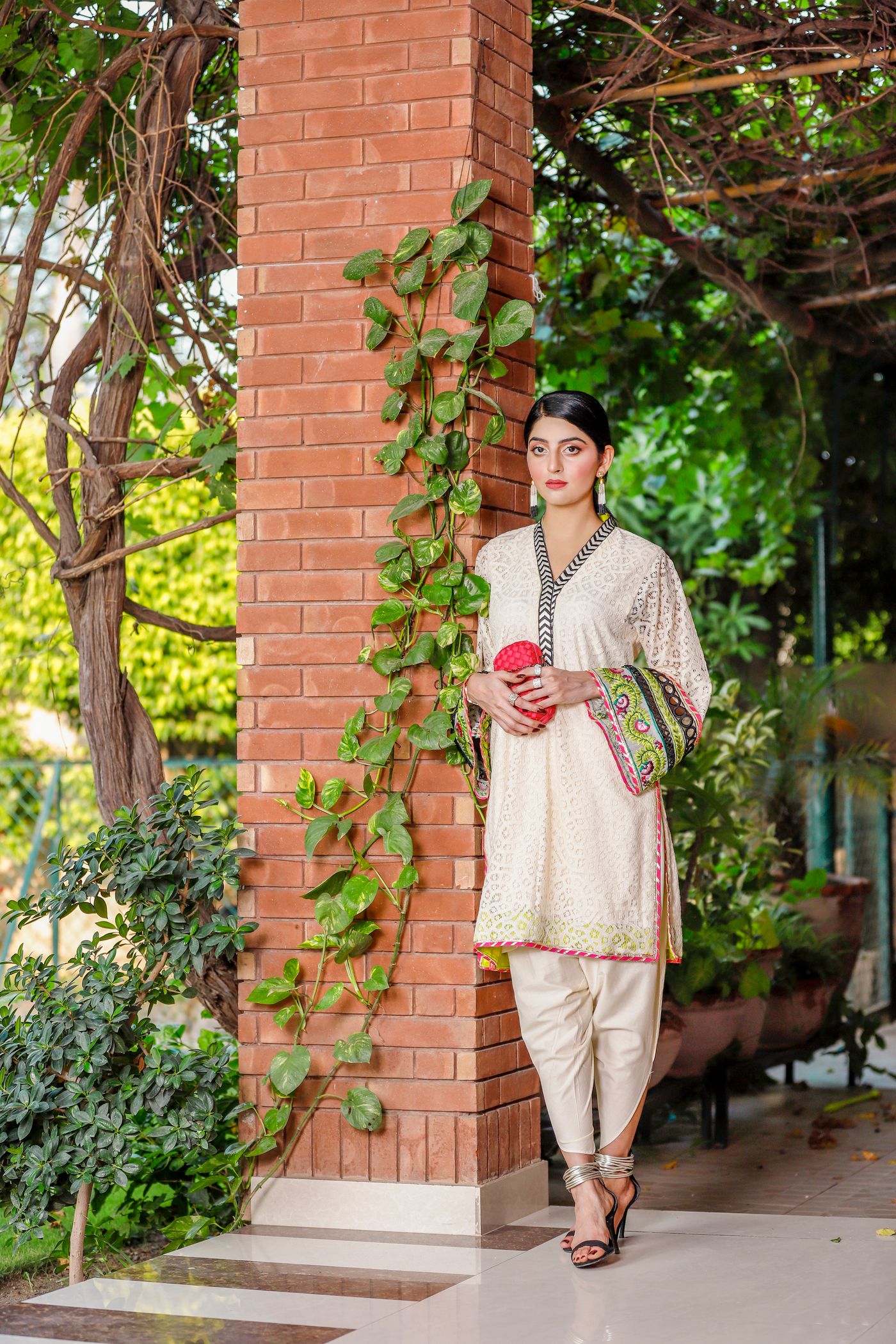
Wear a straight kurta with tapered trousers
Check the kurta’s side openings and the trouser taper so the two shapes move comfortably together.
Clothes, accessories & the ways to wear them
Indian wear & mixing
Check an anarkali at the waist, under the seat and around the hem before committing to a long seated event.
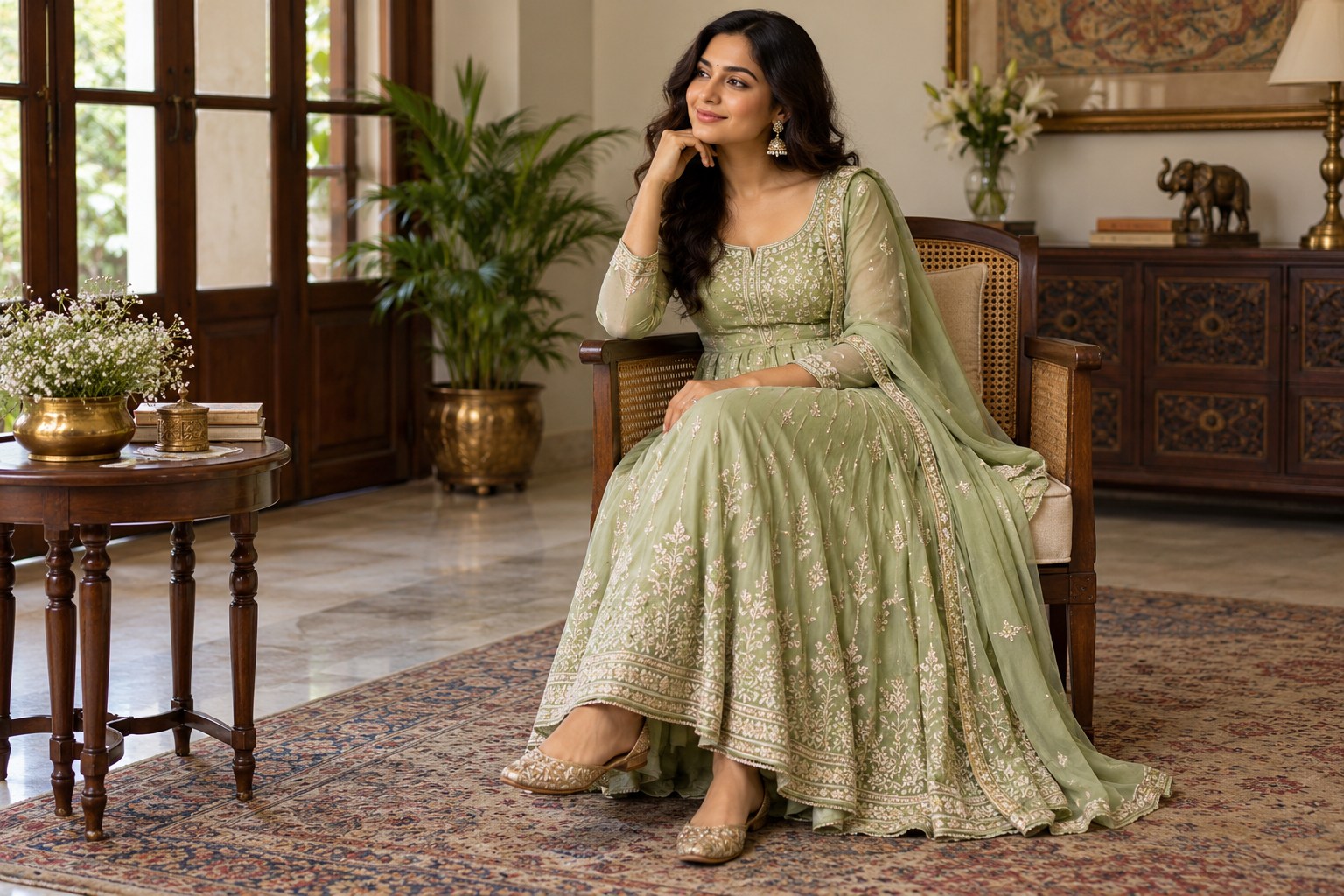
AI-generated illustration. Items shown are illustrative, not specific products for sale.
An anarkali can look wonderfully fluid while standing and feel quite different after half an hour in a chair. The fitted upper section, gathered or flared lower section and any lining all affect that experience. For an event with a long meal, performance or ceremony, make sitting part of the fitting rather than the final check on the day.
Put on the full outfit, including the lower layer and footwear. Sit in a chair similar to the one you expect, if you can. Notice whether the seam beneath the bust or at the waist presses, whether buttons pull and whether the fabric gathers into a hard ridge behind you. A decorative belt can add another pressure point; compare the outfit without it before assuming the garment itself is uncomfortable.
When sitting, lift and settle the fabric gently so you are not sitting on a dense fold or a cluster of embellishment. The aim is not to spread the skirt across neighbouring chairs. Leave enough room around your legs to stand without stepping on the hem. If there is a long back hem, ask someone to look at it while you rise; a mirror view from the front will miss it.
Heavy embroidery near the lower skirt may make the fabric less willing to fold. Try sitting for several minutes instead of performing one quick sit-and-stand. If the event includes floor seating, test that separately within your own range of movement. An outfit suitable for a dining chair may not give the same ease on the floor. Confirm the venue arrangement rather than guessing from the type of ceremony.
Raise your arms as if adjusting your hair, reach for a glass and turn to speak to someone beside you. Check that the armholes and sleeves allow those movements without pulling the neckline. If the dupatta is pinned, repeat the test with the pin in place. A very secure drape can become restrictive when it is attached at two points that need to move independently.
Jewellery should also be tested seated. A long necklace may land against a table edge or disappear into the folds. A bracelet can catch an embroidered sleeve when you rest your forearms. Smaller pieces are one solution, but relocating the detail can be enough: earrings may provide the decoration you want while leaving hands and chest clear.
For footwear, favour the pair that works with the hem and the route to your seat. A lower shoe may be comfortable in itself yet make a previously fitted hem too long. Recheck the full length after any footwear change. If the outfit needs a significant adjustment, discuss it with a tailor before the event, including the lining and any border that limits hemming options.
Pack a bag that can sit beside you or hang securely from its own strap without occupying your lap all evening. That leaves space for the fabric to settle naturally. A successful seated outfit is one you can stand up from without rearranging every layer before taking a step.
A ceremony followed by a restaurant meal can involve very different seats. If the first part uses low seating and the second uses dining chairs, test both rather than choosing the outfit for whichever looks easier. You may find that the anarkali's upper seam is comfortable in a chair but its lining limits the position you need lower down. A different garment may be a better option than trying to loosen one seam without understanding the construction.
If you will carry a warm layer, try placing it where you expect to keep it while seated. A folded coat on your lap can add pressure on top of an already full skirt. Ask about a place to leave it or choose a less bulky layer if the temperature allows. Small logistics can make more difference to comfort than another accessory change.
Leave time between dressing and departure to sit once more in the finished outfit. Hair, jewellery and the final dupatta arrangement may alter how the neckline feels compared with the earlier fitting. This last check should confirm a settled combination, not start a new round of pinning and tightening.
Indian wear & mixing
Check the kurta’s side openings and the trouser taper so the two shapes move comfortably together.
Indian wear & mixing
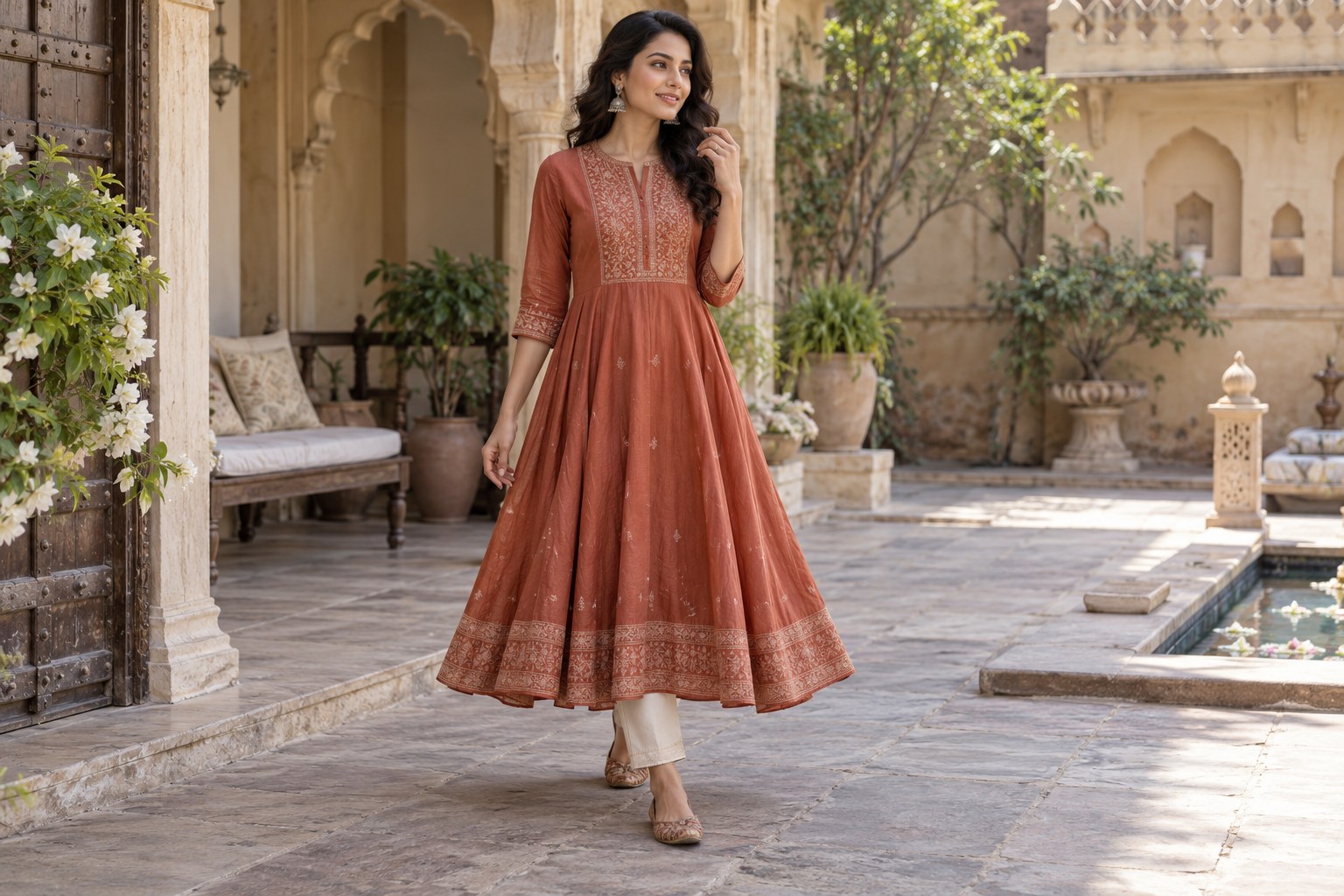
Let a flared kurta move freely above a narrower trouser shape, with enough room at both waist and thigh.
Indian wear & mixing
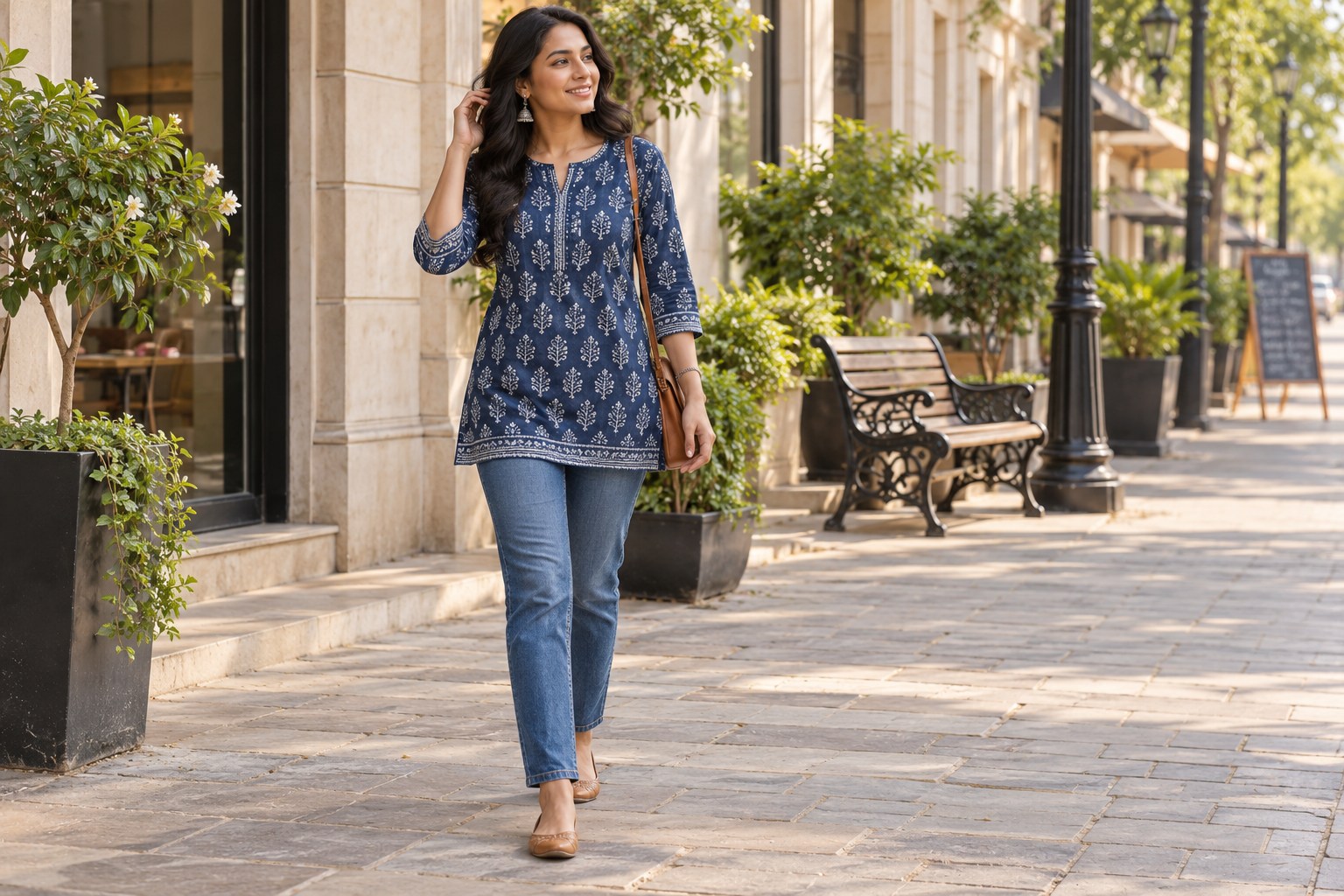
Choose the kurti length and jean rise together, then check how the hem behaves over pockets and waistbands.