Indian wear & mixing
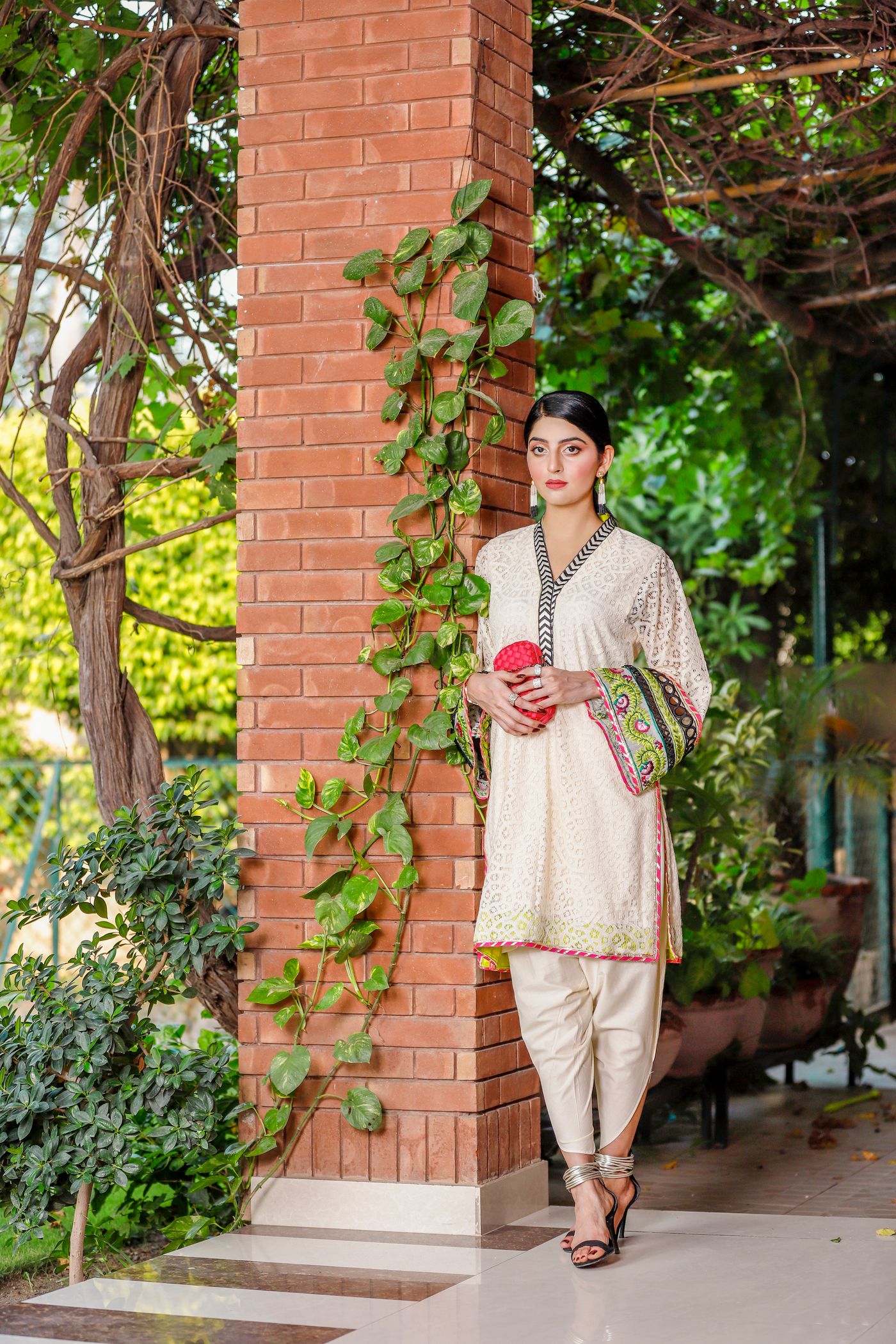
Wear a straight kurta with tapered trousers
Check the kurta’s side openings and the trouser taper so the two shapes move comfortably together.
Clothes, accessories & the ways to wear them
Indian wear & mixing
Bring a traditional textile into a contemporary outfit without losing sight of its scale, construction and care needs.
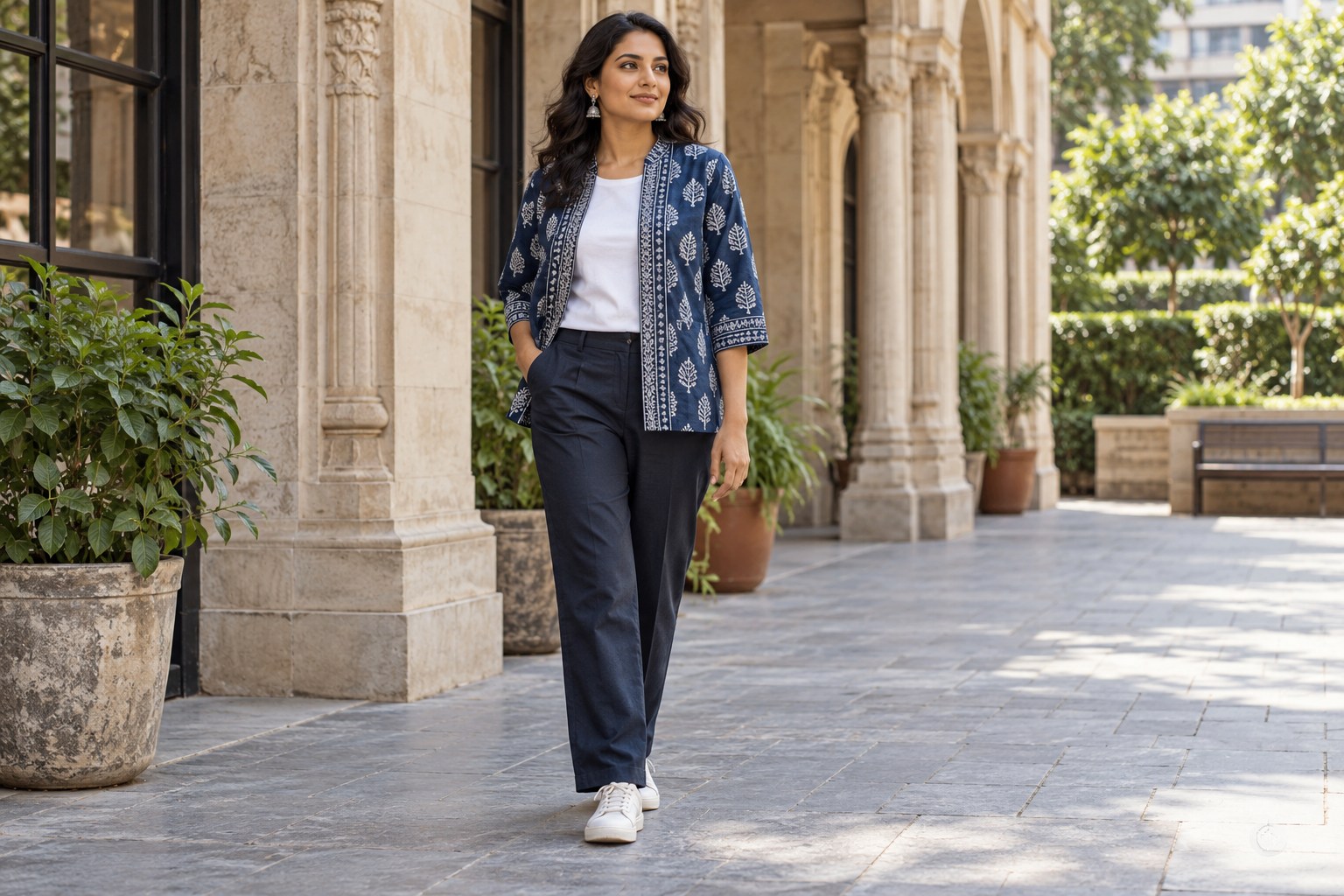
AI-generated illustration. Items shown are illustrative, not specific products for sale.
A woven stole, printed skirt or textile jacket can sit naturally beside jeans, a plain shirt or tailored trousers. You do not need to add several other traditional garments to justify wearing it. Begin with the piece itself: where is the pattern strongest, how does the fabric move, and which part should remain visible once a bag and outer layer are added?
The word traditional covers many different textiles and techniques. If you know the maker, region or process, use that information accurately. If you do not, describe what you can see rather than assigning an origin from a motif. A garment's appearance alone does not establish whether it is handwoven, hand-printed or made by a particular community. Seller information can help, especially when it explains the actual production method rather than only offering a style name.
Try a patterned jacket with the straight trousers you already wear often. Their familiar fit makes it easier to judge the jacket's length and volume. A plain cotton shirt beneath can keep the opening clear, while a low-detail top lets the textile become the only pattern. Close and open the jacket before deciding which version you prefer; the amount of fabric visible can alter the balance considerably.
A textile skirt works differently. With a crisp shirt, the waistband becomes an important boundary. A full tuck makes that boundary clear, but it may add bulk or pull at buttons when you sit. An untucked shirt with a deliberate hem can work just as well. Do not keep tucking and tightening simply because the pairing is usually photographed that way. The shape should survive the activities you have planned.
For a stole over jeans and a T-shirt, choose how much width to show. A broad drape displays the pattern; a narrow fold makes it more like a line of colour. If there are fringes or a contrasting border, arrange them where they will not catch in a zip or bag clasp. One draping method may suit walking while another is better for a seated meal.
An outfit does not become one laundry load just because its pieces look good together. Check each item's care information, particularly where decorative threads, linings or trims differ from the main fabric. Remove brooches and jewellery before putting garments away, and inspect contact points after wear. A bag with rough hardware may be harmless against denim but unsuitable against a loose weave.
Finish by considering what you want the combination to say visually. If the textile is the focus, repeat one of its quieter colours in the shoes or bag. If you enjoy a more mixed outfit, add a second pattern at a different scale and compare them together. You can make a personal combination without presenting it as a rule about how that textile ought to be worn.
Consider a patterned textile jacket you want to wear both to a relaxed office and to dinner. For the office, try it over a plain shirt with straight trousers and shoes suitable for the commute. Check whether the shirt collar sits outside the jacket neatly or competes with its neckline. If both collars are prominent, a collarless inner top may give the textile more room without changing the trousers.
For dinner, keep the jacket and trousers but compare a softer neckline and a smaller bag. This may be enough of a change; adding large earrings and a necklace at the same time could hide the jacket's upper detail. If the jacket is long and heavily patterned, a short necklace inside the opening can be clearer than a pendant that lands across the textile.
Photograph both combinations and note the practical differences, including which bag strap is kindest to the weave. You now have two tested uses for one textile piece. This approach is more useful than declaring it universally versatile, because it shows exactly where the garment works in your own routine and where a different layer might still be needed.
Indian wear & mixing
Check the kurta’s side openings and the trouser taper so the two shapes move comfortably together.
Indian wear & mixing
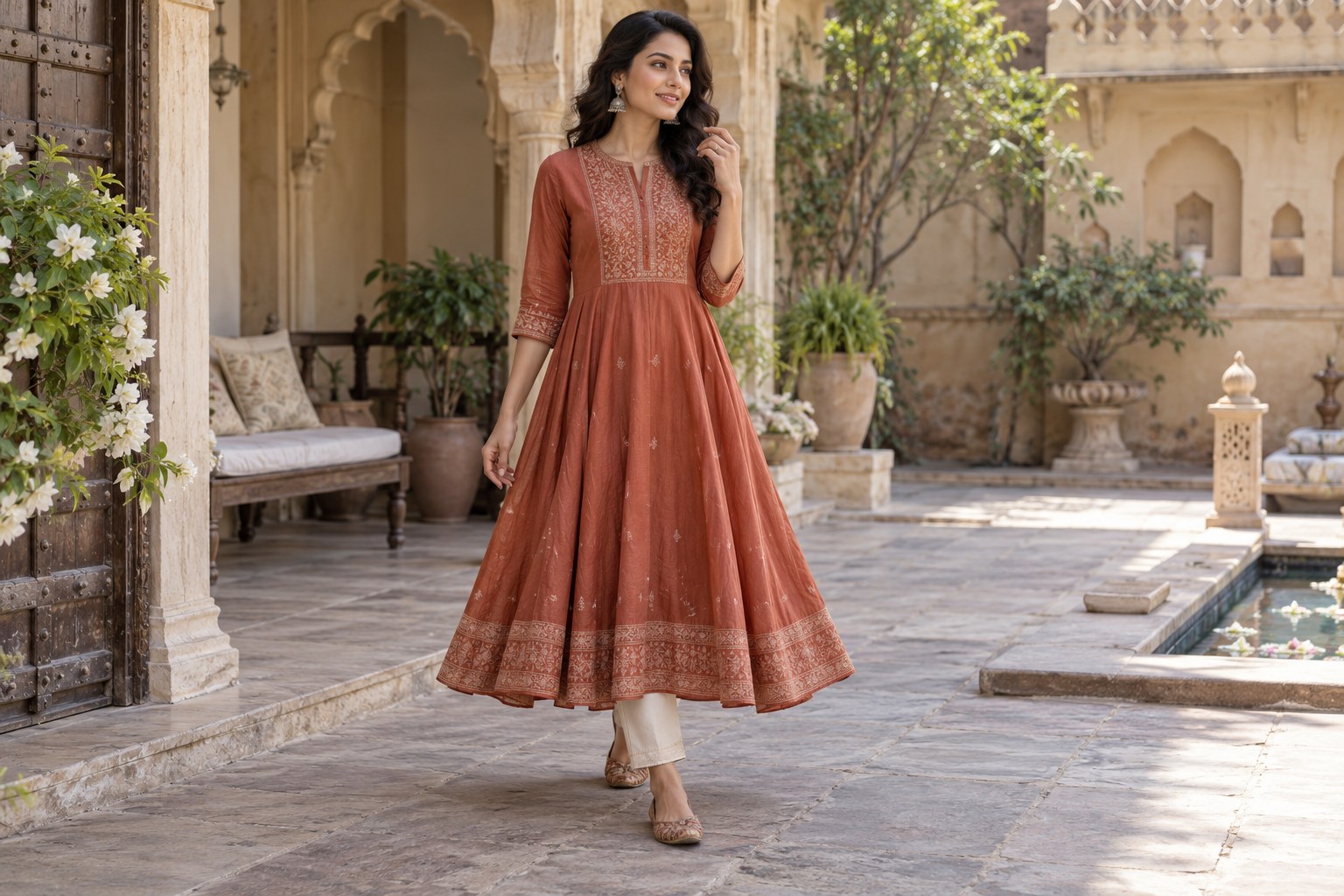
Let a flared kurta move freely above a narrower trouser shape, with enough room at both waist and thigh.
Indian wear & mixing
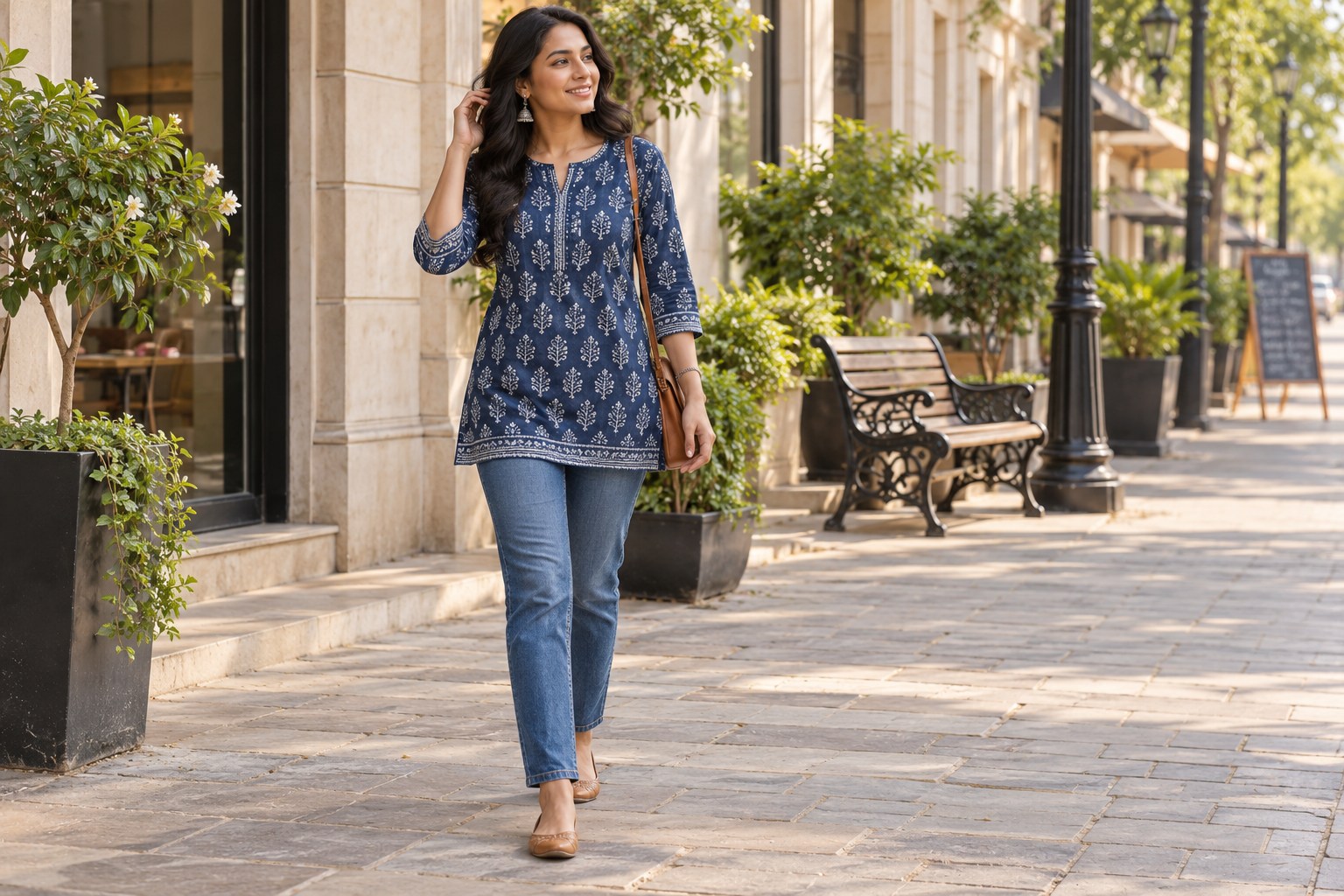
Choose the kurti length and jean rise together, then check how the hem behaves over pockets and waistbands.