Indian wear & mixing
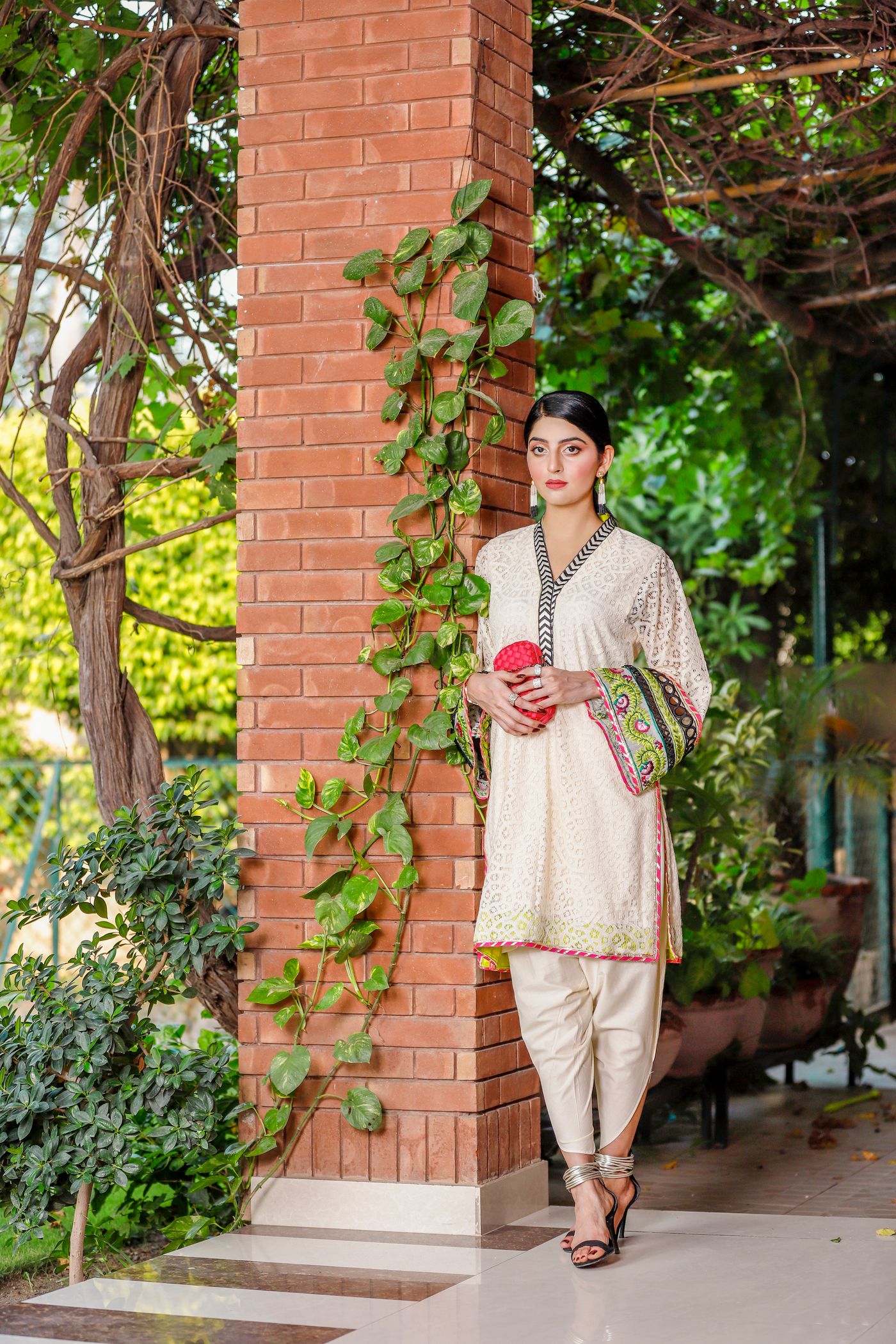
Wear a straight kurta with tapered trousers
Check the kurta’s side openings and the trouser taper so the two shapes move comfortably together.
Clothes, accessories & the ways to wear them
Indian wear & mixing
Let a contrasting dupatta do the visual work before introducing more strong colours or decoration.
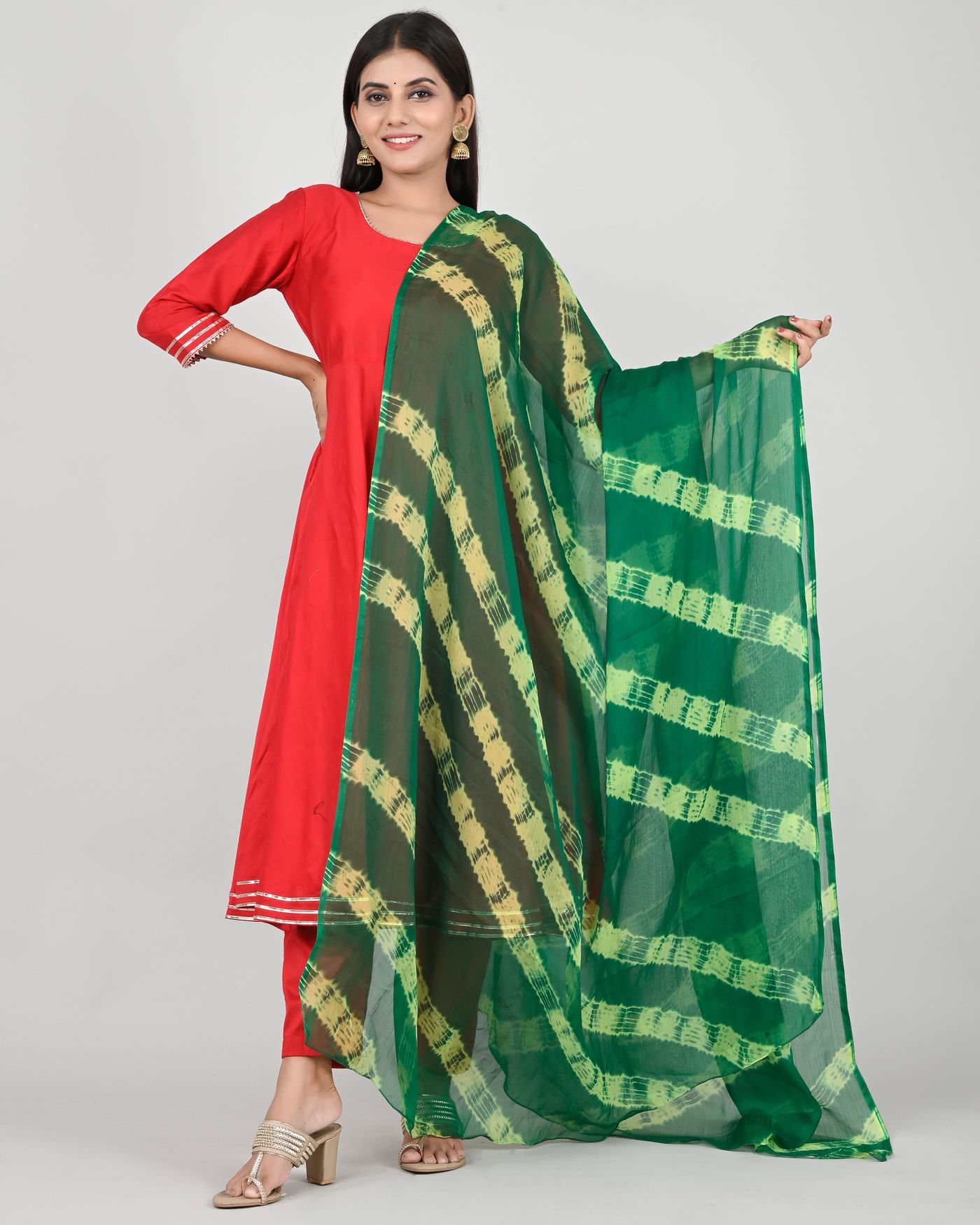
A contrast dupatta can change a plain set in seconds, but the contrast itself is already a strong design choice. A magenta dupatta over a charcoal kurta, for example, does not need an equally bright bag to make the outfit complete. Put on the base set and dupatta first. Then identify whether you want the focus to be its colour, its border or the way it is draped.
Contrast can come from lightness as well as hue. A pale dupatta over a deep-toned set is noticeable even when both colours are quiet. Texture can also create separation: a patterned or sheer layer may stand apart from a smooth solid base. This gives you options if you want a distinct dupatta without adding another saturated colour.
An accessory can repeat a colour, add a metal surface or remain visually unobtrusive. It does not have to perform all three jobs. With a strong dupatta border, earrings in one of the border's tones can connect the outfit. A plain bag in the kurta colour leaves the drape prominent. Shoes can be neutral or repeat the base, depending on what you already own and the event's demands.
If you want a statement necklace as well, try it with the dupatta arranged in its real position. A necklace that sits beneath a broad fold may be almost invisible; one that rests on top may catch the fabric. Moving the drape to one shoulder can give each element more space, but it changes how secure the dupatta feels. Test that choice while walking and carrying your bag.
Take a full-length photograph and look at it at a small size. This can show which details dominate more clearly than a close mirror view. If your attention moves between several unrelated bright areas, decide which one matters most. You might keep the coloured bag and choose smaller earrings, or retain bold jewellery and use quieter footwear.
There is no universal limit of two focal points. The point of this exercise is to make your choices visible. If you enjoy a richly layered combination, keep it. If you wanted the dupatta to transform a simple outfit, let it remain the clearest change. A final movement check should confirm that the drape, jewellery and strap can coexist without being rearranged every few minutes.
Indian wear & mixing
Check the kurta’s side openings and the trouser taper so the two shapes move comfortably together.
Indian wear & mixing
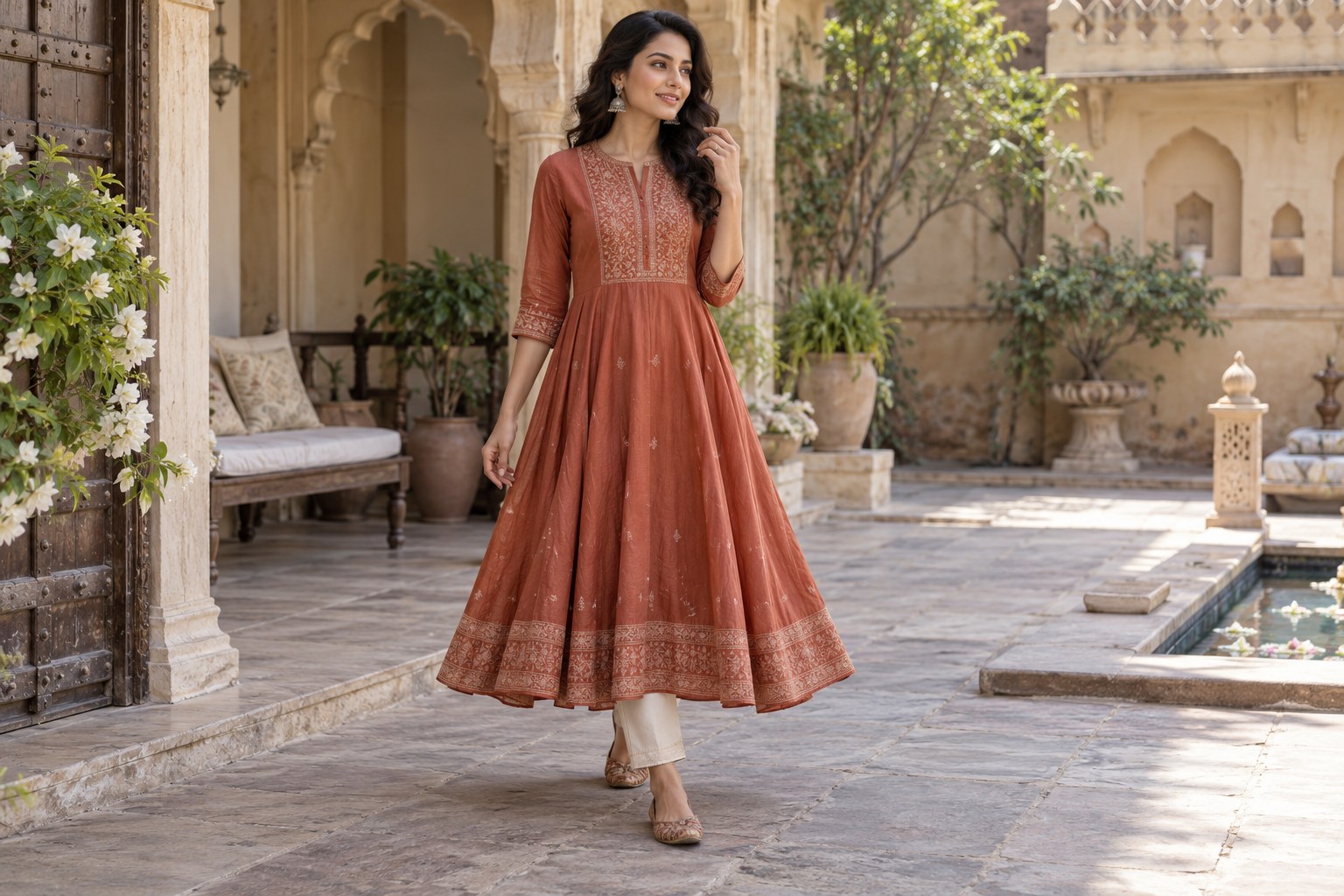
Let a flared kurta move freely above a narrower trouser shape, with enough room at both waist and thigh.
Indian wear & mixing
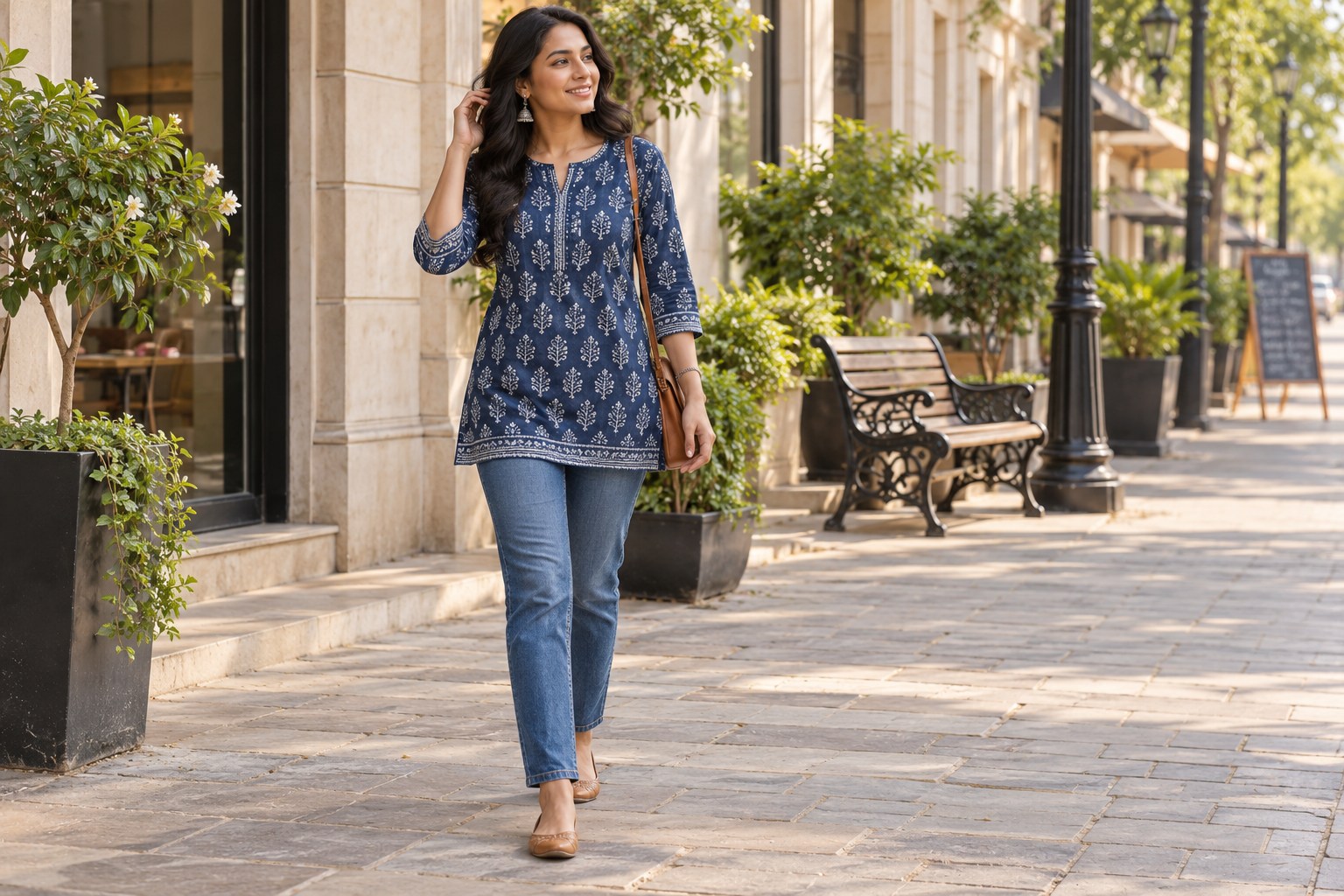
Choose the kurti length and jean rise together, then check how the hem behaves over pockets and waistbands.