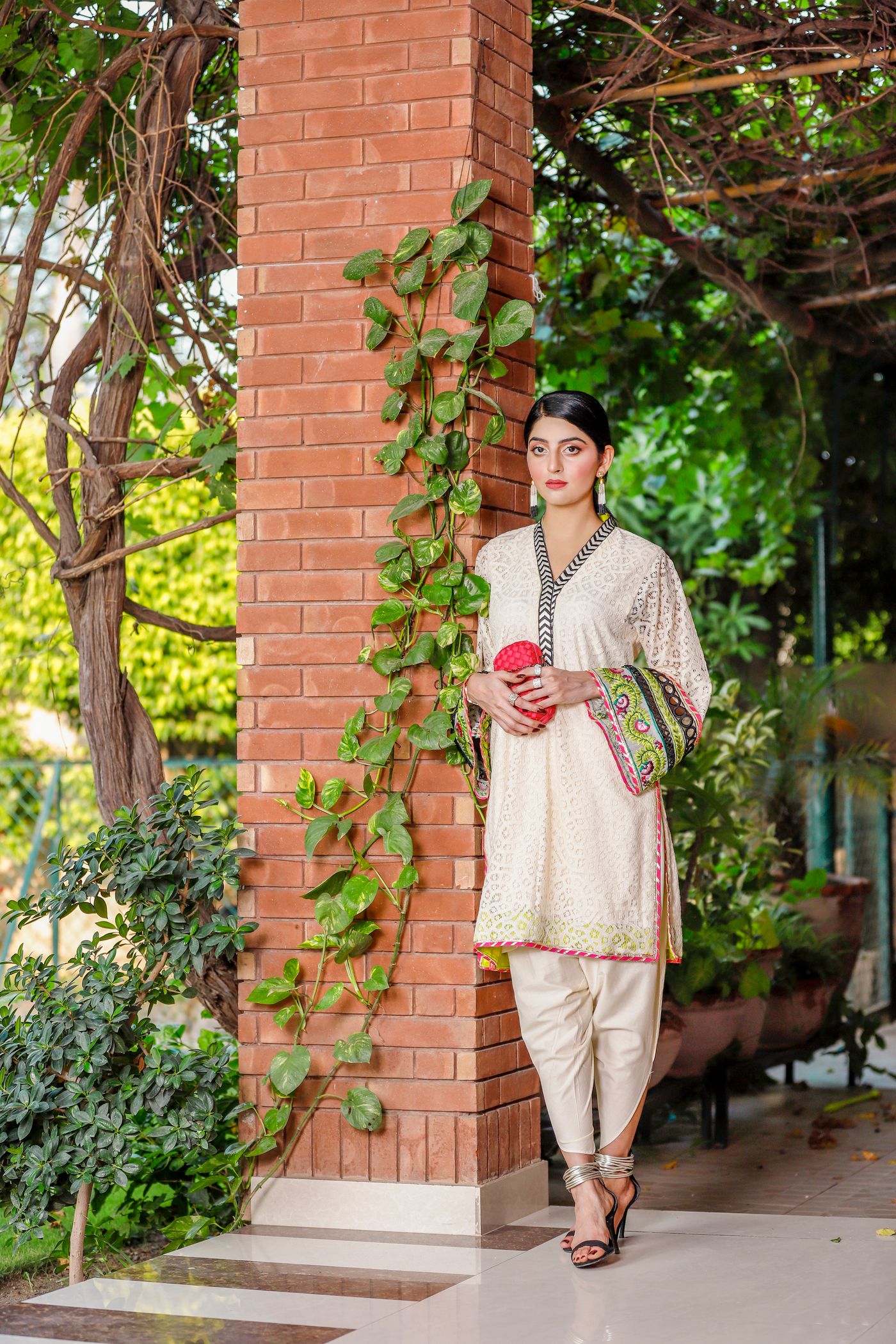
Indian wear & mixing
Wear a straight kurta with tapered trousers
Check the kurta’s side openings and the trouser taper so the two shapes move comfortably together.
Clothes, accessories & the ways to wear them
Indian wear & mixing
Let the scale and placement of an ikat pattern guide the rest of the outfit.
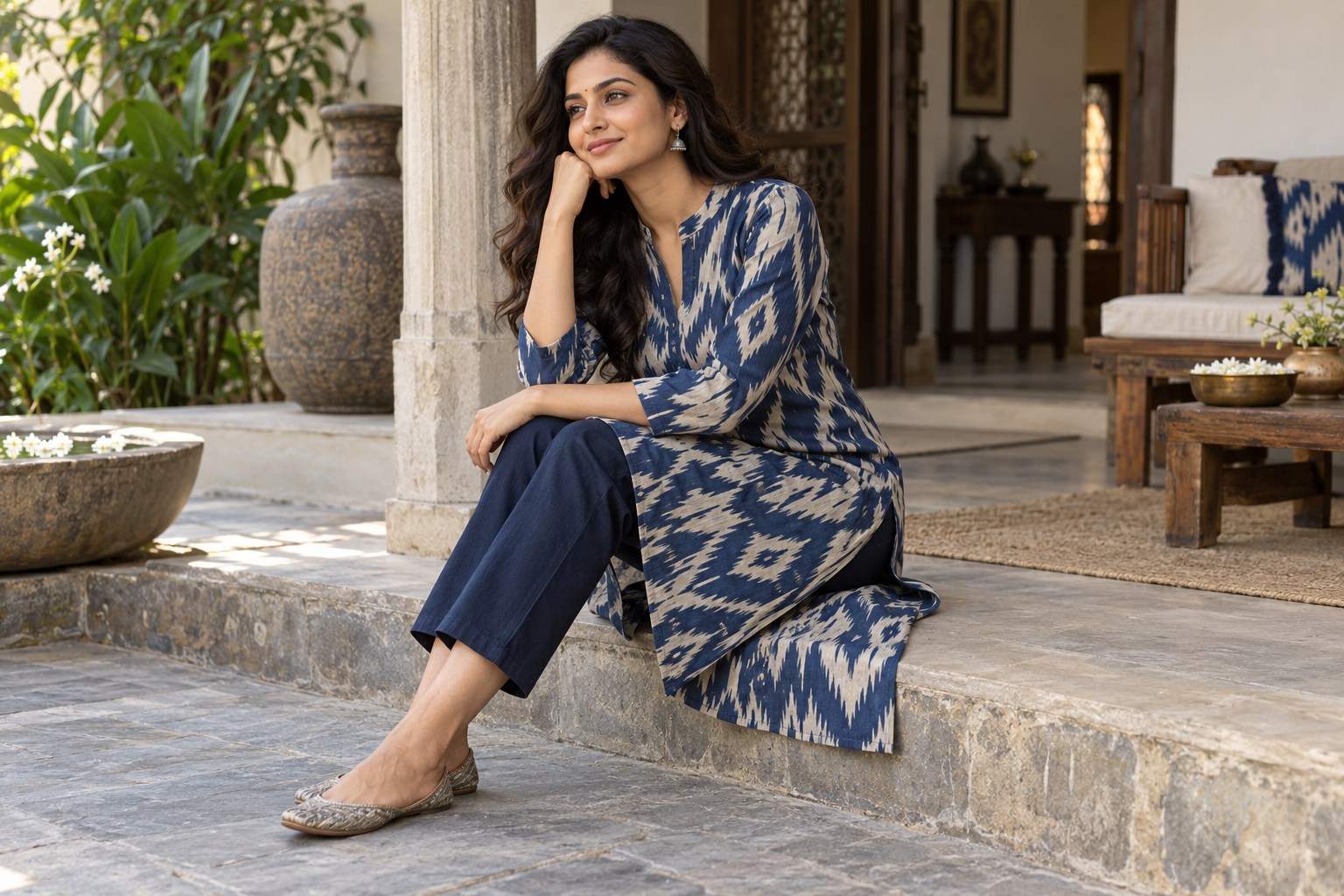
AI-generated illustration. Items shown are illustrative, not specific products for sale.
Ikat is a textile technique in which yarn is resist-dyed before weaving; it is not simply a name for every blurred geometric print. The V&A describes the technique across different textile traditions. When choosing a garment, distinguish an identified woven ikat from an ikat-inspired printed design. Both can be worn in an outfit, but the description should match what you are buying.
Once the piece is in your wardrobe, its visual scale is the useful starting point. A kurta with large repeated shapes occupies more visual space than one with fine, closely spaced marks. Try it against plain trousers first so you can see the pattern clearly. Then decide whether another print would add something you enjoy or merely make the outfit harder to read.
Suppose an ikat skirt contains indigo, cream and small rust accents. A cream shirt provides a pause beside the pattern. A rust top draws attention to a smaller colour without copying the whole design. An indigo top creates a more continuous block of colour. These are three different effects, so compare them rather than looking for a single correct match.
If the garment has a border, check where the top or jacket ends. Covering half the border can make its placement seem accidental. A shorter top may display it fully; a longer one may hide it deliberately. Fold the top temporarily to compare lengths before changing the garment. With a kurta, the trouser length and footwear can provide a similar clear break below a patterned hem.
Large geometric earrings can echo a geometric textile, but repeating every shape is unnecessary. A smooth hoop, simple stud or plain cuff can introduce a different surface. Try jewellery at a distance from the mirror as well as close up. An earring that looks distinct in your hand may merge into a patterned shoulder once worn.
A solid bag is an easy starting point because its outline remains visible. Check straps against the weave and any raised threads; a decorative chain can rub at exactly the area you want to preserve. If you prefer a patterned bag, use a different scale and give the two patterns one shared colour. The result can be lively without requiring every accessory to compete for attention. Leave room for the textile's own rhythm to be seen.
Indian wear & mixing
Check the kurta’s side openings and the trouser taper so the two shapes move comfortably together.
Indian wear & mixing
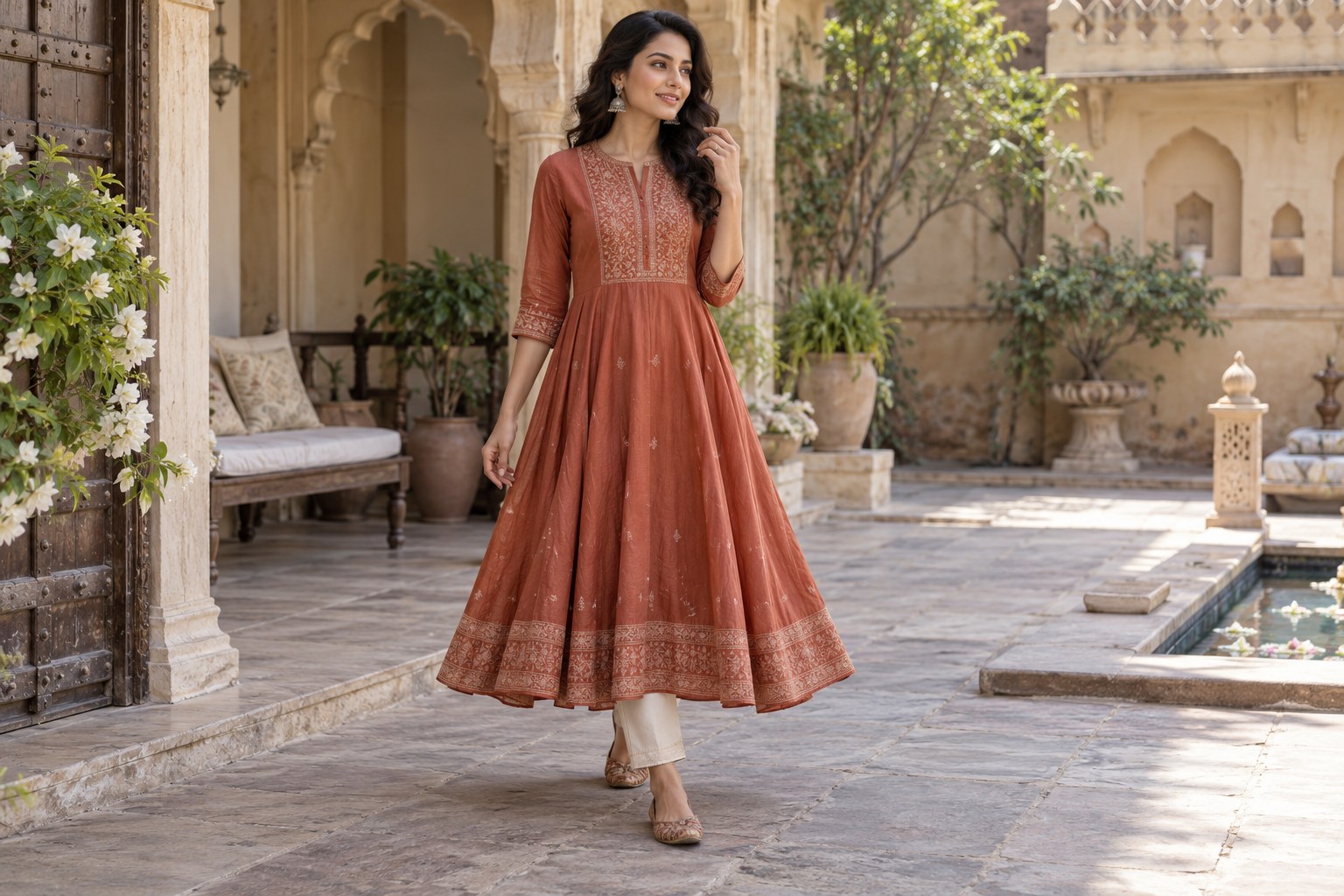
Let a flared kurta move freely above a narrower trouser shape, with enough room at both waist and thigh.
Indian wear & mixing
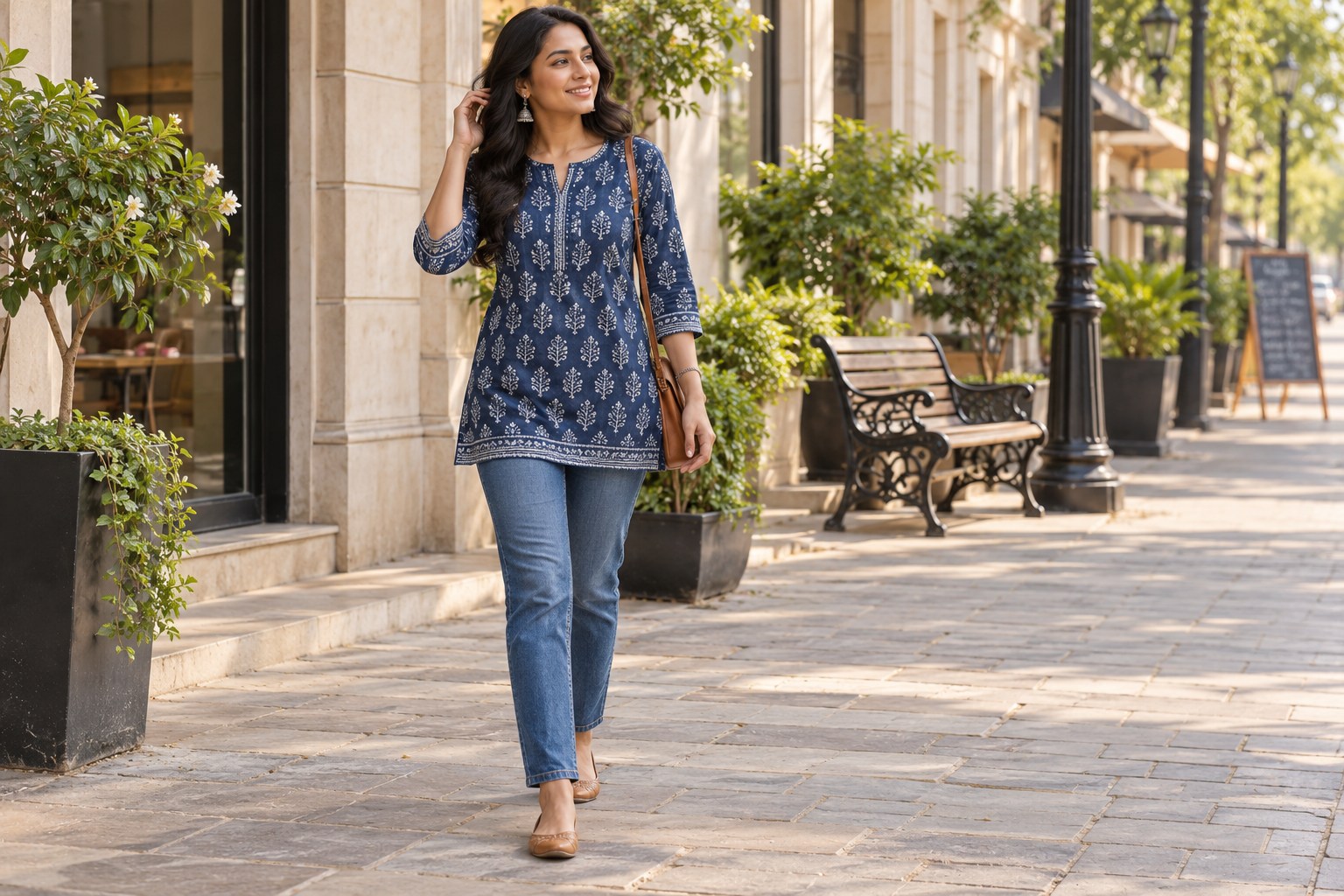
Choose the kurti length and jean rise together, then check how the hem behaves over pockets and waistbands.