Indian wear & mixing
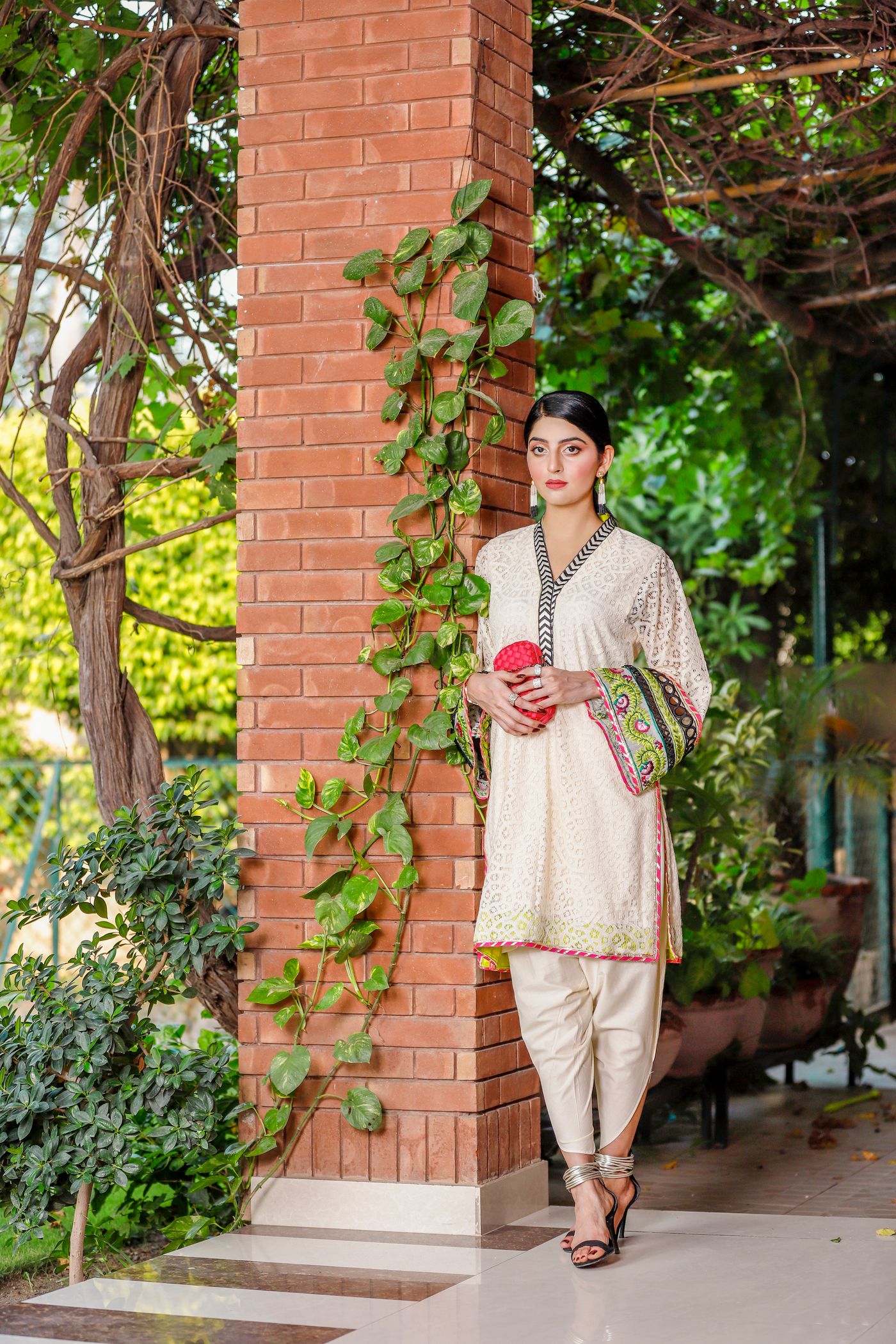
Wear a straight kurta with tapered trousers
Check the kurta’s side openings and the trouser taper so the two shapes move comfortably together.
Clothes, accessories & the ways to wear them
Indian wear & mixing
Plan warmth beneath and around a saree while keeping the drape, fastening and footwear workable.
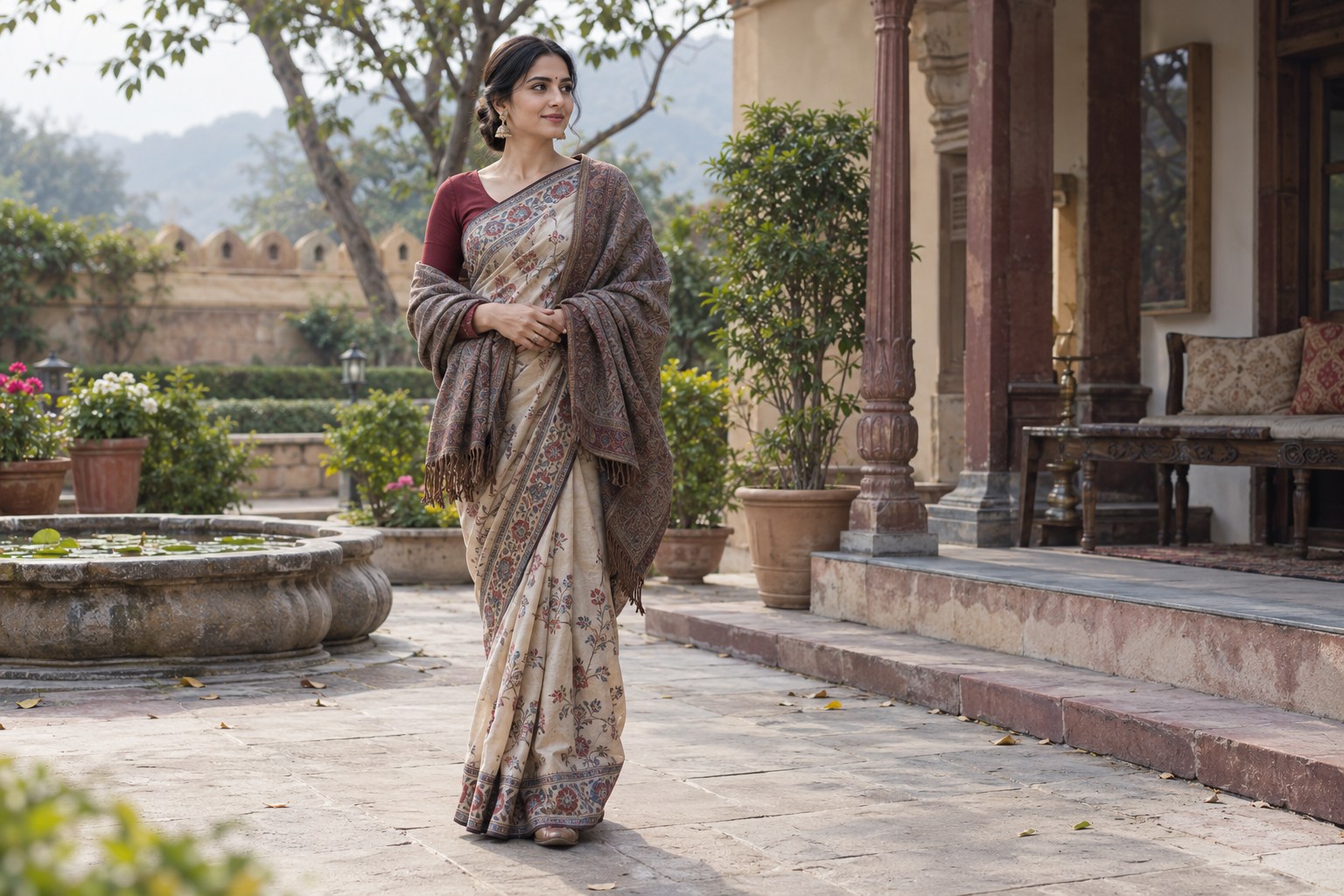
AI-generated illustration. Items shown are illustrative, not specific products for sale.
Cooler-weather saree dressing starts with the actual conditions: a short outdoor walk between heated rooms requires a different layer from an evening spent on a terrace. List where you will be and how long you will stay there. Then choose a warm layer that can be worn or removed without dismantling the drape. Colour coordination comes after that practical decision.
A blouse with longer sleeves may provide some additional coverage, but its fabric and fit matter more than sleeve length alone. Try it with the saree and any underlayer you intend to use. Check that the neckline, armholes and sleeve seams remain comfortable when the pallu is in place. If you are considering a thin inner layer, make sure it does not show where you do not want it to or create ridges beneath a fitted blouse.
A tailored coat or jacket can sit over the saree, but it needs room for the drape at the shoulder and across the front. Put it on after arranging the saree, then close it. Notice whether the pallu is compressed into a thick fold, whether a pin presses against you or whether the coat pulls the shoulder line out of place. Repeat the check with your arms extended forward as if carrying a bag.
If you want the pallu visible over the outer layer, test how it stays in position. The outer fabric may be more slippery than the blouse, and its shoulder seam may change where the drape settles. Do not assume the same pin placement will work. Any fastening should be appropriate for both fabrics and easy to remove without pulling threads. A loose coat you can take off easily may be more convenient than a highly fitted jacket trapped beneath the drape.
A shawl is another option, particularly for a seated event. Try it with the pallu rather than treating both as independent decorative layers. Two broad textiles over one shoulder can become bulky and restrict arm movement. You may prefer a narrower shawl fold, a different shoulder or an outer coat that leaves the hands free. Choose the arrangement that you can maintain while eating and greeting people.
Closed shoes or ankle boots can change the required saree length. Wear the intended pair while draping, and walk on a level surface and a step. Make sure the hem does not catch under the heel or trail after you. If you will change into another pair indoors, compare their heights before the event. A large difference can make a single drape awkward for one part of the day.
Also consider the upper edge of the shoe. A boot shaft can rub against the inner layer or catch a loose fold, while a low shoe may leave more of the foot exposed than you expected. These are reasons to test the specific pair, not to exclude a whole style of footwear. Use the shoes that suit your route and fit the drape securely.
Imagine arriving with a bag, phone and coat. Can you remove the coat without pulling at the pallu? Is there somewhere to keep it? Can you put it back on without help if you need to leave early? Practise that sequence at home. A combination that looks composed while standing can become inconvenient when several layers must be handled in a narrow entrance.
For a simple starting outfit, a deep-toned saree with a plain long-sleeved blouse and an open, roomy coat can create clear layers. Let one border remain visible and keep the bag strap away from it. Add jewellery only after the warm layers are working. The most useful winter adjustment is the one that lets you remain comfortable while wearing the saree in the way you prefer.
Indian wear & mixing
Check the kurta’s side openings and the trouser taper so the two shapes move comfortably together.
Indian wear & mixing
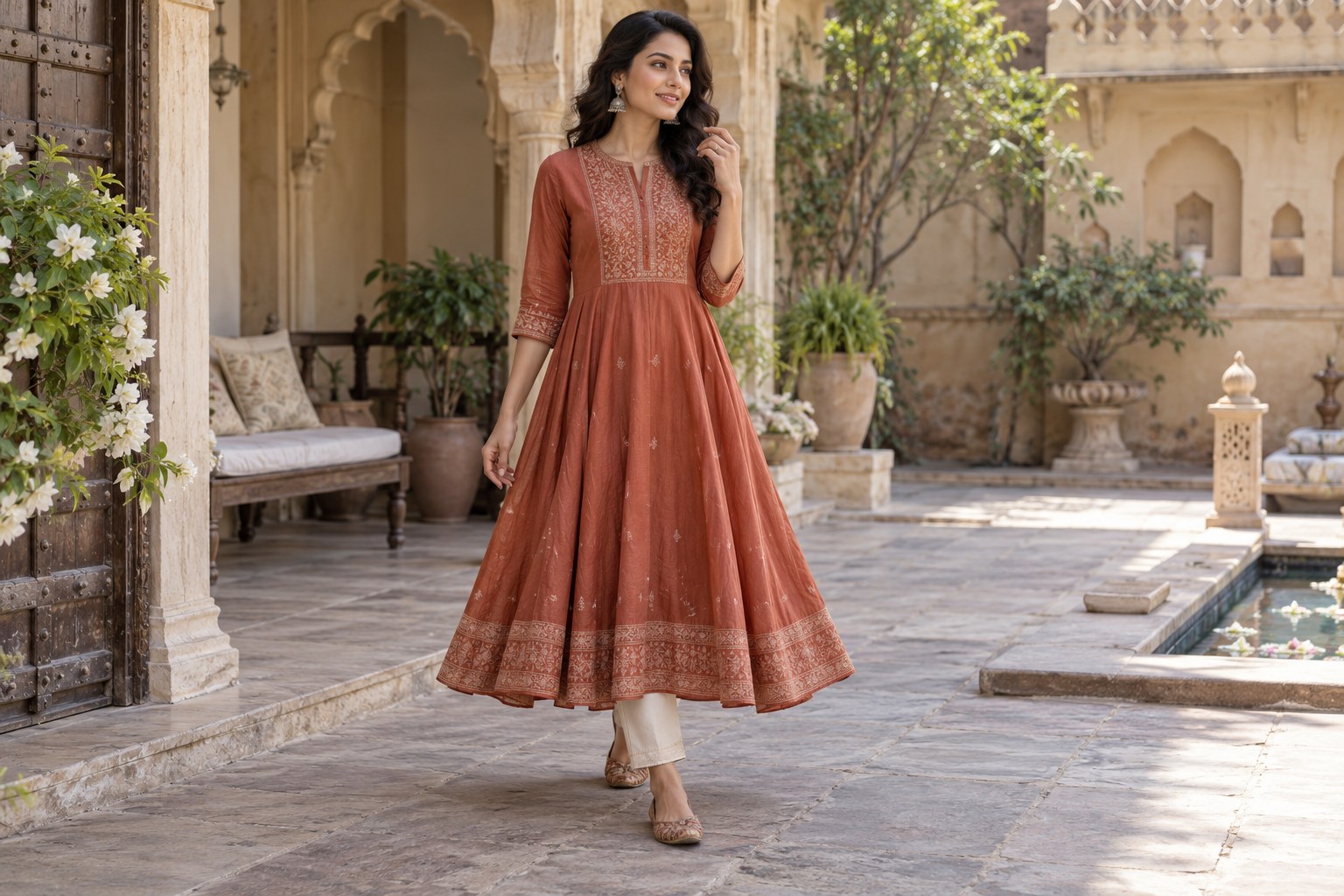
Let a flared kurta move freely above a narrower trouser shape, with enough room at both waist and thigh.
Indian wear & mixing
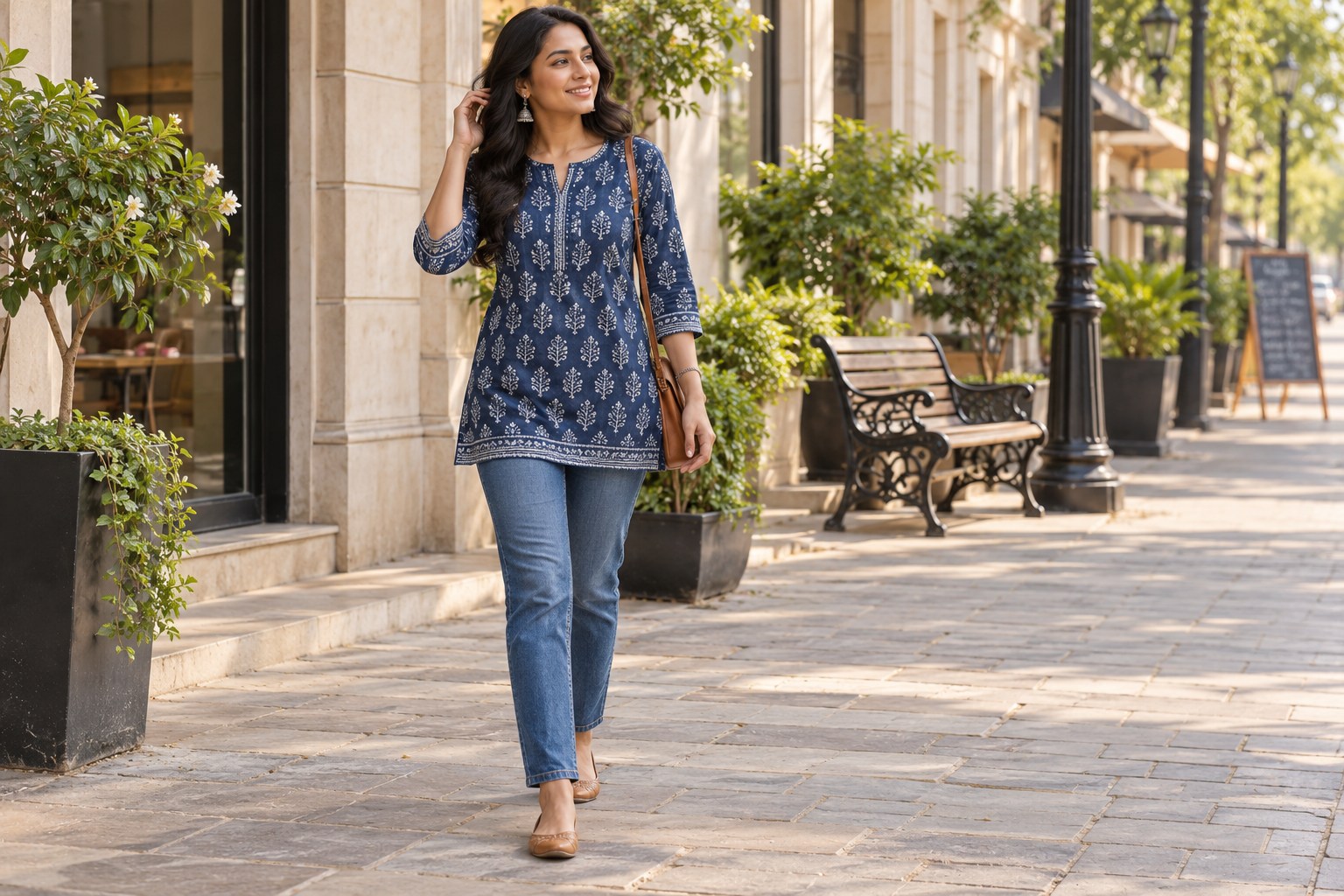
Choose the kurti length and jean rise together, then check how the hem behaves over pockets and waistbands.