Indian wear & mixing
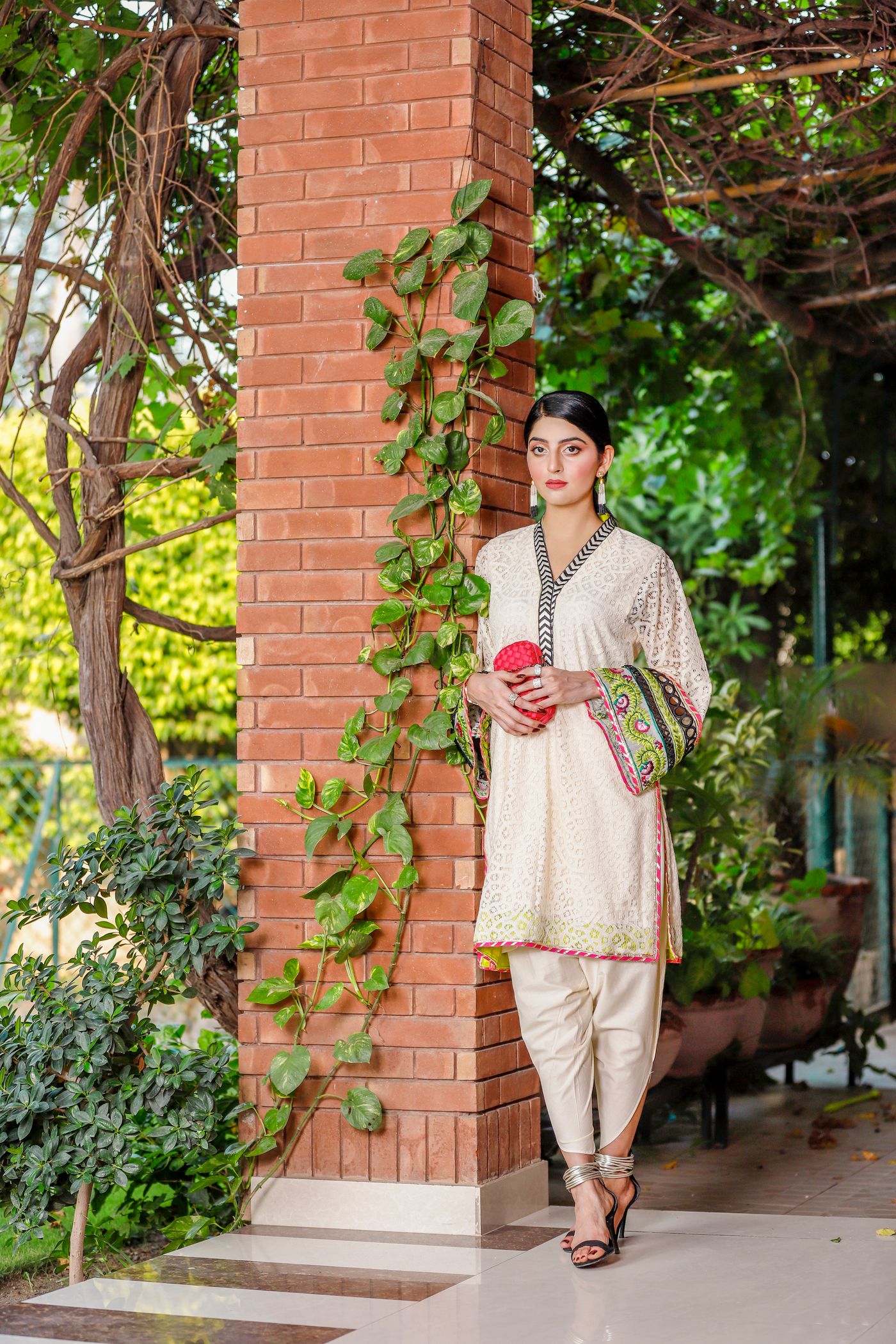
Wear a straight kurta with tapered trousers
Check the kurta’s side openings and the trouser taper so the two shapes move comfortably together.
Clothes, accessories & the ways to wear them
Indian wear & mixing
Use differences in weave, sheen and drape to give a tonal outfit definition without adding another colour.
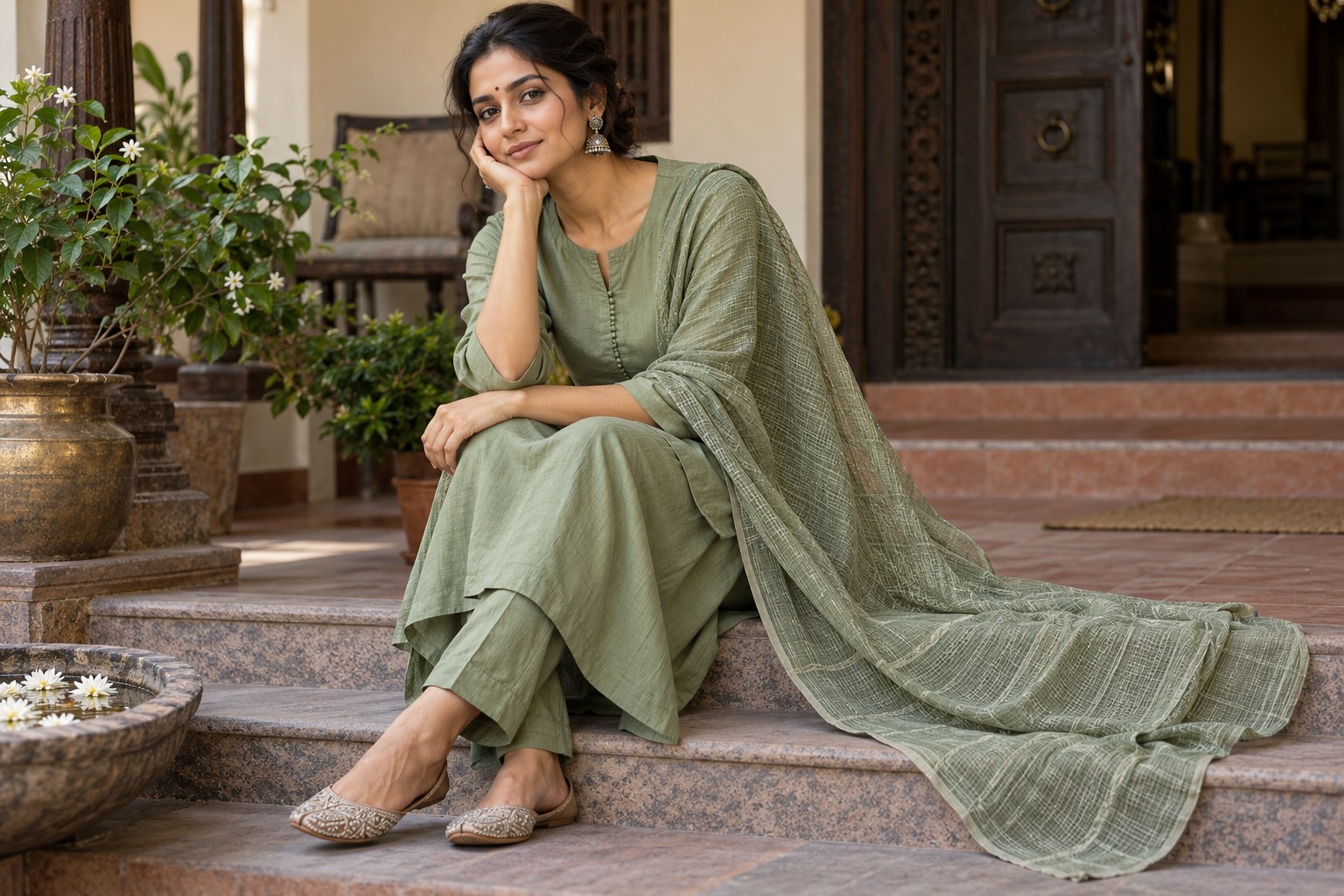
AI-generated illustration. Items shown are illustrative, not specific products for sale.
Two garments can share a colour and still look very different. A matte cotton kurta, softly lustrous trousers and an open-weave dupatta each reflect light and hold their shape differently. In a tonal set, those differences can provide the detail that a contrasting colour would otherwise supply. The aim is to make the layers distinguishable, not to find three fabrics with identical surfaces.
Start with the kurta and trousers in daylight. Are the shades close enough to feel related, or does one look unexpectedly yellow, grey or pink beside the other? A deliberate light-to-dark progression is often easier to use than a near-match that seems wrong only under certain lighting. Check the combination under the indoor light you will wear it in as well.
A textured dupatta is easiest to see when its edge falls over a smoother area. If the kurta already has dense stitching, a similarly detailed dupatta may merge with it. Try a plainer drape or show only the border. With a smooth kurta, a loosely woven or crinkled textile can become the main feature without changing the palette.
Look at the silhouette from a few steps away. A very soft kurta and equally soft trousers may form one flowing shape, which you may enjoy. If you want more definition, introduce a cleaner trouser hem, a structured bag or a more deliberate sleeve finish. These changes create boundaries without requiring a belt or another colour.
Metal jewellery can add a small change in surface. Choose the scale around the neckline: a simple chain may suit a plain open neck, while earrings leave a textured yoke visible. You do not have to match every metal perfectly, but repeating one finish can keep the effect quiet if that is your intention.
Before wearing the set for a long day, check where the textures touch. A rough bag strap can rub a loose weave, and a textured dupatta may catch on raised embroidery. Move the strap or adjust the drape if necessary. A tonal outfit is most successful when its subtle differences remain visible through ordinary movement, rather than relying on a carefully lit photograph to show that there are separate pieces.
Indian wear & mixing
Check the kurta’s side openings and the trouser taper so the two shapes move comfortably together.
Indian wear & mixing
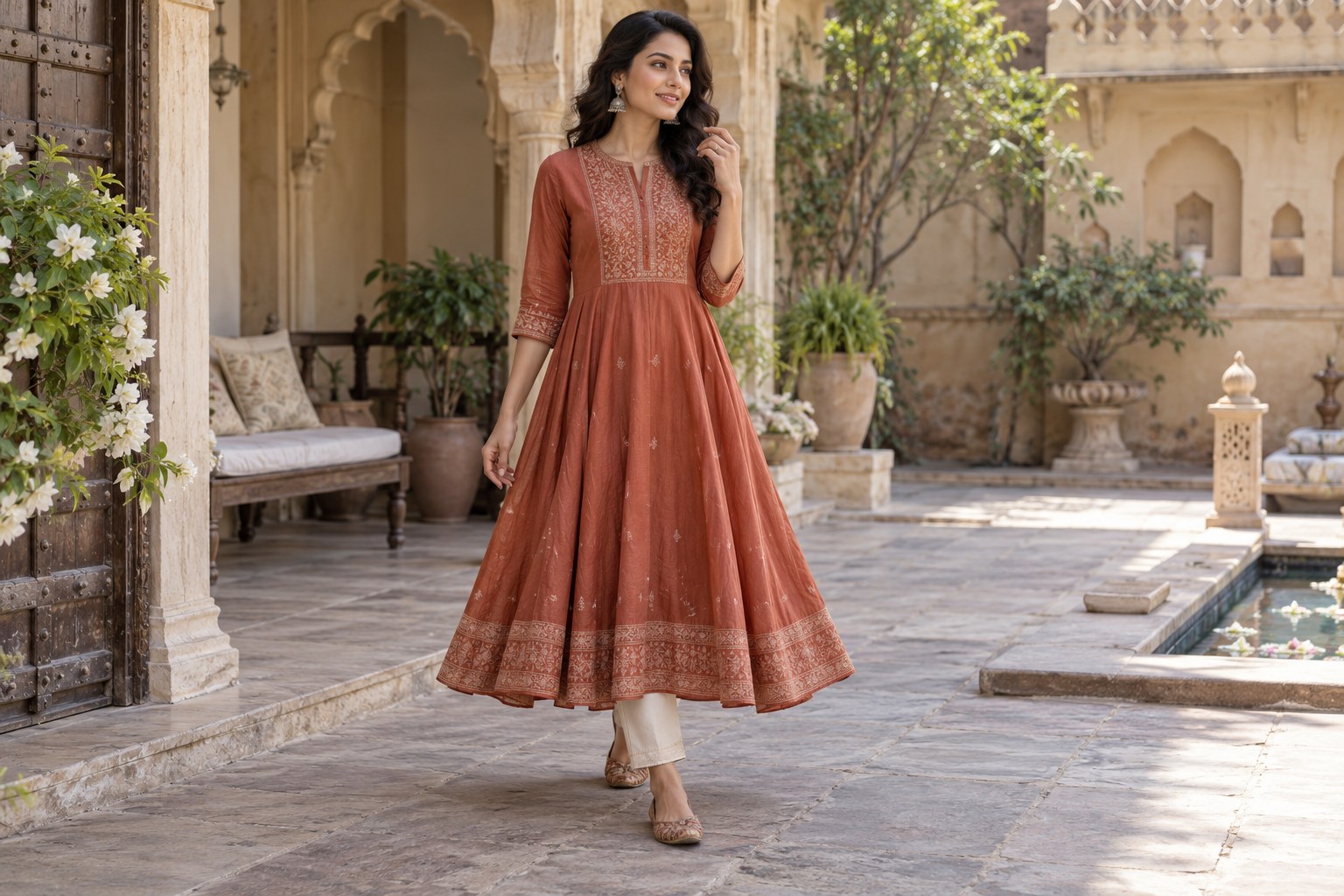
Let a flared kurta move freely above a narrower trouser shape, with enough room at both waist and thigh.
Indian wear & mixing
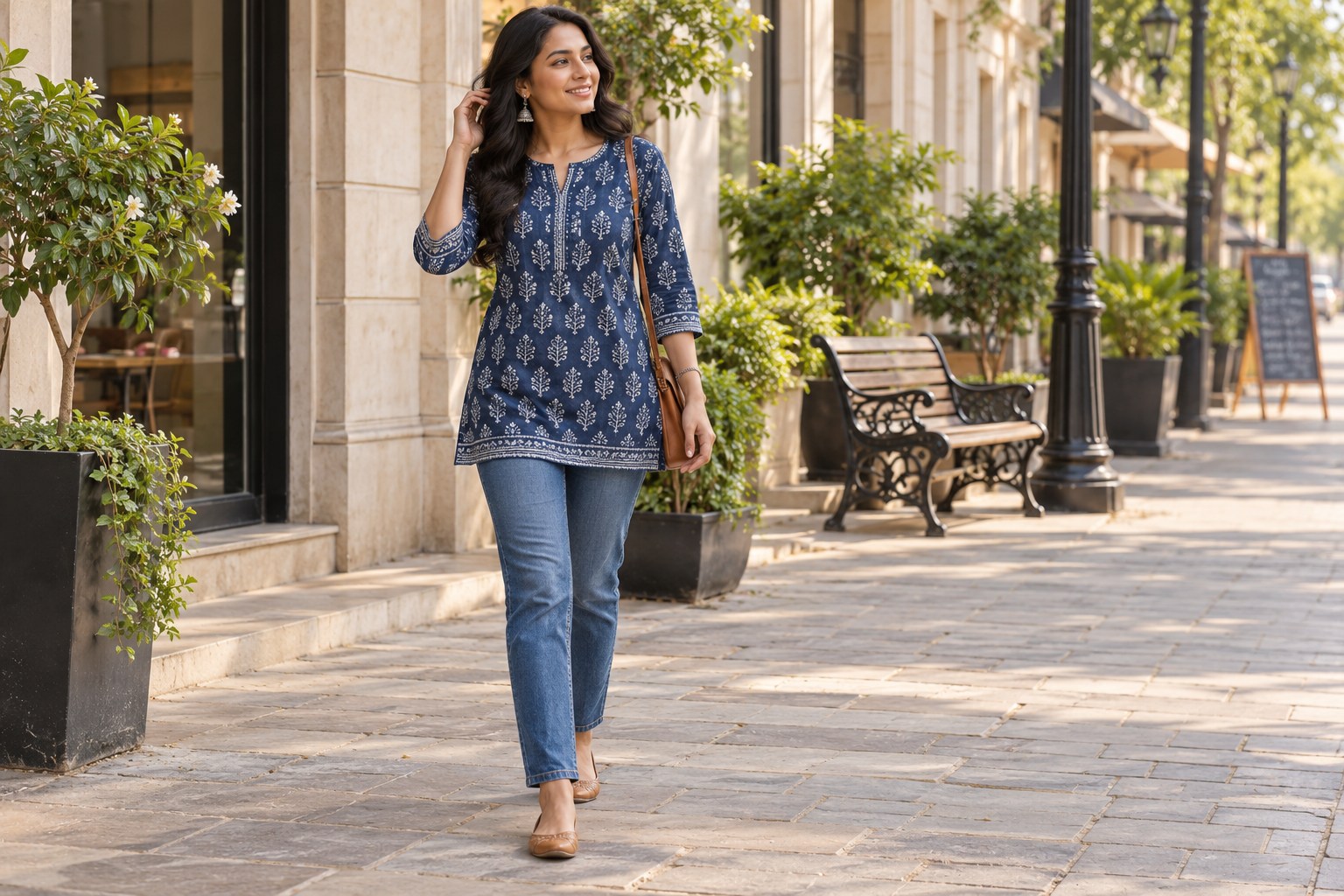
Choose the kurti length and jean rise together, then check how the hem behaves over pockets and waistbands.