Indian wear & mixing
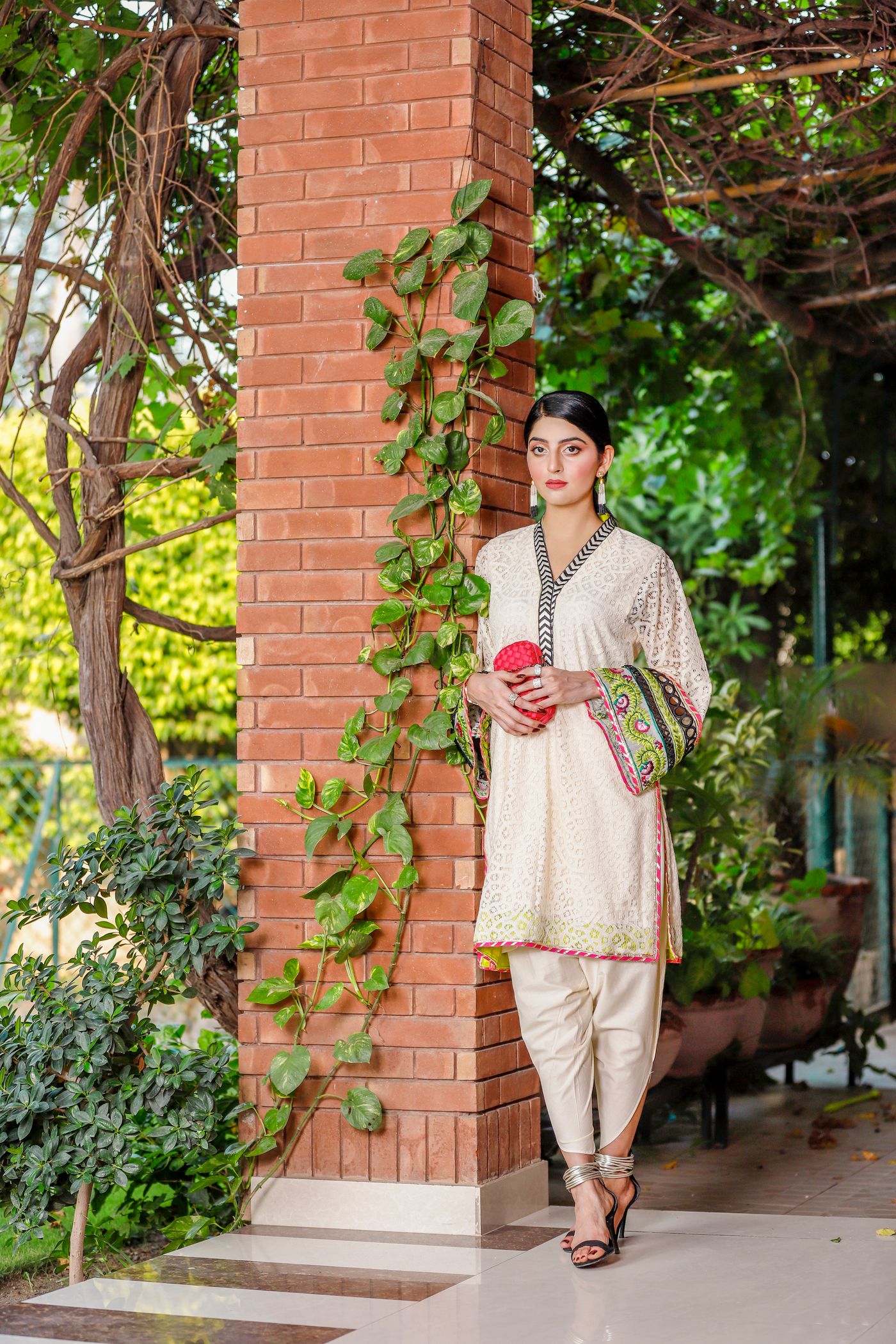
Wear a straight kurta with tapered trousers
Check the kurta’s side openings and the trouser taper so the two shapes move comfortably together.
Clothes, accessories & the ways to wear them
Indian wear & mixing
Choose a contained drape, test it with your bag and use any fastening without putting delicate fabric under strain.
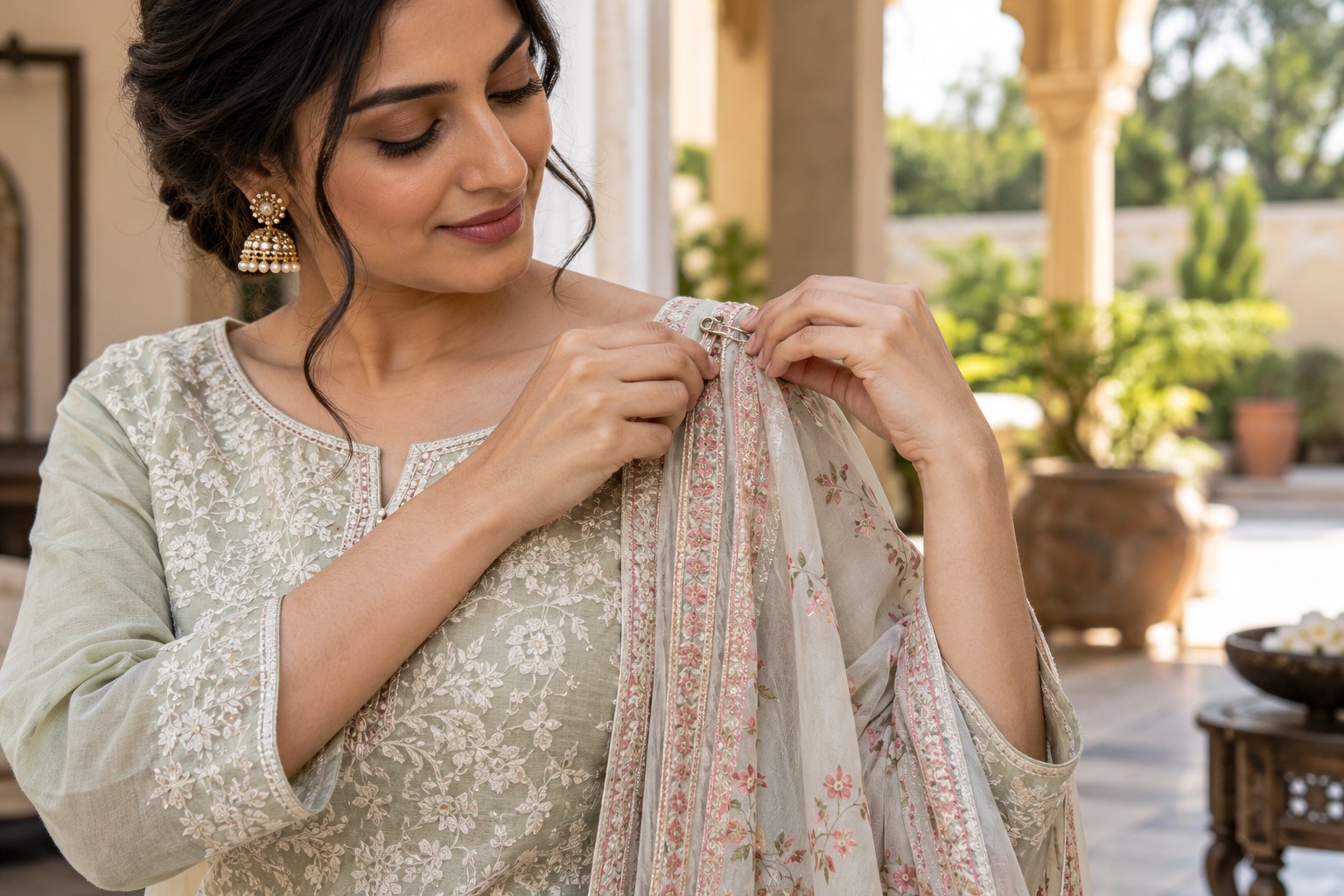
AI-generated illustration. Items shown are illustrative, not specific products for sale.
Keeping a dupatta secure begins with choosing an arrangement that suits the day. An elaborate drape for a seated gathering may be inconvenient when commuting, carrying bags or moving between tasks. There is no universal method that suits every fabric, length and coverage preference, so test the actual dupatta over the actual kurta.
Start by arranging it in your usual way and walking around the room. Notice what moves first. One end may be much heavier because of the border, a shoulder may be too slippery to hold the fabric or the bag strap may be pulling the drape backwards. Solving that specific cause is more useful than adding several pins immediately.
Compare the length and weight on both sides. Unequal lengths can be intentional, but a heavily decorated end may keep sliding if there is little fabric to balance it. Refold the dupatta and see whether the border can be distributed more evenly without losing the appearance you want.
A narrower fold can reduce the amount of loose fabric, though it may also reduce coverage. Check the front, sides and back while moving. If the folded version no longer serves your preference, choose a wider arrangement and a different way of supporting it rather than accepting less coverage simply for neatness.
Keep the ends at a length you can manage on steps and around doors. If they trail or must be held continuously, another drape or another dupatta may suit the active part of the day better. You can change the arrangement once seated if that is practical, but do not build the plan around having a spare hand every moment.
Put on the loaded bag and move both arms. A shoulder strap can hold fabric in one place while pulling another area out of position. A crossbody strap may gather the dupatta across the chest. Adjust the strap or drape first so the two items are not working against each other.
If you use a backpack, practise putting it on and taking it off. The movement can catch a folded edge or bring an end forward. Long earrings and raised jewellery settings can add snagging points. Remove or reposition the item causing the problem rather than tightening the whole drape.
For a desk-based day, sit and reach as though using your usual equipment. Loose ends should remain clear of tasks and follow any workplace requirements. Where moving machinery or another specific hazard is present, follow the setting's safety guidance; a decorative styling tip is not an appropriate substitute.
Choose a fastening suitable for the fabric and place it where it will not press against the body or catch when a strap moves. Inspect the closure before use. Do not force a pin through a delicate, embellished or tightly stretched area, and do not assume a clip cannot mark a fabric. Test cautiously on an inconspicuous part where appropriate.
The fastening should support an already balanced arrangement, not carry the whole weight of a heavy dupatta from one fragile point. If the cloth visibly pulls around it, reconsider the drape. A different fabric or a simpler arrangement may be the more useful choice for that day.
After securing it, turn your head, lift your arms, sit and remove the bag. You should be able to perform these ordinary movements without a sharp pull. Keep any spare fastening stored safely rather than loose among items you reach for by hand.
A manageable dupatta does not have to look rigid. Small natural movement can be part of the outfit. The aim is to reduce repeated rescuing and avoid trailing fabric while preserving the drape and coverage you actually want. If the arrangement remains uncomfortable despite several changes, choose another one instead of adding more tension.
Indian wear & mixing
Check the kurta’s side openings and the trouser taper so the two shapes move comfortably together.
Indian wear & mixing
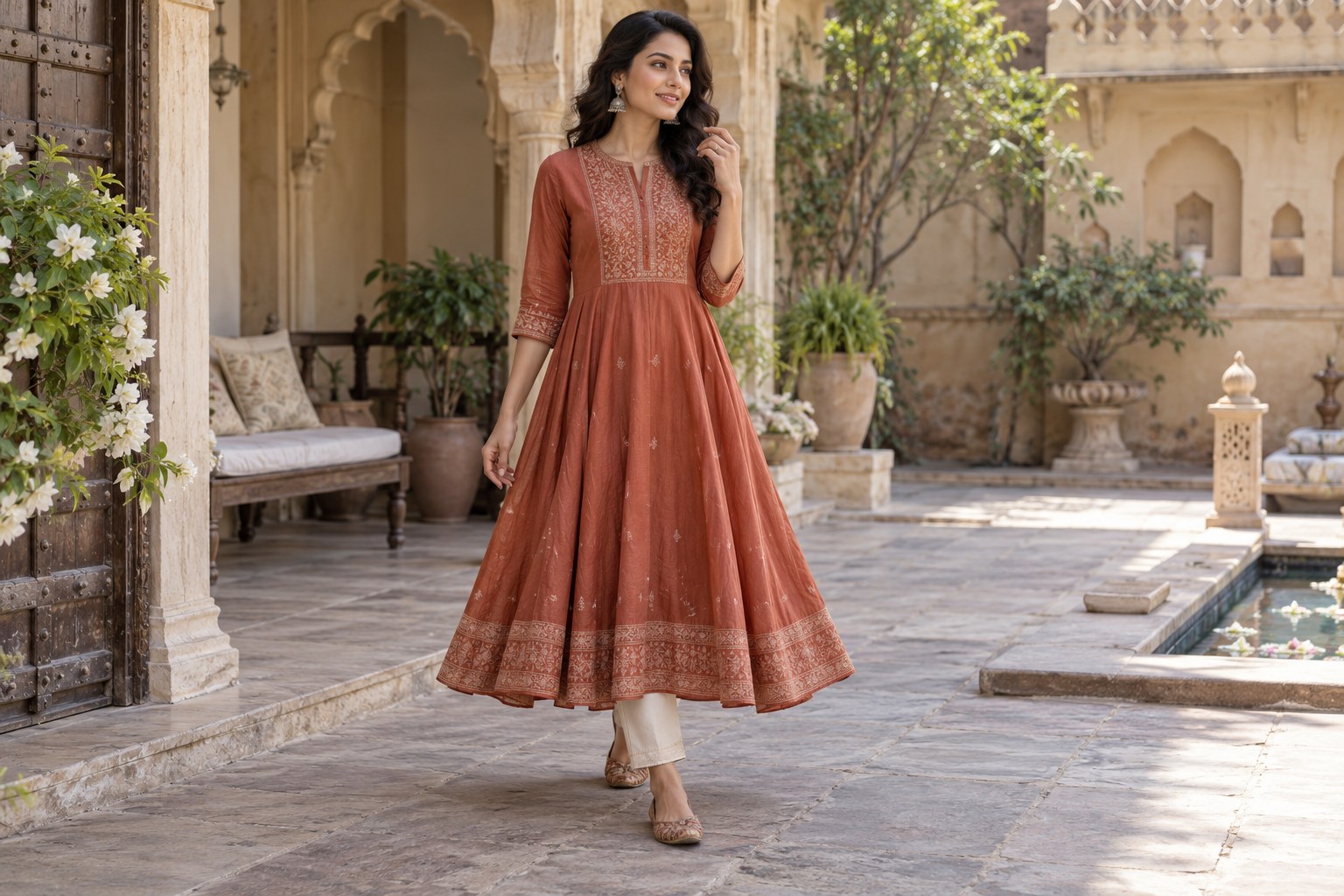
Let a flared kurta move freely above a narrower trouser shape, with enough room at both waist and thigh.
Indian wear & mixing
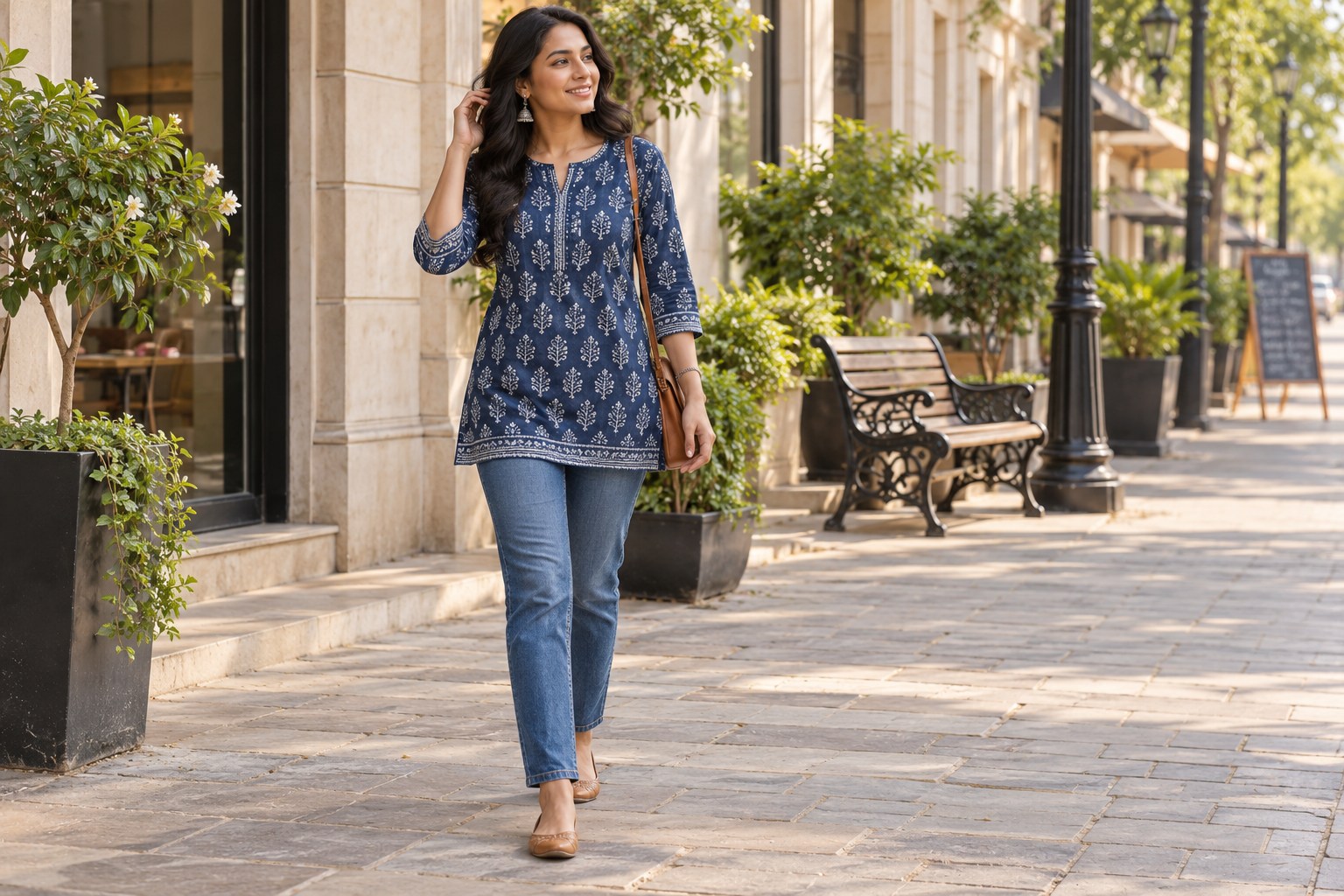
Choose the kurti length and jean rise together, then check how the hem behaves over pockets and waistbands.