Shoes & bags
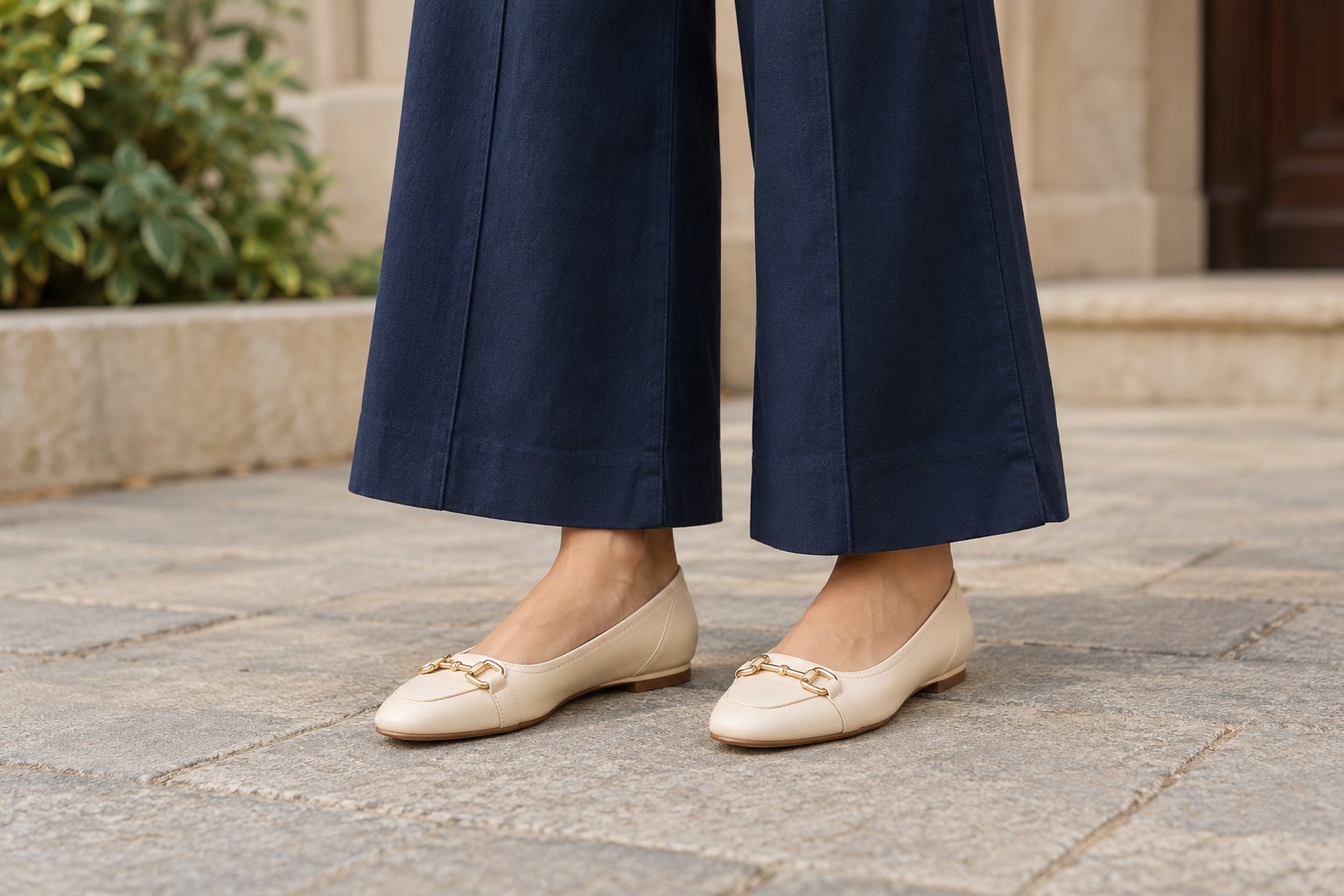
Choose flats to wear with wide-leg trousers
Choose flats with enough visible shape beneath wide trousers, then make sure the hem stays clear while walking.
Clothes, accessories & the ways to wear them
Shoes & bags
Build a small occasion shoe selection around the events and surfaces you actually encounter, with enough variety to cover different hems and levels of formality.
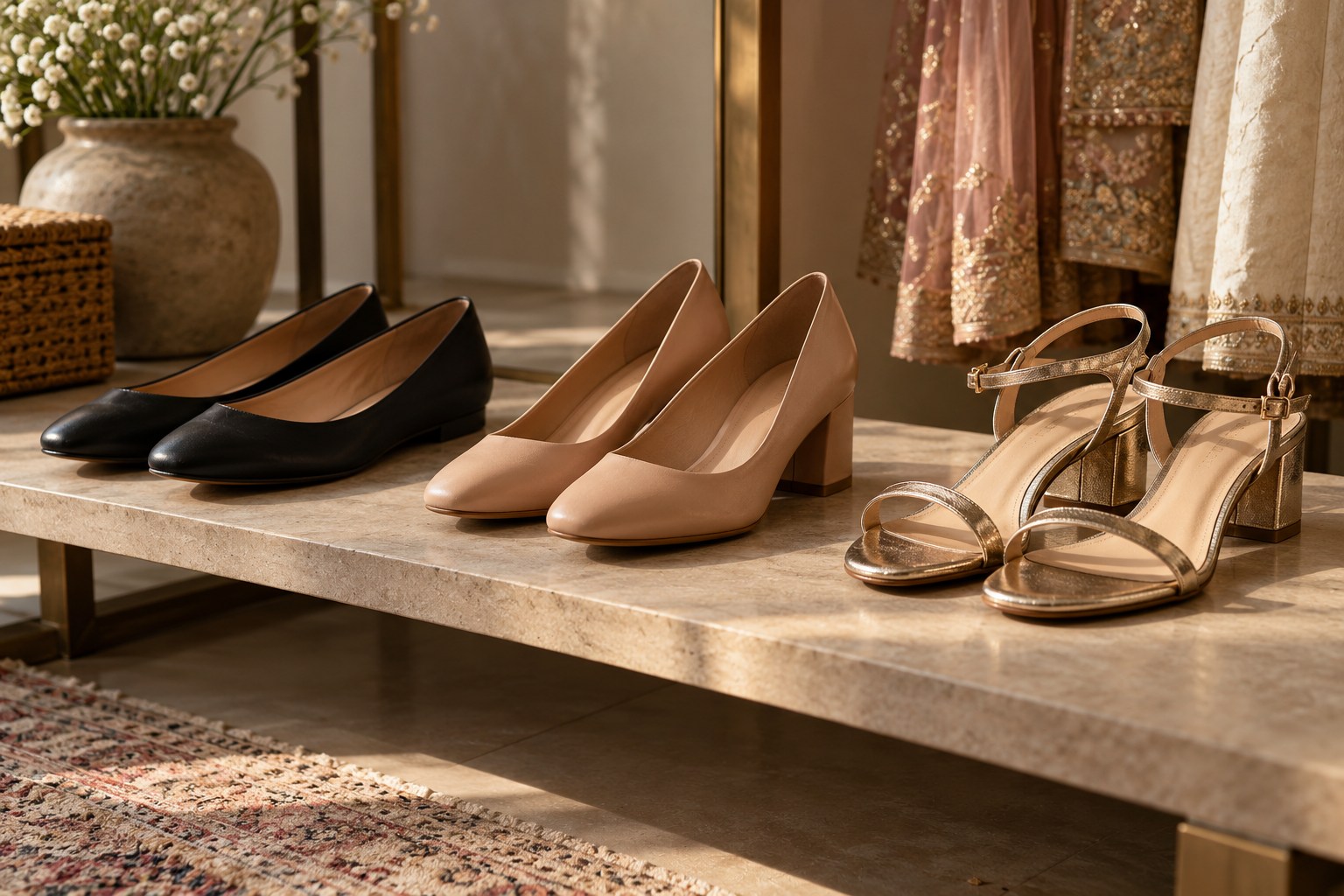
AI-generated illustration. Items shown are illustrative, not specific products for sale.
A small occasion wardrobe does not need one pair of shoes for every outfit. It needs footwear that covers the situations you return to. Start with recent invitations and likely plans: indoor dinners, outdoor weddings, family gatherings, work celebrations or theatre visits. Record the parts that affect shoes, such as walking distance, stairs, grass, long periods standing and the length of the outfit.
Gather the occasion shoes you already own and inspect them before planning additions. A pair that fits the colour palette but cannot be worn comfortably for the event is not doing the required job. Note any repairs, worn closures or changes in fit. This is also a chance to separate shoes you genuinely wear from shoes kept only because they once completed a particular outfit.
One job might be a relatively understated pair for long indoor events. Another might be footwear suited to shorter, more formal outings. A third could be a pair that works with the outdoor settings you regularly attend. Those jobs may overlap in one pair, or they may not. There is no fixed minimum number that makes a shoe wardrobe complete.
Try each useful pair with the main clothing shapes you own. Long sarees or skirts may have hems adjusted around a particular shoe height. An ankle-length trouser exposes more of the shoe. A full lehenga can hide most of the footwear while still requiring enough clearance to walk. Record these relationships; a colour match cannot compensate for a hem that catches underfoot.
Consider a person who wears navy and cream separates for dinners, a few colourful kurta sets for family visits and a saree for occasional weddings. A quiet metallic or neutral pair might connect several of those outfits. But if its height does not work with the saree's drape, the saree still needs separate consideration. The example shows why outfit trials are more informative than choosing a supposedly universal colour in isolation.
If several outfits work but one type of event consistently causes trouble, identify that problem precisely. Perhaps the only shoes that clear a long skirt are uncomfortable for standing. Perhaps the pair worn to dinners is too exposed for a cooler evening. A new purchase should answer that recurring need rather than duplicate the role already covered by another pair.
Colour can then be narrowed around the wardrobe. Look for a shade or finish that relates to several garments without requiring matching bags. A restrained metal, a deep brown or a colour repeated in your clothes could all work. Choose with the actual outfits nearby, since a sample viewed on its own can seem more versatile than it is in use.
Check the practical details of any candidate: fastening, toe room, the way the heel sits and the ease of putting it on in the planned clothes. Try it at home within the seller's conditions before committing. Do not assume that a shoe described as an occasion style is suitable for all event surfaces or that discomfort will necessarily disappear after a few wears.
Keep the resulting selection easy to see. A short note beside each pair can list the outfits and occasions it works with. After an event, record a useful observation such as 'hem cleared the steps' or 'strap needed adjusting after sitting'. Over time, these specific notes make it easier to choose from a few dependable options and avoid buying another pair for a role you already have covered.
Shoes & bags
Choose flats with enough visible shape beneath wide trousers, then make sure the hem stays clear while walking.
Shoes & bags
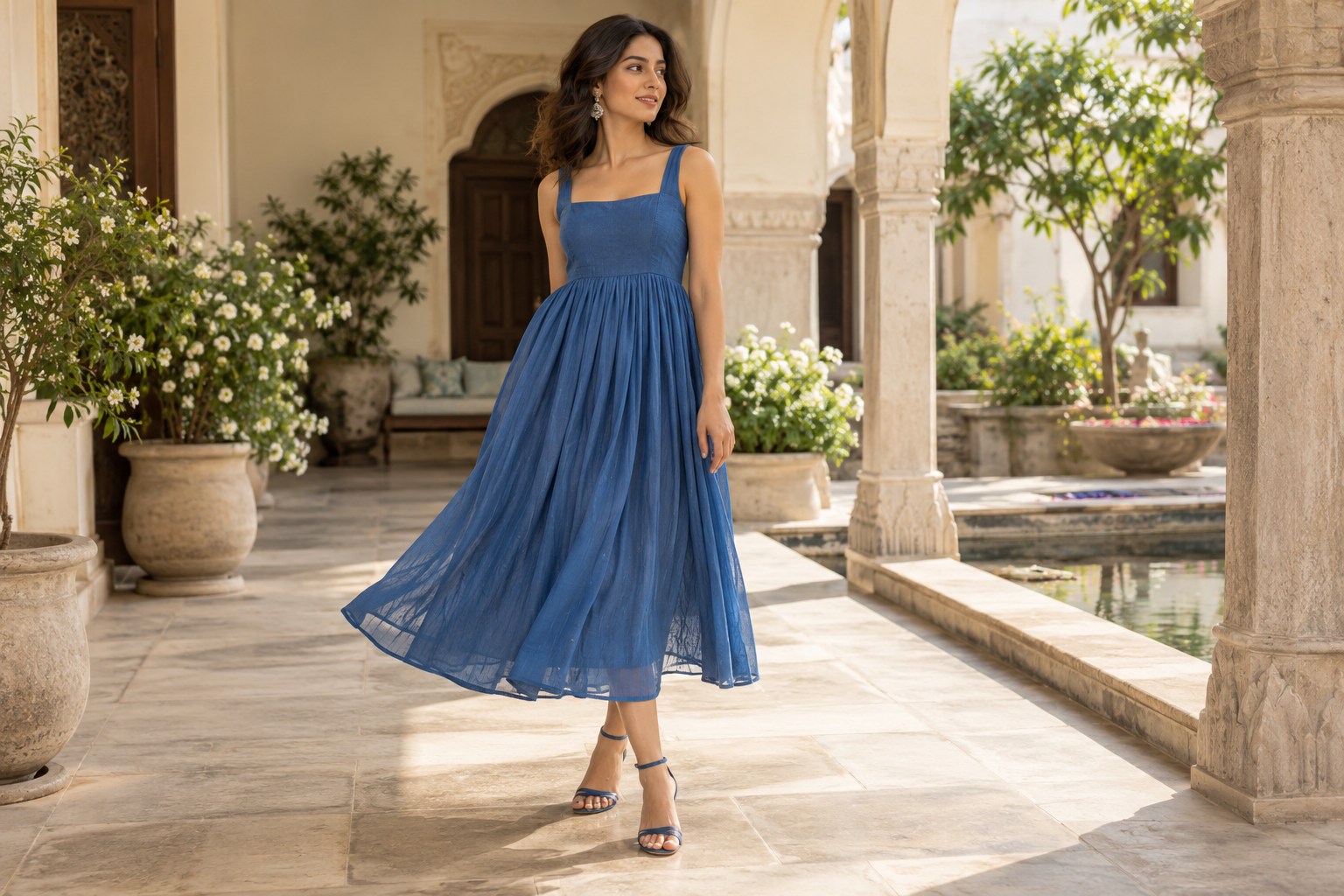
Use sandal straps to echo or contrast the shape of a midi dress, without letting a visual match outweigh fit.
Shoes & bags
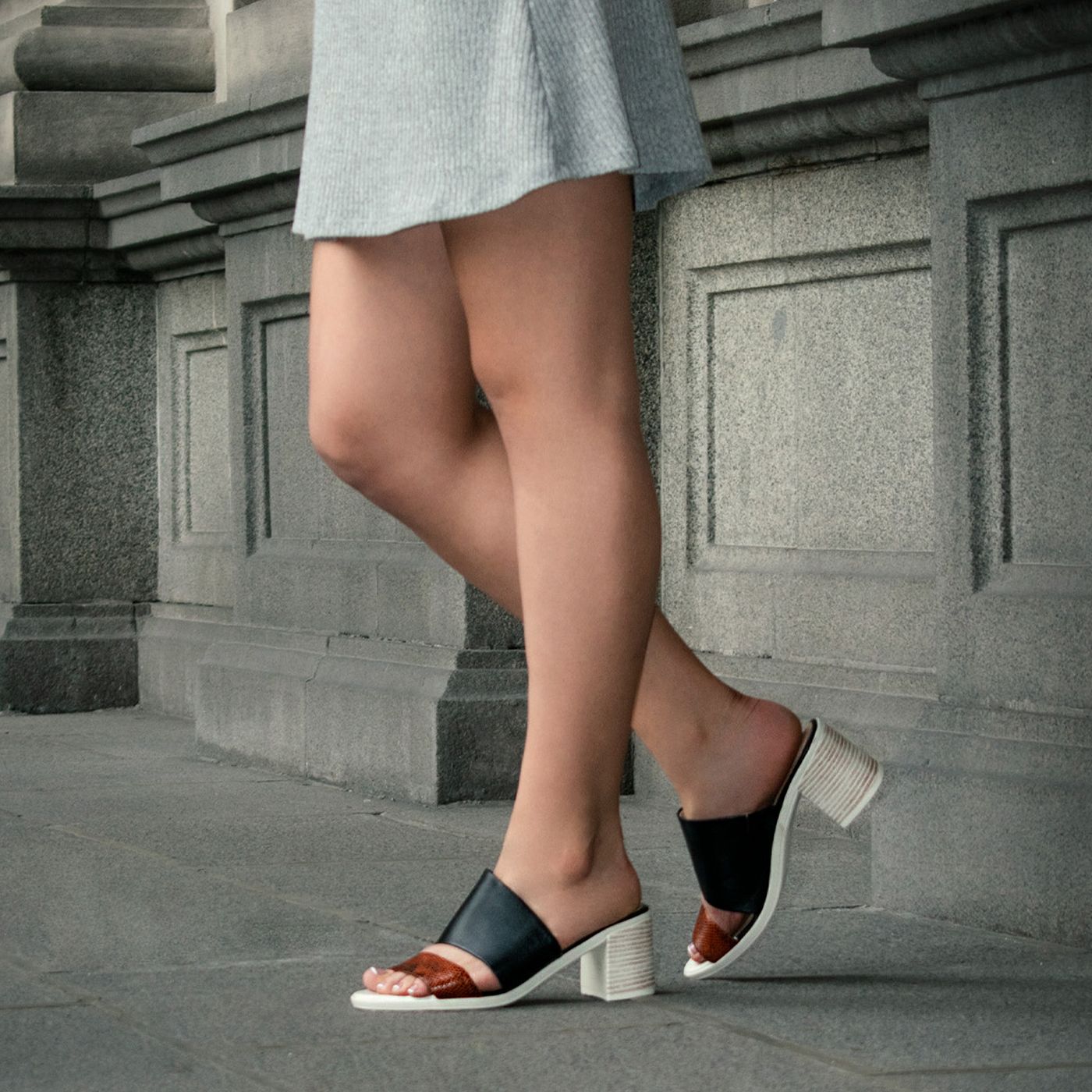
Assess the whole block-heel shoe and the event route; heel width alone does not tell you how it will feel on different surfaces.