Shoes & bags
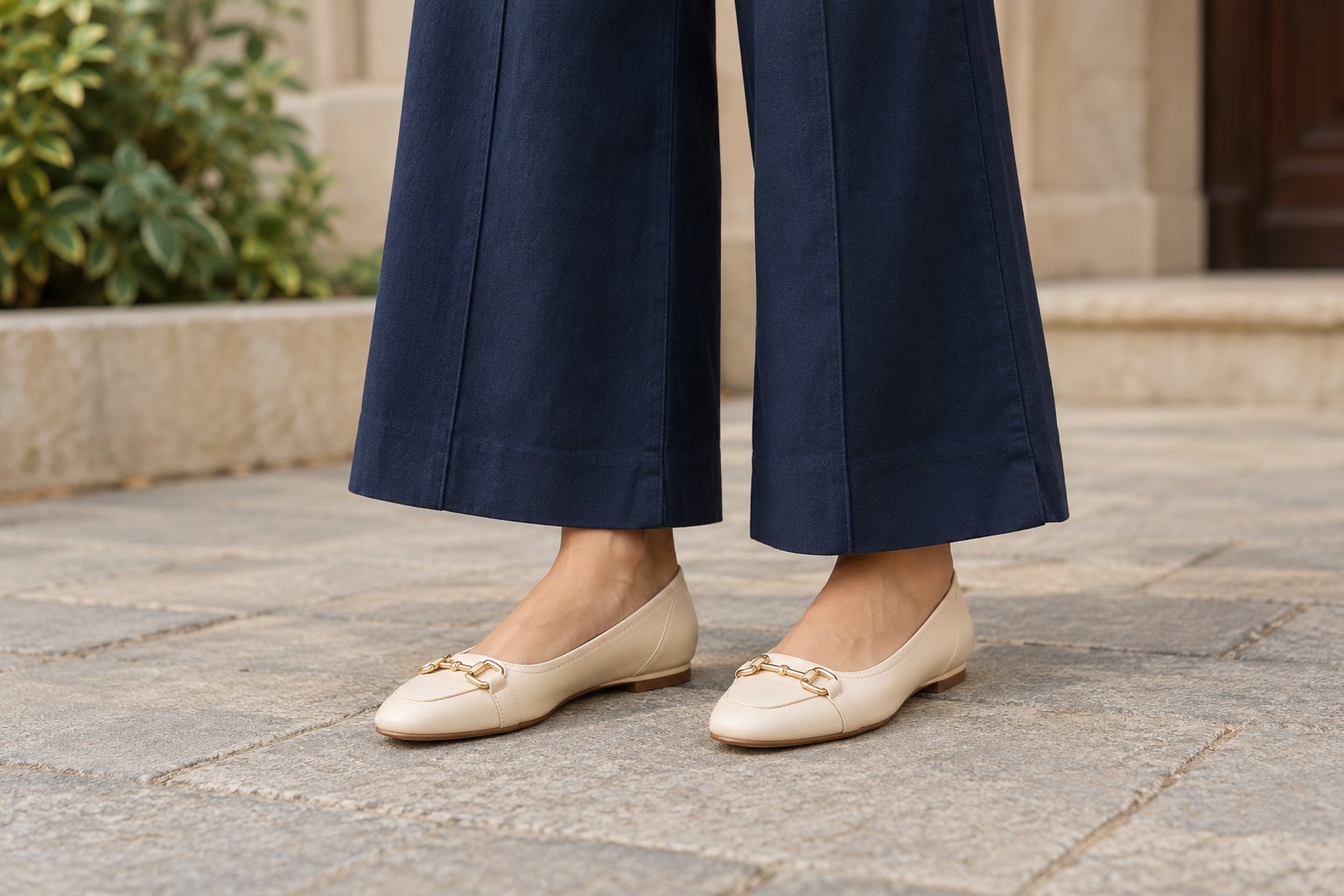
Choose flats to wear with wide-leg trousers
Choose flats with enough visible shape beneath wide trousers, then make sure the hem stays clear while walking.
Clothes, accessories & the ways to wear them
Shoes & bags
Compare tote closures through the way you pack, carry and open the bag, rather than relying on its appearance when empty.
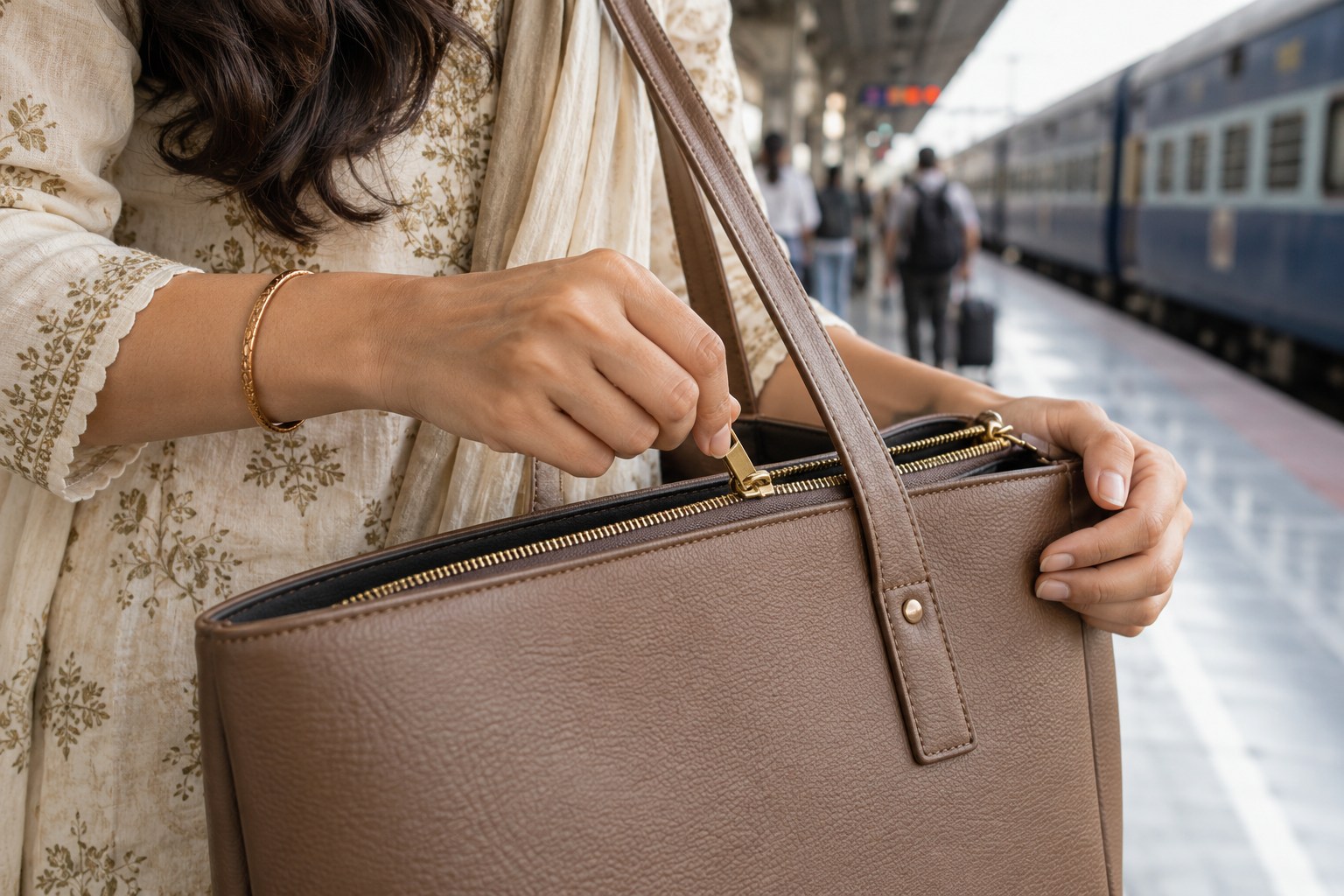
AI-generated illustration. Items shown are illustrative, not specific products for sale.
An open tote, a central press stud and a full zip give different levels of enclosure. None makes a bag immune to loss or theft, but the closure affects whether contents remain contained when the bag tilts, how easily you can reach them and how exposed they are during a crowded commute. Begin with those ordinary actions rather than a vague promise of security.
Pack the tote with the load you expect to carry. A zip that closes easily over a flat notebook may not reach across a bottle and lunch container. A magnetic tab may meet when the bag is empty but separate once the sides are pushed outward. Look at the complete opening, including any gaps beside the fastening.
A single central fastening can keep the sides together without enclosing the corners. This may be enough for larger objects, but small items can still move towards those gaps when the bag is set down. Try placing keys in a suitable internal pocket or pouch rather than treating the main fastening as the only layer of organisation.
A full zip can contain the opening more completely if it closes without strain. Check the start and end of the zip, the ease of moving the pull and whether a scarf or lining catches in the teeth. If you need to hold the bag with both hands to align the zip every time, consider whether that suits your commute. A closure can be effective yet inconvenient for the way you use the bag.
A flap adds another layer over the opening, but its reach matters. With the bag loaded, does it still cover the contents, or does it lift into a shallow tent? Inspect whether fastening it changes the usable interior height. Tall objects should not be forced sideways merely to make the flap appear closed.
Decide what you need while travelling and what can stay packed until arrival. A travel card may need a different location from a work notebook. An accessible internal pocket can help, provided you can open the bag and find it without displaying everything. An outside pocket is convenient but may leave its contents more exposed; assess its actual closure and position.
Carry the loaded tote over the shoulder with the top fastened. Notice whether it rotates so the opening faces away from you, whether the handle drop presses the bag into your arm and whether you can bring it in front of you when needed. A familiar, manageable carrying position is more useful than an attractive closure you rarely bother fastening.
Set the bag beside a chair, lift it by one handle and place it on your lap. Contents should not tumble out during these normal changes of angle. Do the test at home over a clear surface, using non-fragile stand-ins if needed. The point is to understand containment, not to subject the bag or your possessions to a dramatic stress test.
If an existing open tote otherwise works well, a zipped internal pouch can organise small essentials. It does not close the tote itself and should not be described as equivalent to a fully enclosed bag. Decide whether the remaining openness is acceptable for your route and contents.
Before buying a replacement, write down the specific failure you want to solve: a tab that opens under load, a gap that lets small items escape, or a zip that catches the lining. That description helps compare alternatives more clearly than simply looking for a bag described as commuter-friendly.
Shoes & bags
Choose flats with enough visible shape beneath wide trousers, then make sure the hem stays clear while walking.

Shoes & bags
Use sandal straps to echo or contrast the shape of a midi dress, without letting a visual match outweigh fit.
Shoes & bags
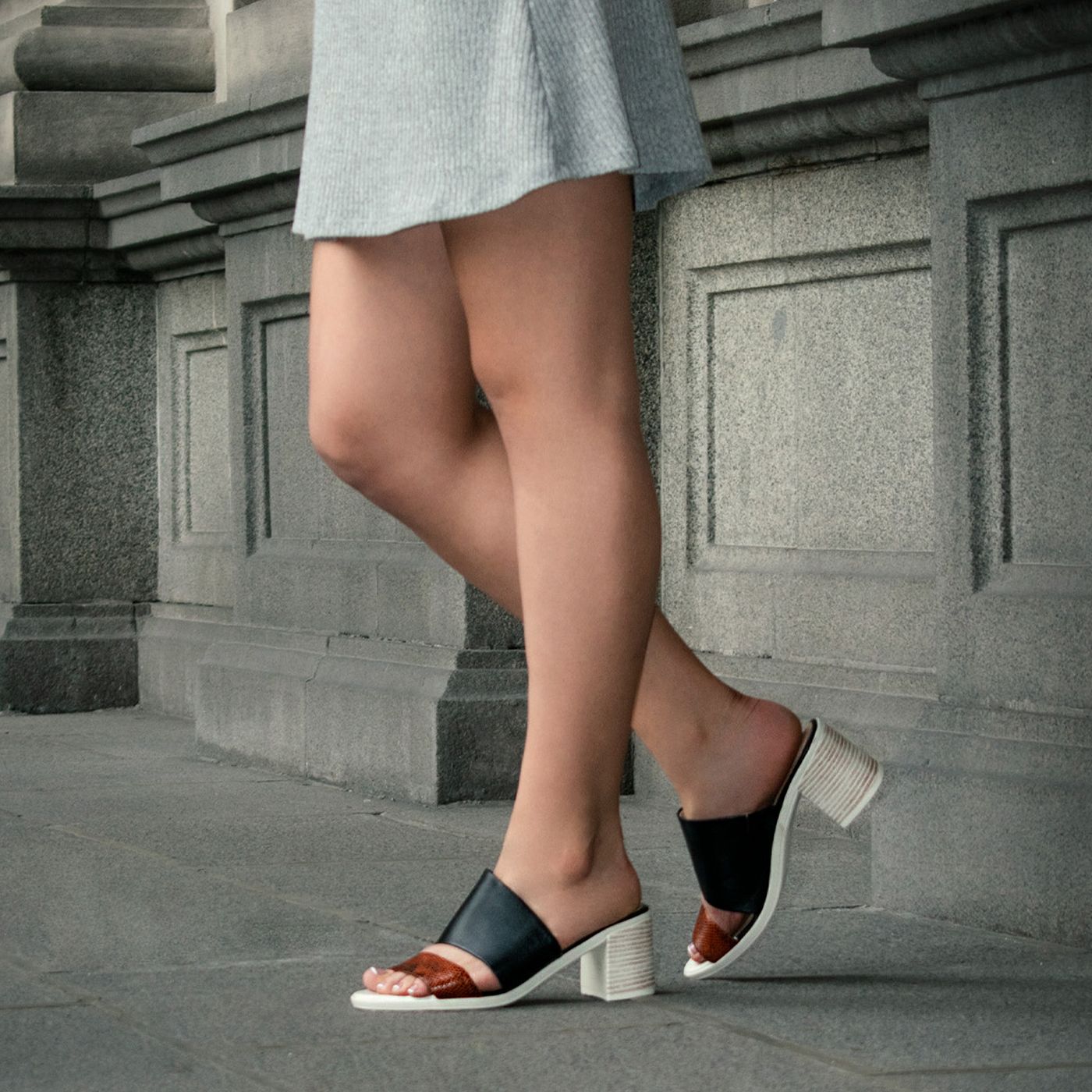
Assess the whole block-heel shoe and the event route; heel width alone does not tell you how it will feel on different surfaces.