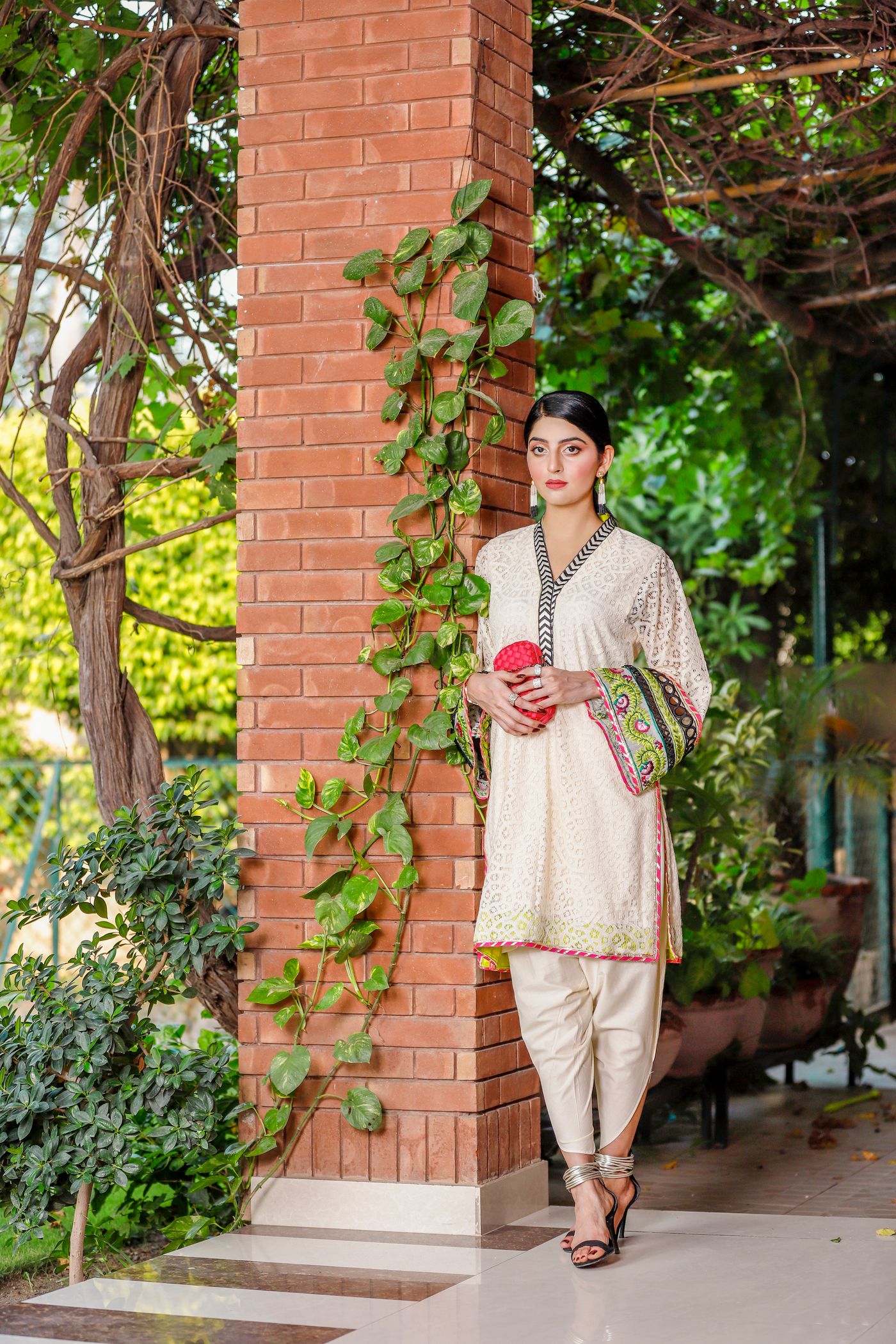
Indian wear & mixing
Wear a straight kurta with tapered trousers
Check the kurta’s side openings and the trouser taper so the two shapes move comfortably together.
Clothes, accessories & the ways to wear them
Indian wear & mixing
Use the printed trousers' scale and waistband position to select a solid kurta that does not hide the whole idea.
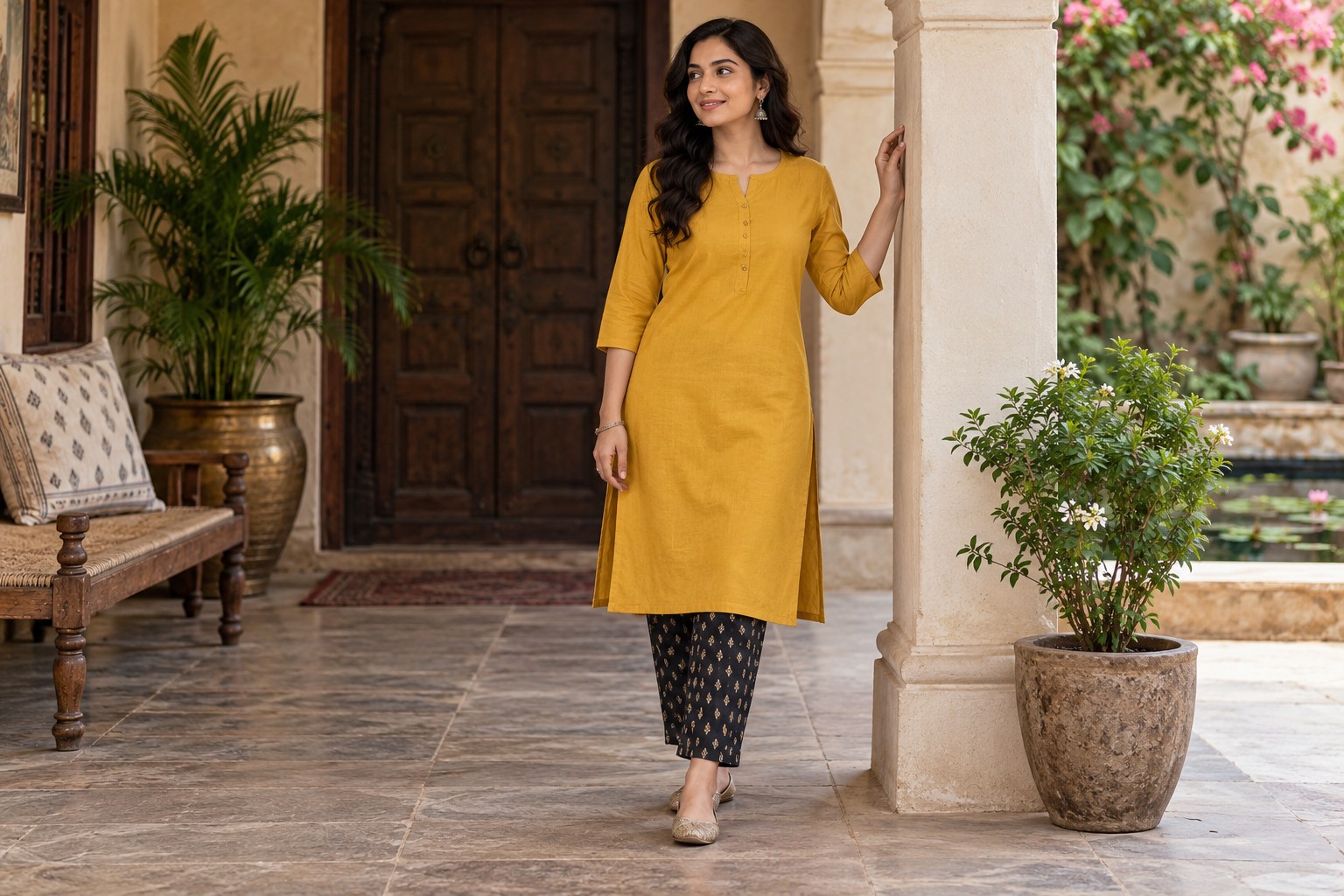
AI-generated illustration. Items shown are illustrative, not specific products for sale.
Printed trousers are easy to overlook when a long kurta covers most of them. Decide how much pattern you actually want to show. A shorter kurta displays the upper trouser shape, while a longer one may leave only a patterned band below the hem. Either can be deliberate, but the remaining strip should be wide enough to read as part of the outfit rather than a barely visible accident.
Try the trousers with two plain kurtas of different lengths. Check the front and side, then sit down. A kurta with side slits will reveal more of the print during movement, so the standing front view is only part of the picture. If the trousers have a decorated waistband, decide whether you want it visible; a longer kurta may conceal a feature you paid particular attention to when choosing them.
The background shade of the print is a reliable starting point for the kurta. It can make the outfit feel connected without requiring an exact match. An accent colour gives a more distinct contrast. For navy trousers with cream and ochre motifs, a cream kurta creates separation, while navy makes the patterned lower section more subtle. Ochre brings the smaller motif forward.
Check the fabrics together as well. A very stiff kurta can stand away from soft trousers; a fluid kurta can settle into their waistband and pockets. If either result feels awkward, change the fabric weight or fit before adding a dupatta to conceal it. The outfit should work before an extra layer is draped over the join.
Patterned hems can become crowded by elaborate footwear. Try a plain sandal or flat first and see whether the print remains visible. If you want decorated shoes, compare their scale with the trouser motif. A broad, simple shoe detail may be clearer than several small decorations that blend into the pattern.
Use the same approach for the bag: one solid colour can hold the combination together. A printed dupatta is optional, not required by the kurta. If you add one, choose its pattern consciously and check all three textiles together. The solid kurta can then act as a quiet area between them instead of disappearing beneath another layer of competing detail.
Indian wear & mixing
Check the kurta’s side openings and the trouser taper so the two shapes move comfortably together.
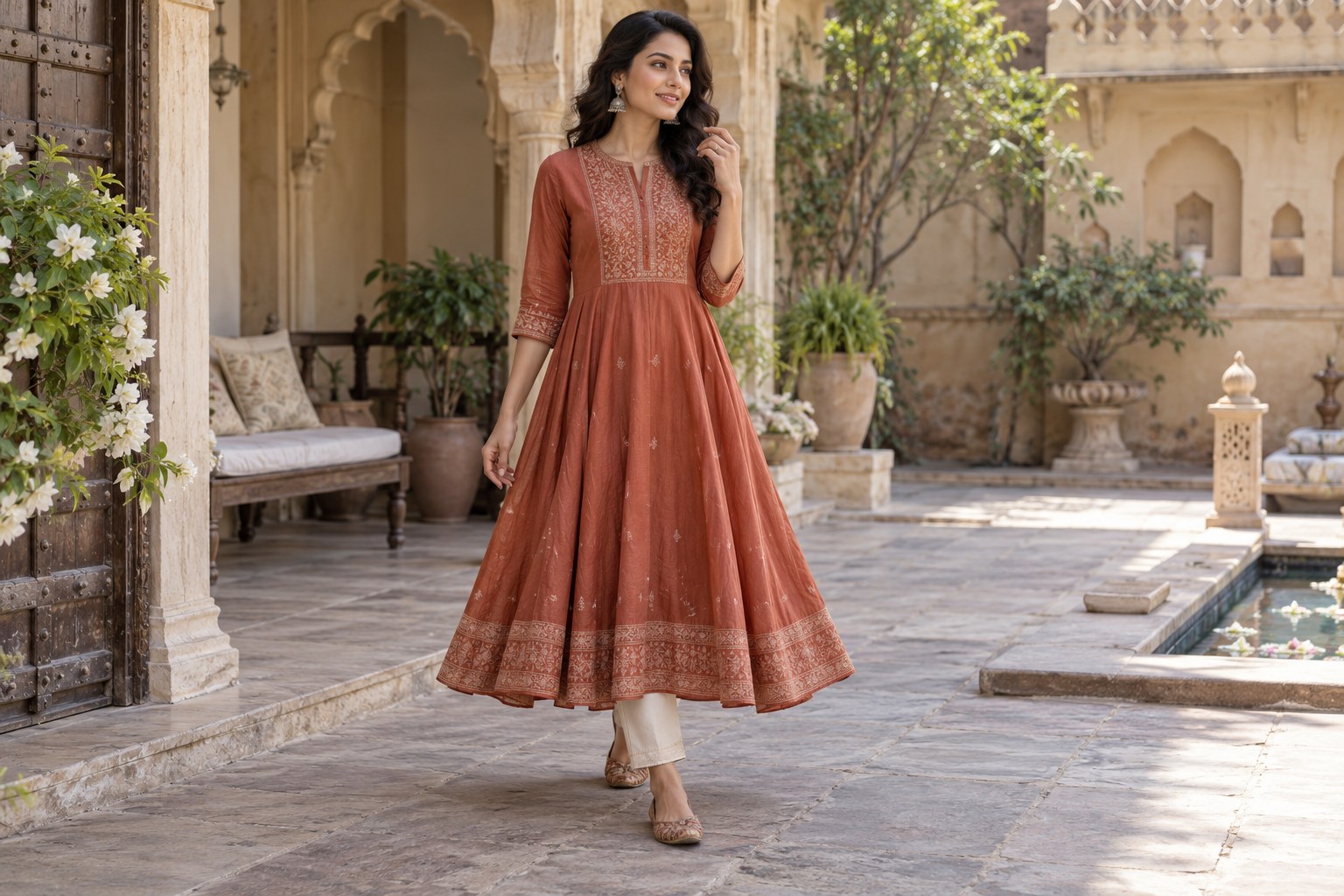
Indian wear & mixing
Let a flared kurta move freely above a narrower trouser shape, with enough room at both waist and thigh.
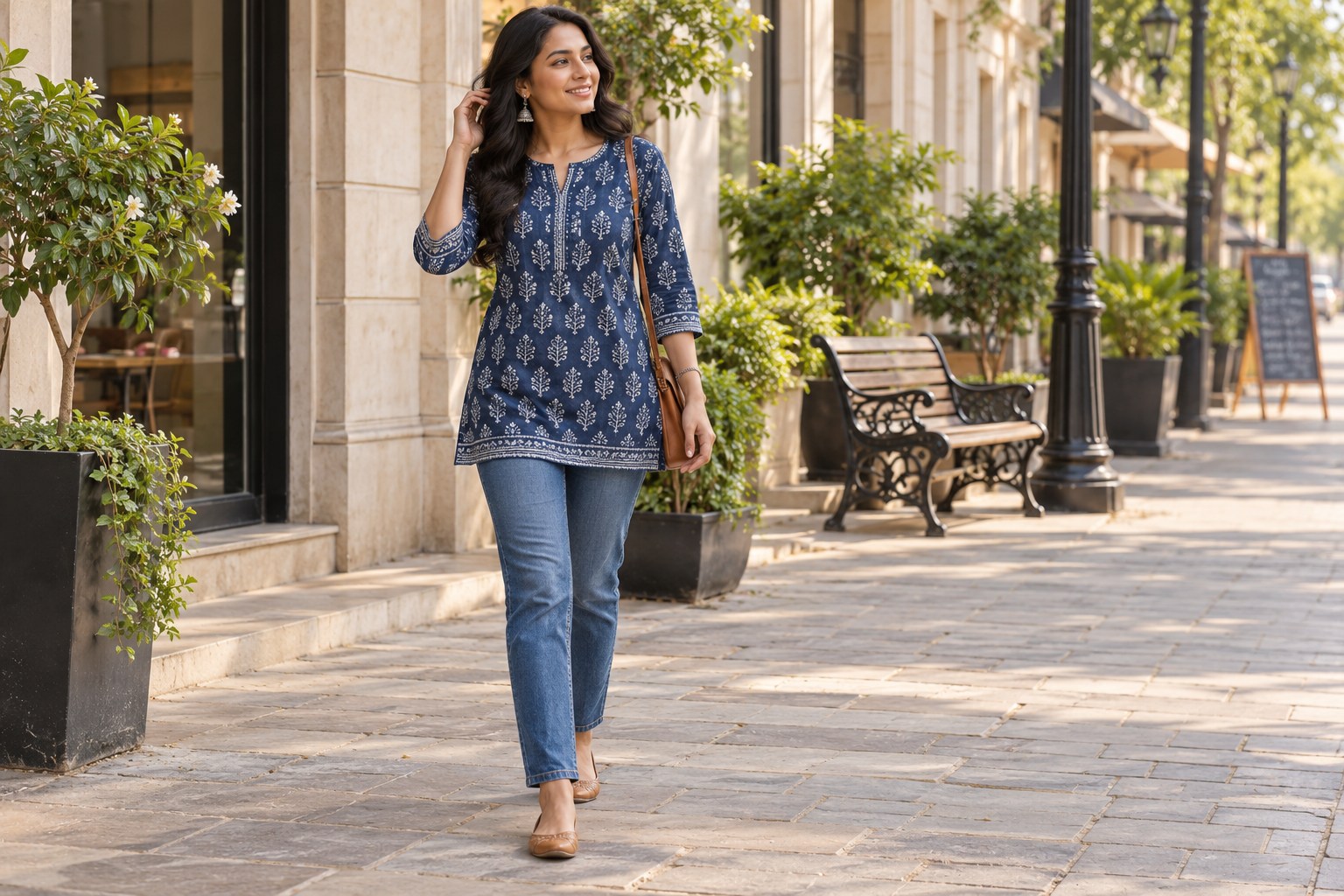
Indian wear & mixing
Choose the kurti length and jean rise together, then check how the hem behaves over pockets and waistbands.