Indian wear & mixing
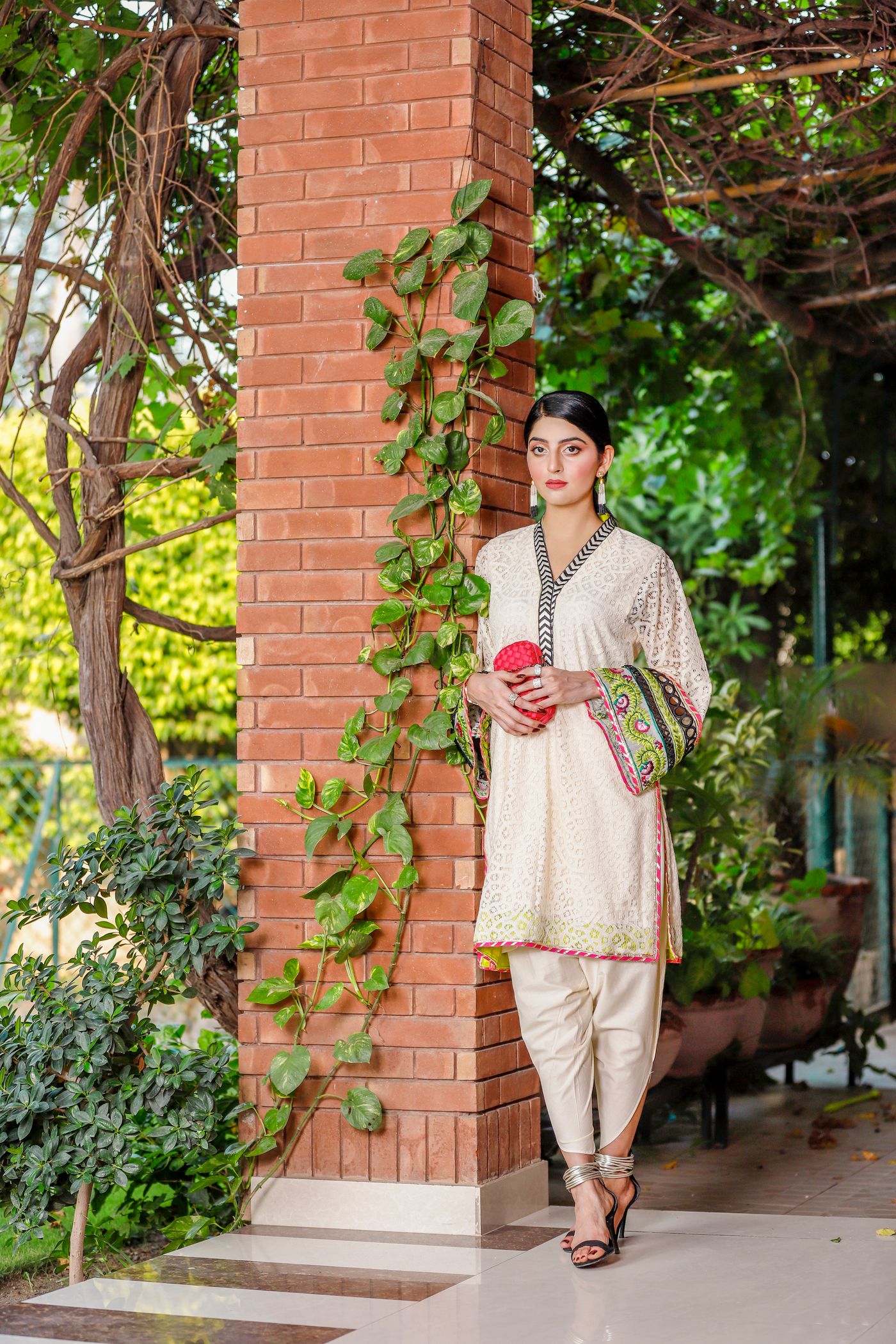
Wear a straight kurta with tapered trousers
Check the kurta’s side openings and the trouser taper so the two shapes move comfortably together.
Clothes, accessories & the ways to wear them
Indian wear & mixing
Assess the waistband, pleats, blouse and pallu as a seated outfit before choosing a saree for a long event.
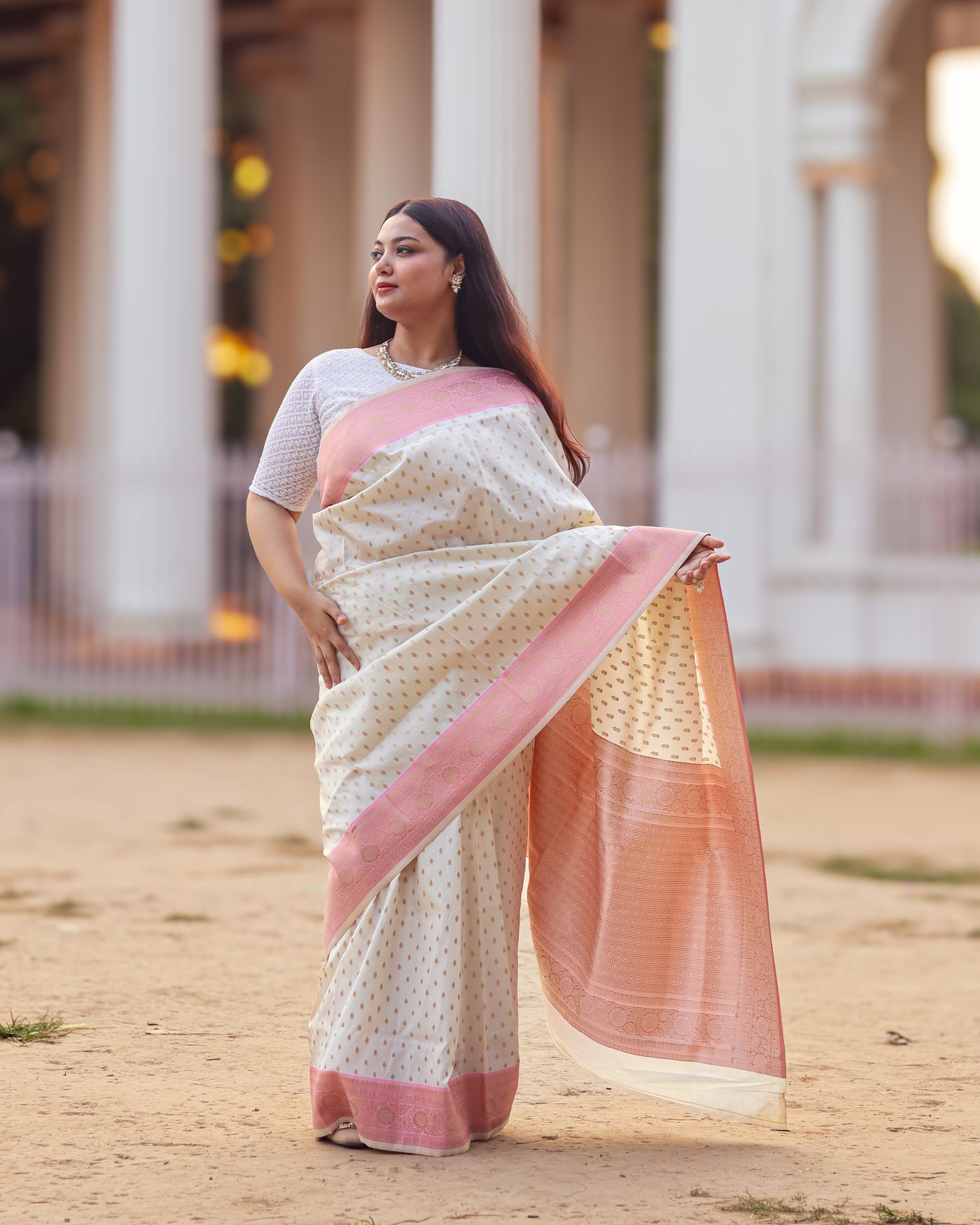
A saree for a long seated event needs to work in a chair, not only in a full-length photograph. A ceremony, performance or extended family gathering may involve several hours with relatively little opportunity to rearrange clothing. Choose the saree, blouse and underlayer together, then rehearse the way you expect to sit.
Start with the event's actual setting. A padded chair, a narrow theatre seat and floor seating create different demands. Ask about arrangements if they are unclear and relevant to your comfort. Do not assume every gathering follows the same seating practice, even when the event name is familiar.
Drape the saree in your intended style over the base layers and wear the planned shoes. Sit for ten or fifteen minutes. Notice pressure at the waist, pulling across the blouse and where the pleats collect. These observations are more useful than deciding from a fabric description alone whether a saree is 'comfortable'.
A bulky tuck may press when seated even if it looks neat standing. Check whether the fabric can be arranged more evenly without weakening the drape. If you are unsure, ask someone experienced with your chosen draping style to help. Tightening the waistband excessively is not a good substitute for a stable, comfortable arrangement.
The blouse should allow a natural seated posture. Reach forward as though taking a programme or glass, and turn slightly to speak to someone beside you. If the neckline or sleeves pull, address that fit before the event. A shawl or pallu can change what is visible but cannot remove restrictive tension in the blouse.
A saree with substantial raised embellishment may feel different where it is compressed against the seat or your body. Inspect the areas likely to be underneath you. Decorative edges can also catch on rough furniture or bag hardware. This does not exclude embellished clothing; it means choosing where those details fall and whether they suit the setting.
A fabric that creases visibly may look changed after a long session of sitting. Decide whether that is acceptable to you. If you want a smoother appearance, compare another saree you own rather than expecting careful posture to prevent all movement in the cloth. Follow the garment's care guidance when preparing it and avoid applying heat based only on the fabric's appearance.
Check the pallu while seated. A long end can fall beside or beneath the chair, while a very short arrangement may pull when you turn. Place it where it remains manageable without constant gripping. If a fastening is used, make sure it does not press against the shoulder or hold delicate fabric under strain.
A large bag on your lap can compress the pleats; a small bag with sharp or projecting hardware can still snag fabric. Choose enough capacity for essentials and consider where the bag will sit. Do not rely on having an extra chair available unless the arrangement is confirmed.
Bangles, cuffs and rings may contact the chair arms or catch the pallu. Wear the pieces you enjoy, but test those interactions during the rehearsal. Earrings should remain comfortable if a collar, wrap or pallu comes near them when you turn your head.
Before finalising the outfit, stand and walk after the seated test. Check whether the hem clearance and pleats remain manageable. If the drape needs extensive rebuilding, change the arrangement or choose another saree for this particular event. The aim is an outfit that allows attention to stay on the gathering, with fabric and support suited to several hours of ordinary sitting.
Indian wear & mixing
Check the kurta’s side openings and the trouser taper so the two shapes move comfortably together.
Indian wear & mixing
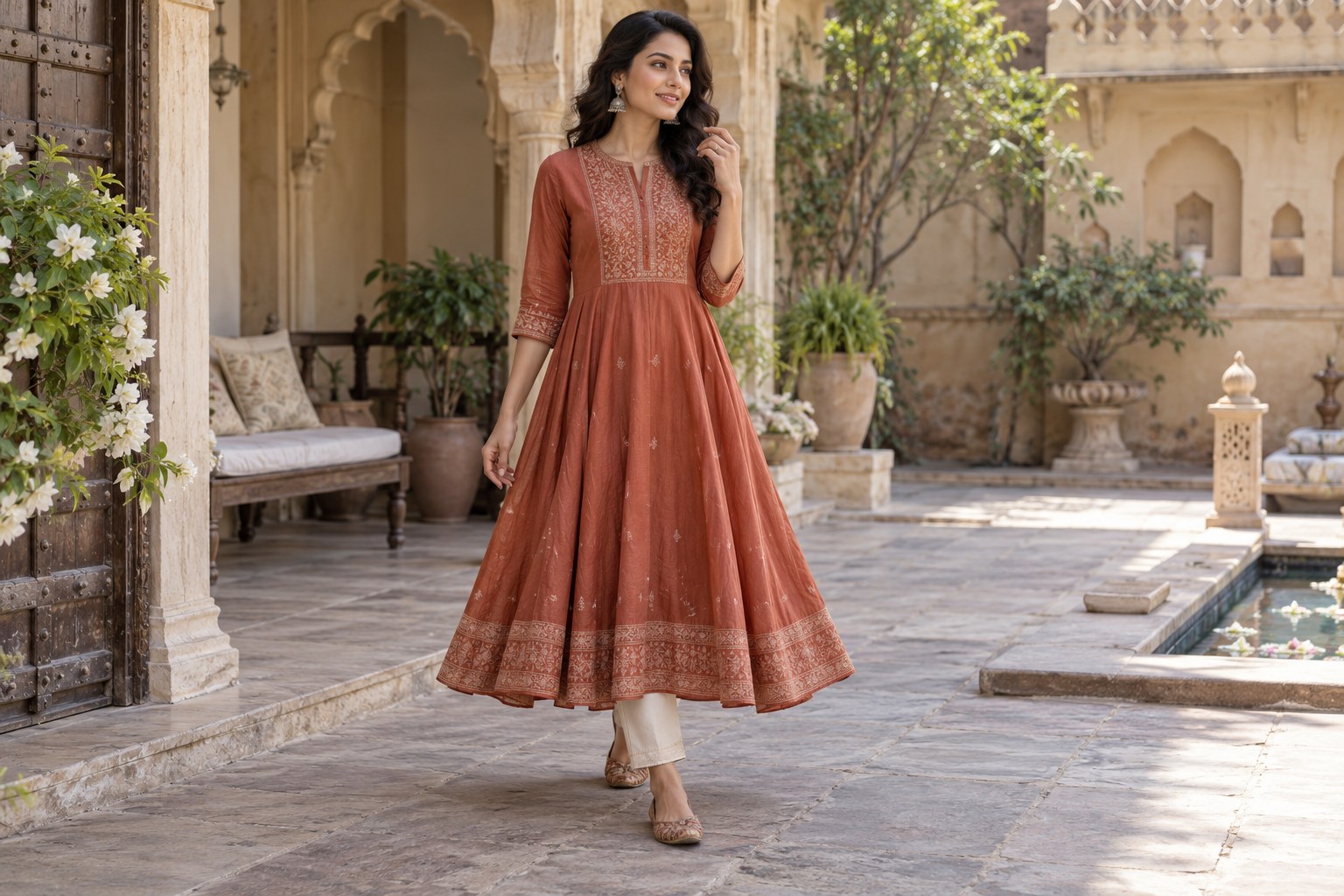
Let a flared kurta move freely above a narrower trouser shape, with enough room at both waist and thigh.
Indian wear & mixing
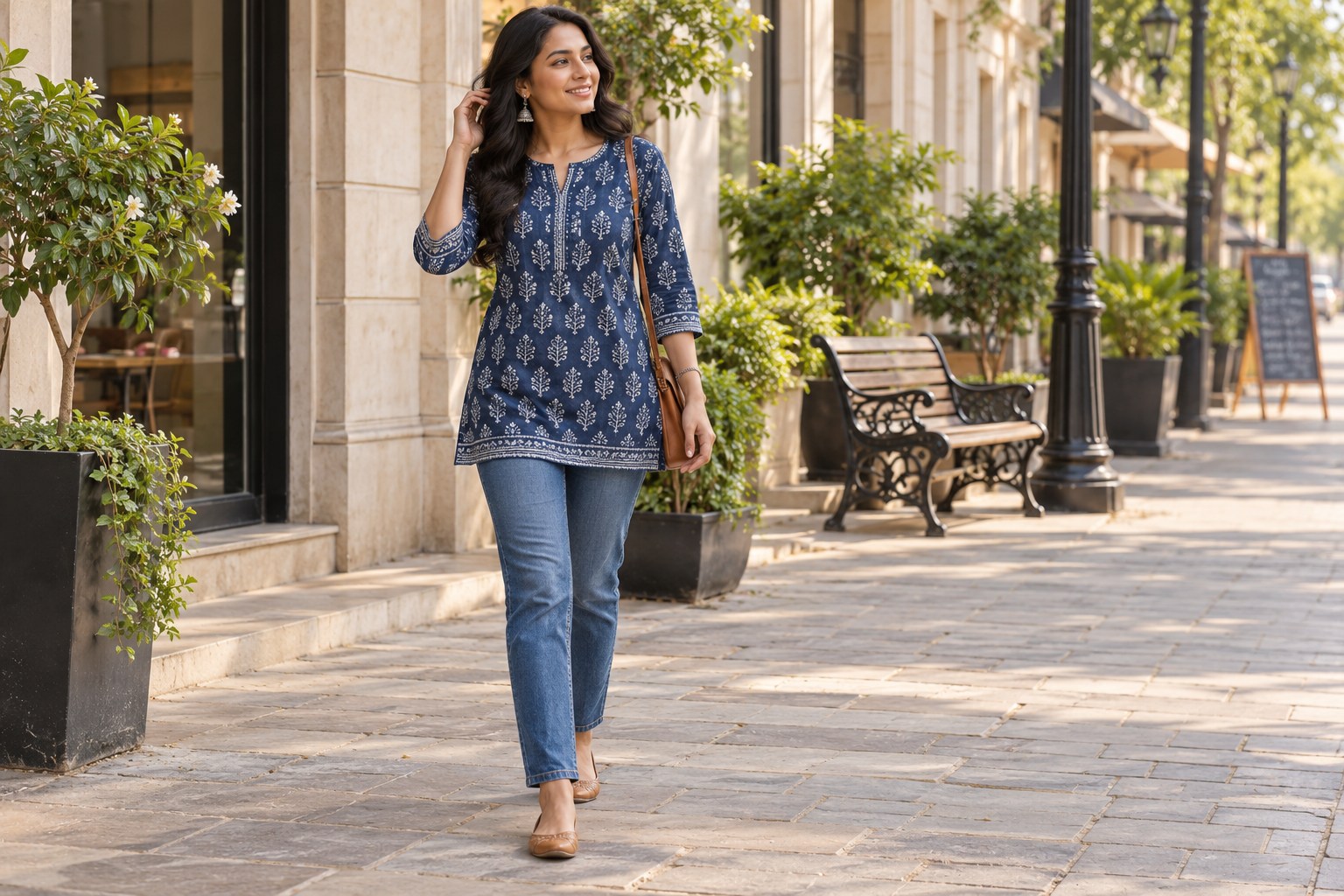
Choose the kurti length and jean rise together, then check how the hem behaves over pockets and waistbands.