Indian wear & mixing
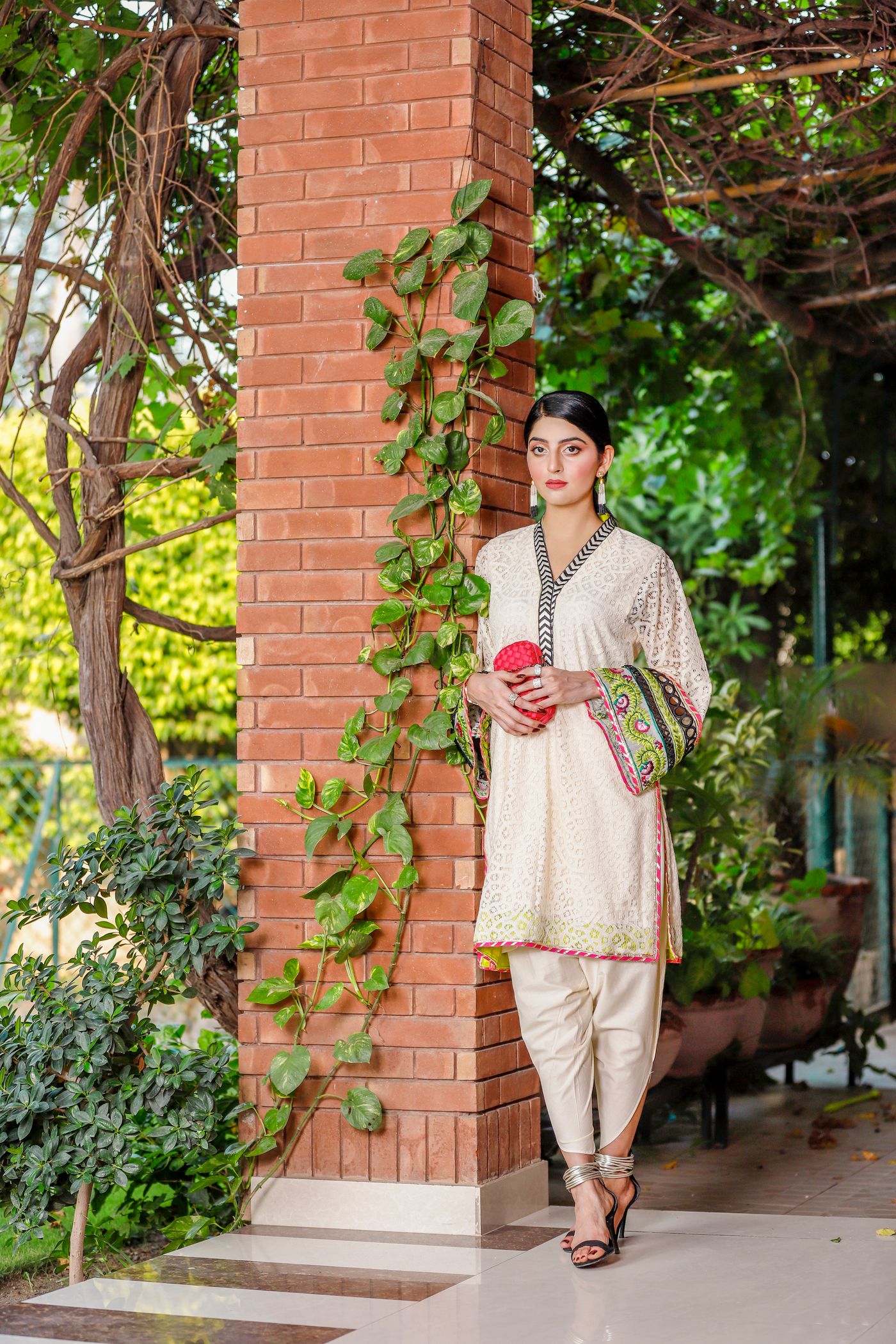
Wear a straight kurta with tapered trousers
Check the kurta’s side openings and the trouser taper so the two shapes move comfortably together.
Clothes, accessories & the ways to wear them
Indian wear & mixing
Choose the saree underlayer around the drape, movement and fastening you want, rather than one supposedly universal shape.
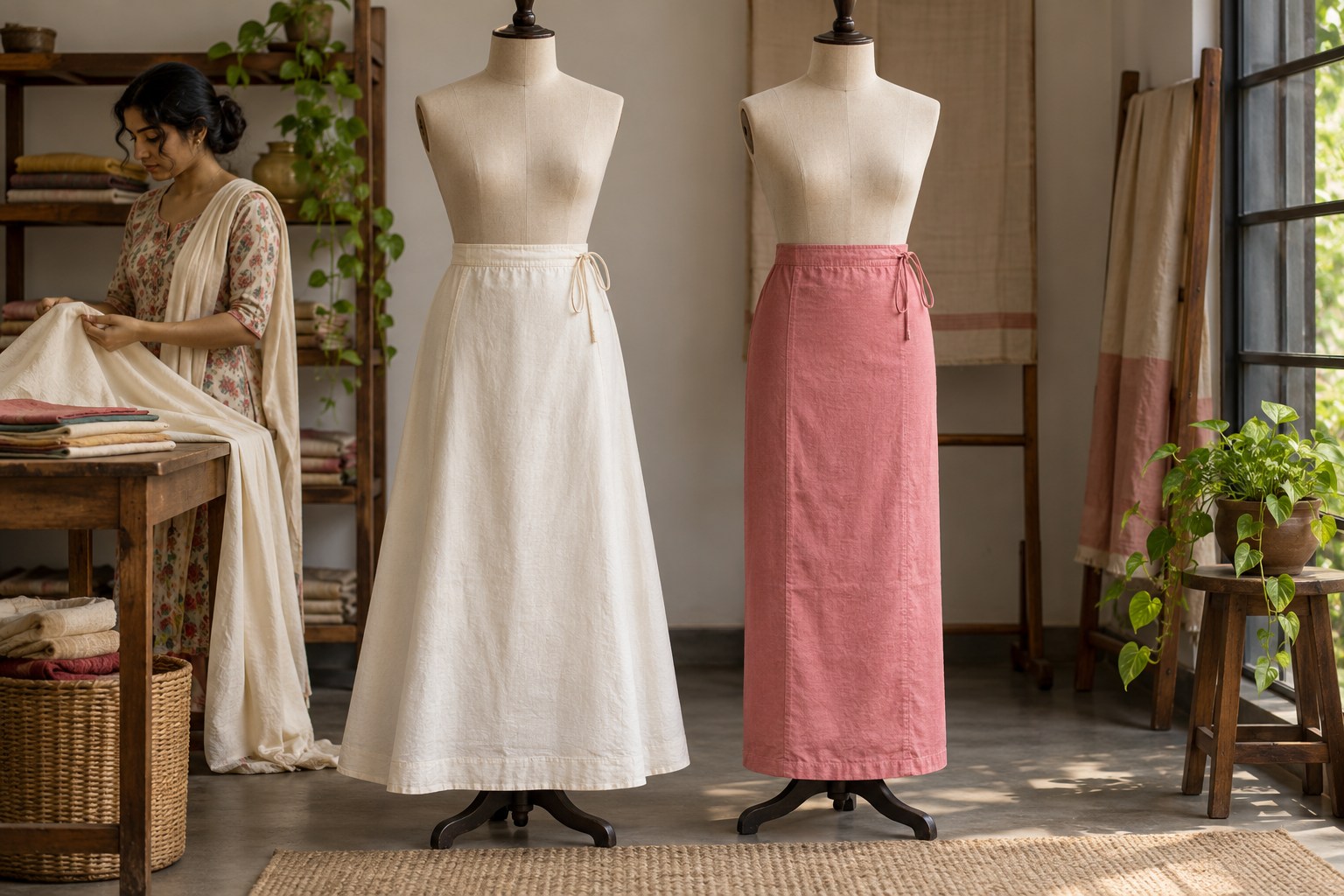
AI-generated illustration. Items shown are illustrative, not specific products for sale.
A petticoat or other saree underlayer affects how the fabric is supported and how freely you can move. Its shape also changes the outline beneath the saree. Start with the draping style you intend to wear and your own comfort preferences; different styles may use different arrangements, so one underlayer is not automatically suitable for every saree.
Look at what the underlayer needs to do. It may provide coverage, support a tuck and allow the outer fabric to fall in a particular way. Those jobs should be assessed together. A garment that creates the outline you like but restricts sitting or walking is not a successful choice for a long event.
A fuller petticoat provides a different amount of space from a narrow or shaped one. Put it on and take a normal step before adding the saree. Sit, bend the knees and turn. If movement is already restricted, the outer drape will not make the base more comfortable.
A narrower underlayer may create a closer outline, but that is an optional aesthetic preference rather than a requirement. Do not choose a size that presses or limits movement to achieve a particular silhouette. Compare cuts and materials, and check the manufacturer's sizing information if purchasing a ready-made piece.
Length matters as well. The underlayer should provide the coverage you want without extending below the intended saree hem. Try it with the actual shoes before deciding on an adjustment. A shorter base may be less likely to show but may not give the coverage or support you expect; inspect the completed drape rather than guessing.
A drawstring, elasticated waistband or another fastening will behave differently under the weight of the drape. Use it as intended and check that it remains comfortable when seated. Tightening a drawstring until it hurts is not a sound solution for an unstable tuck. Ask someone experienced with your chosen drape to help distribute and secure the fabric appropriately.
The waist area can become bulky when several layers collect in one place. Arrange the fabric carefully and inspect where knots, seams and pleats overlap. If a knot presses beneath the saree, consider its position and the underlayer's construction rather than simply hiding it more deeply.
Check the condition of the fastening before the event. A damaged cord, loose seam or stretched waistband deserves attention while there is time to repair or replace it. Do not rely on a last-minute improvised fastening for a garment supporting the main drape.
With a sheer or light saree, the underlayer may affect the visible colour. Compare it in daylight and indoors. A close colour match can create one effect; a deliberately contrasting layer creates another. Choose the result you want, rather than assuming that a pale underlayer will always disappear.
The underlayer's surface can also affect how the saree rests over it. Inspect for seams, lace or raised details showing through where you prefer a smooth line. Avoid assuming that a product name alone guarantees a particular result. The same base can look different beneath a heavy saree and a fine one.
Put the complete outfit on for a seated and walking rehearsal. Check whether the underlayer twists, rides up or becomes visible at the hem. If it does, investigate the fit and length before adding more tension at the waist. Include the blouse and shoes so the test reflects the actual outfit.
If requesting tailoring, bring the saree and describe the drape and movement you need. Ask what changes are feasible, and test the result before the event. Choosing a petticoat is an outfit-construction decision, not a judgement about body shape. The useful choice supports the saree while allowing you to participate comfortably in the day.
Indian wear & mixing
Check the kurta’s side openings and the trouser taper so the two shapes move comfortably together.
Indian wear & mixing
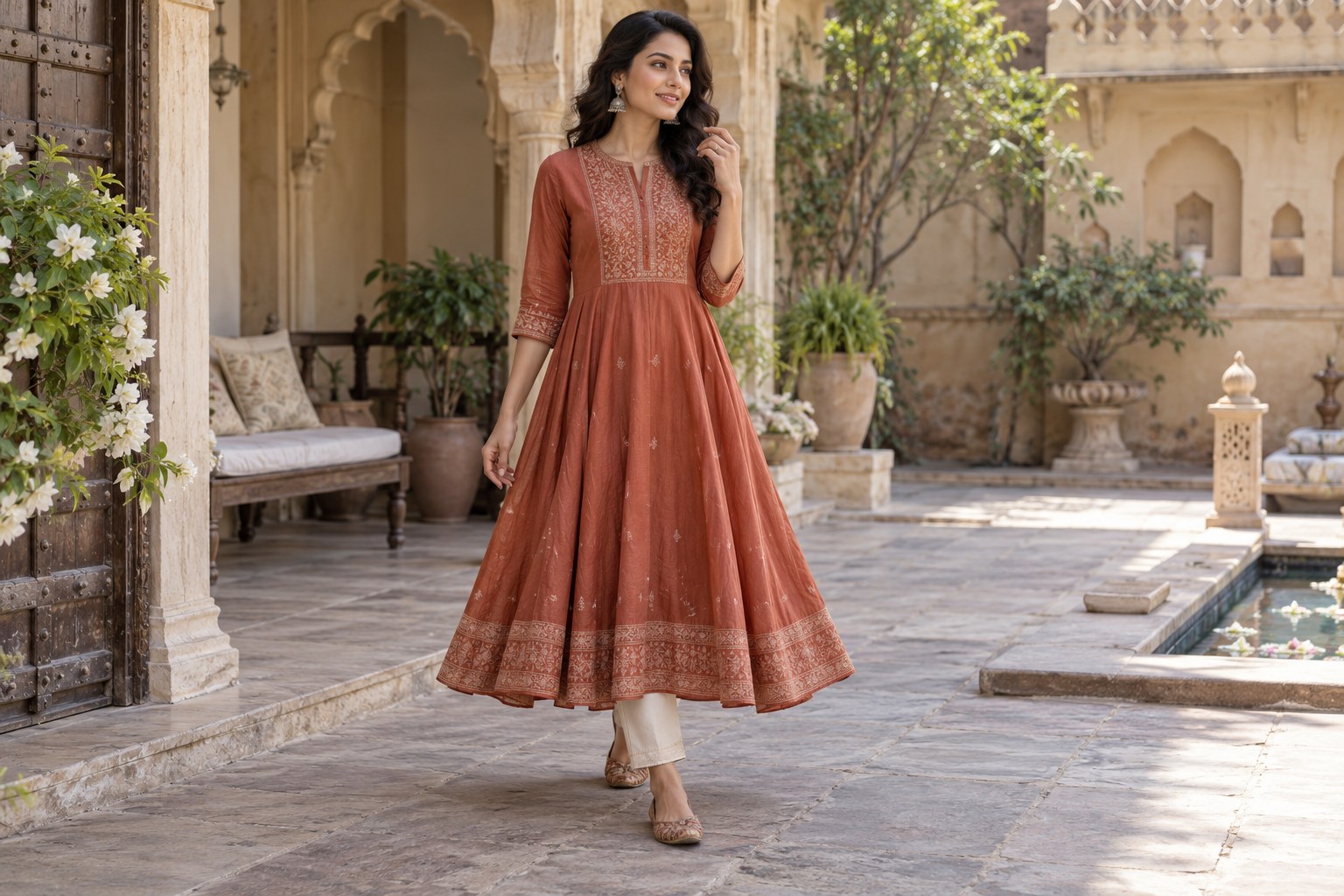
Let a flared kurta move freely above a narrower trouser shape, with enough room at both waist and thigh.
Indian wear & mixing
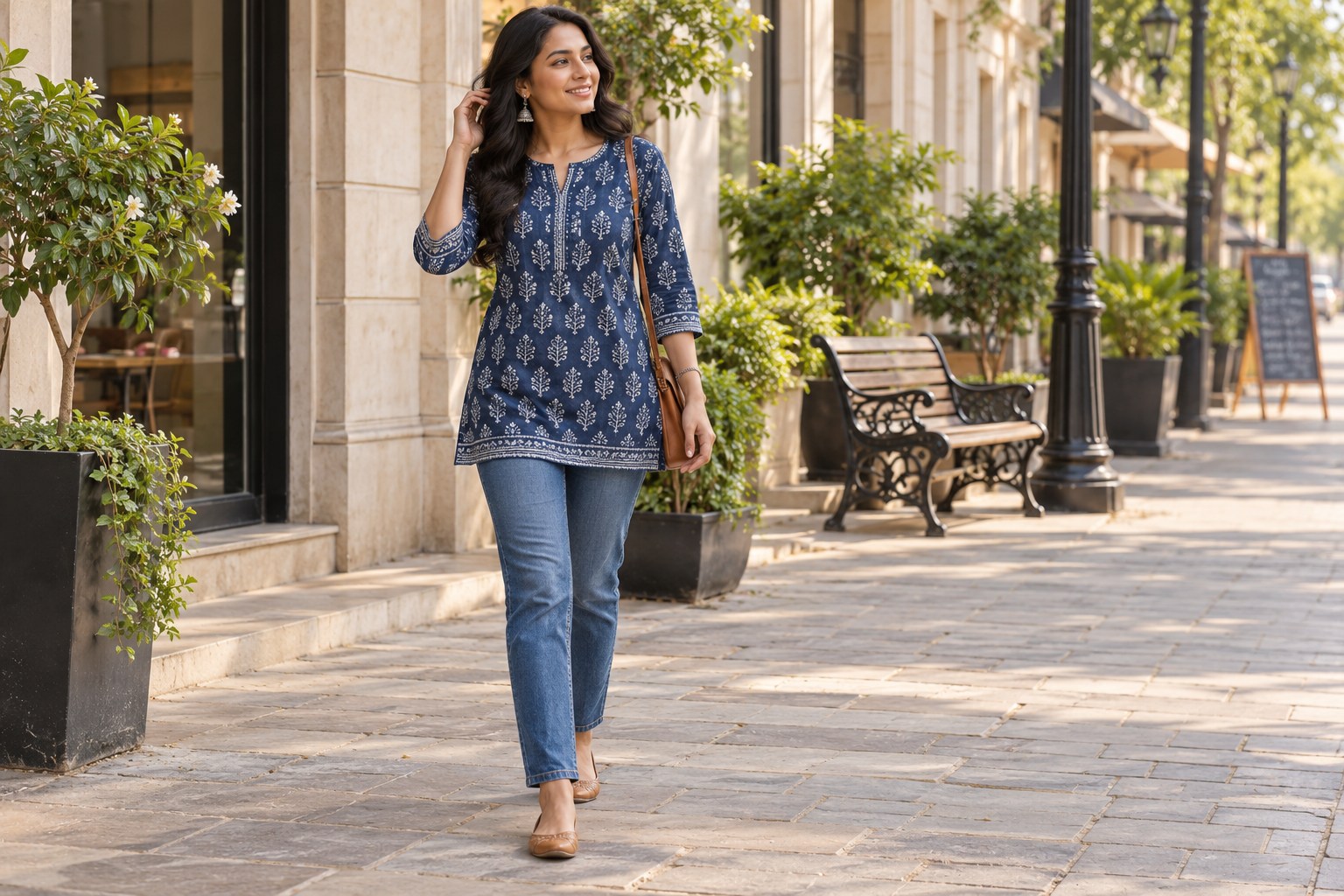
Choose the kurti length and jean rise together, then check how the hem behaves over pockets and waistbands.