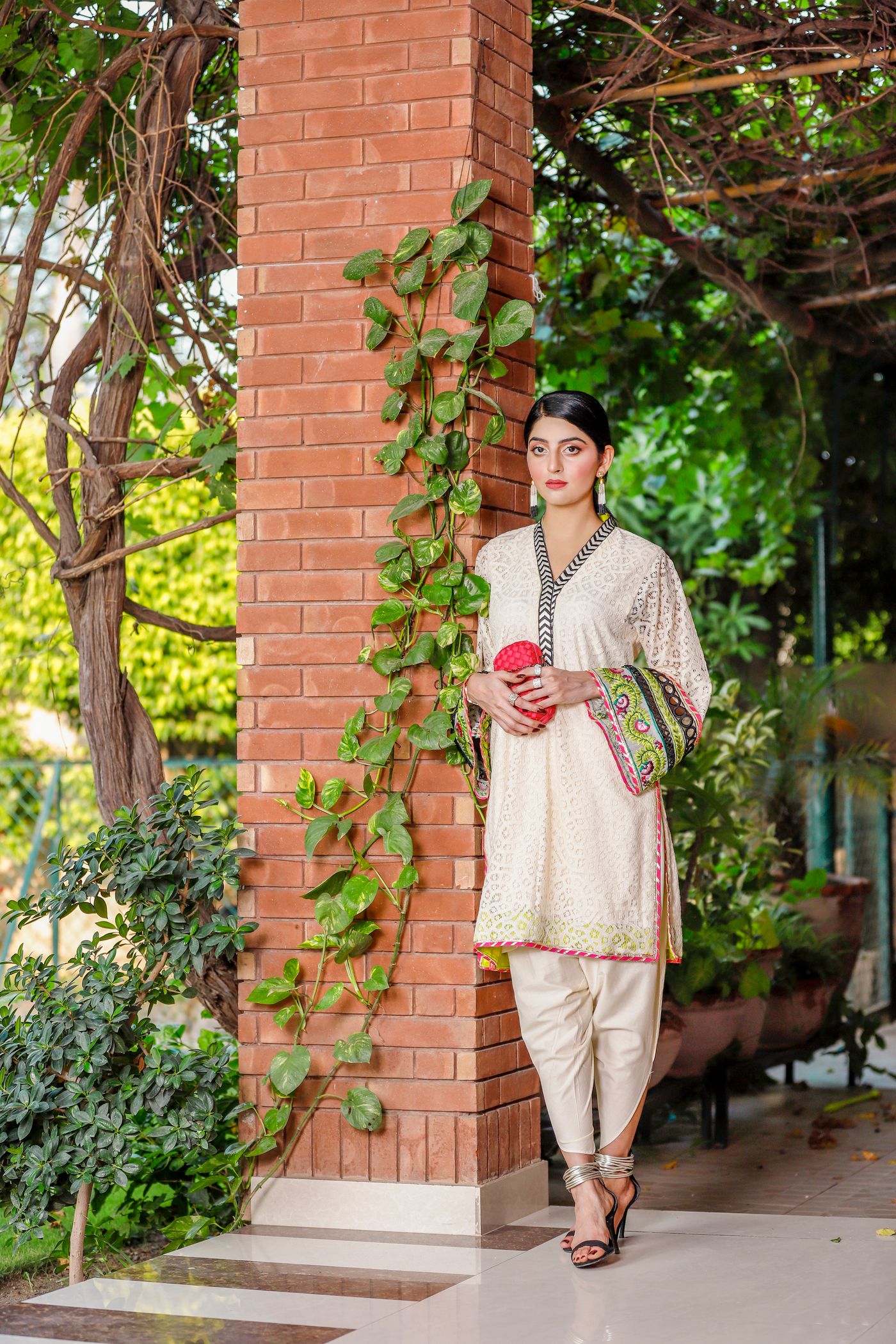
Indian wear & mixing
Wear a straight kurta with tapered trousers
Check the kurta’s side openings and the trouser taper so the two shapes move comfortably together.
Clothes, accessories & the ways to wear them
Indian wear & mixing
Choose a dupatta by its colour, border and weight, then see how it changes the plain set you already own.
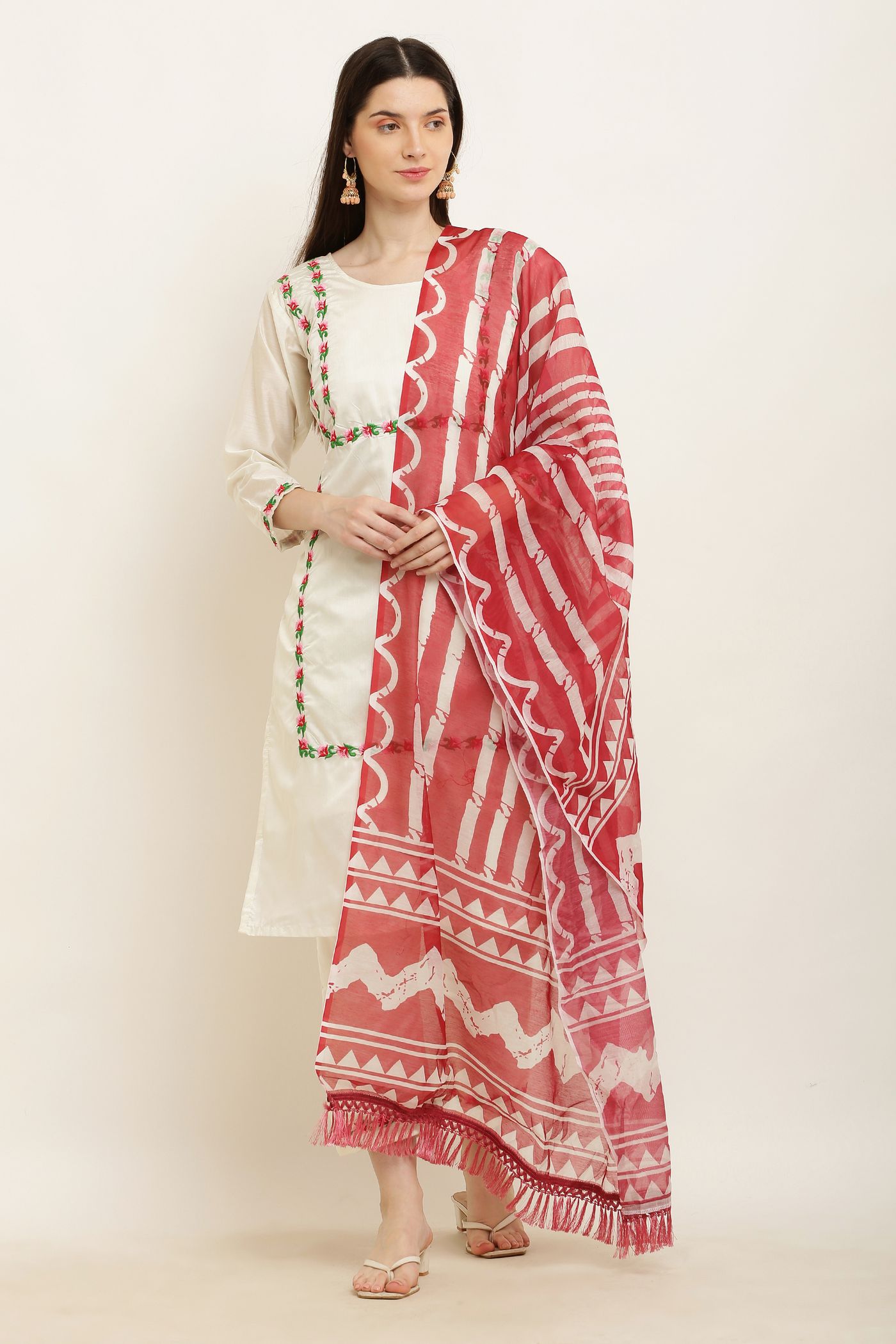
A dupatta can change a plain kurta set without requiring new trousers or a new kurta. Start with the set on your body rather than laid flat. The dupatta's border, transparency and weight will interact with the neckline and shoulders differently once draped.
A contrasting colour creates the most obvious change. A navy set with a rust dupatta, for example, makes the added piece easy to see. A tonal dupatta gives a quieter effect, especially when the texture differs. A print can connect the set to another colour without requiring that shade to appear in shoes, earrings and a bag as well.
A broad border frames the drape and may become the main detail. Try it over one shoulder, across both shoulders or in your usual arrangement. If the border lands directly over kurta embroidery, decide whether you enjoy the overlap. A plain area may allow both details to remain clearer.
Weight changes the way the dupatta stays in place. A substantial border can pull a light centre fabric downwards. A very light dupatta may move more readily when you walk. Neither is automatically better; choose according to how actively you will move and how much adjustment you are happy to make.
Check the length with your shoes and bag. Long ends can be appealing at a seated event but inconvenient during a commute. If you fold the dupatta narrower, make sure it still provides the coverage you want. A decorative fold and a coverage-focused drape may need different amounts of fabric.
Try the new arrangement before selecting jewellery. When the dupatta is the main detail, small earrings or a simple bracelet may be enough. If you prefer a richer combination, add pieces individually and check for snagging against the fabric or border.
One useful test is to photograph the original set and the set with the dupatta from the same distance. Look at whether the added colour and border create the change you wanted. If they do, resist buying several matching accessories simply because the dupatta is new; the existing plain set has already supplied the foundation.
Place two dupattas beside the same plain set: one close in colour with a broad border, and another contrasting in colour with little decoration. The first changes the frame of the outfit; the second changes its colour balance. Try both draped before deciding which feels like the more useful addition.
If the set already has decorative cuffs, see where the dupatta ends fall when your arms hang naturally. A heavily bordered end beside an ornate cuff may create a concentration of detail. You can enjoy that richness, adjust the drape or choose the simpler dupatta. The comparison makes the decision concrete without requiring a general rule against mixing embellishment.
Indian wear & mixing
Check the kurta’s side openings and the trouser taper so the two shapes move comfortably together.
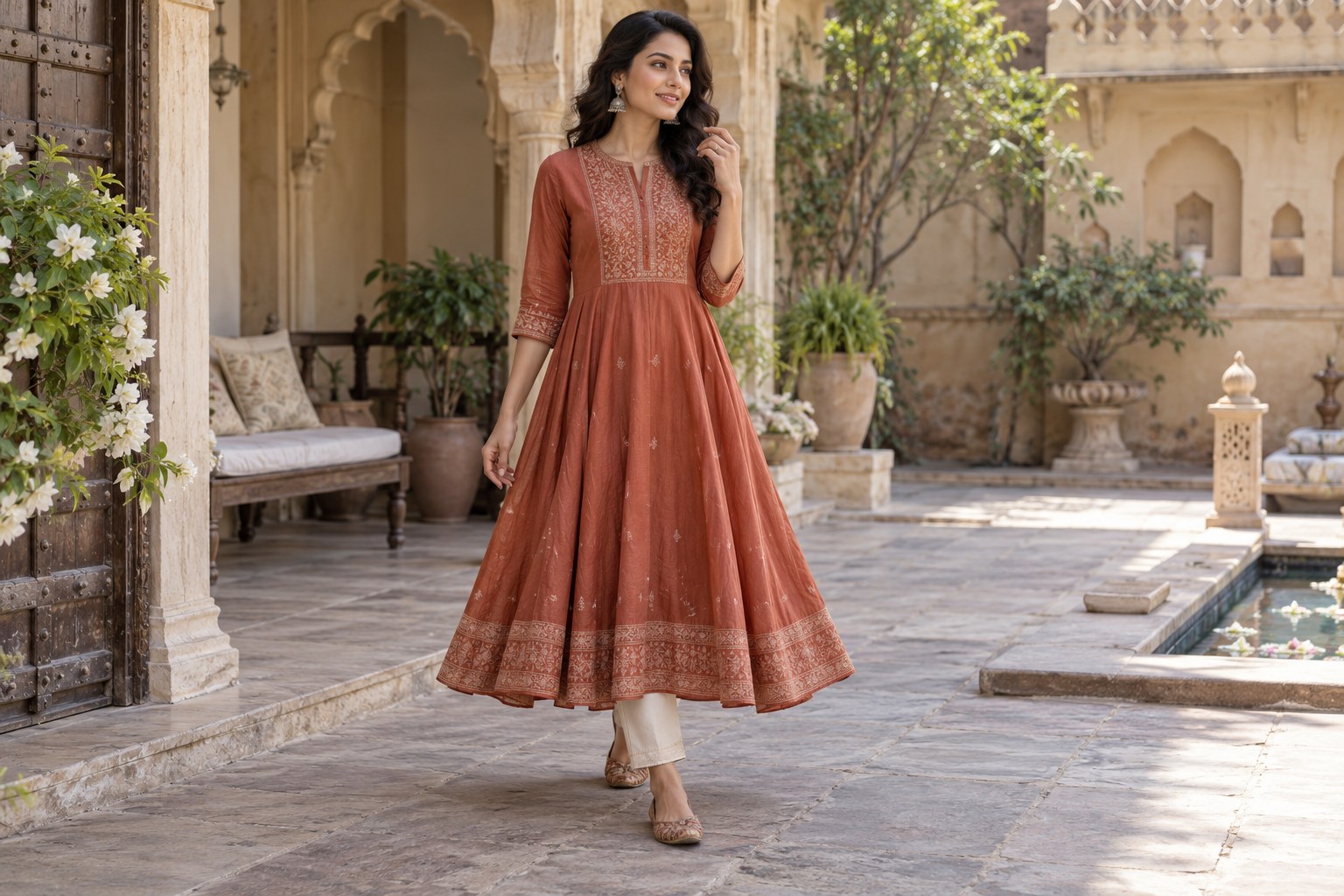
Indian wear & mixing
Let a flared kurta move freely above a narrower trouser shape, with enough room at both waist and thigh.
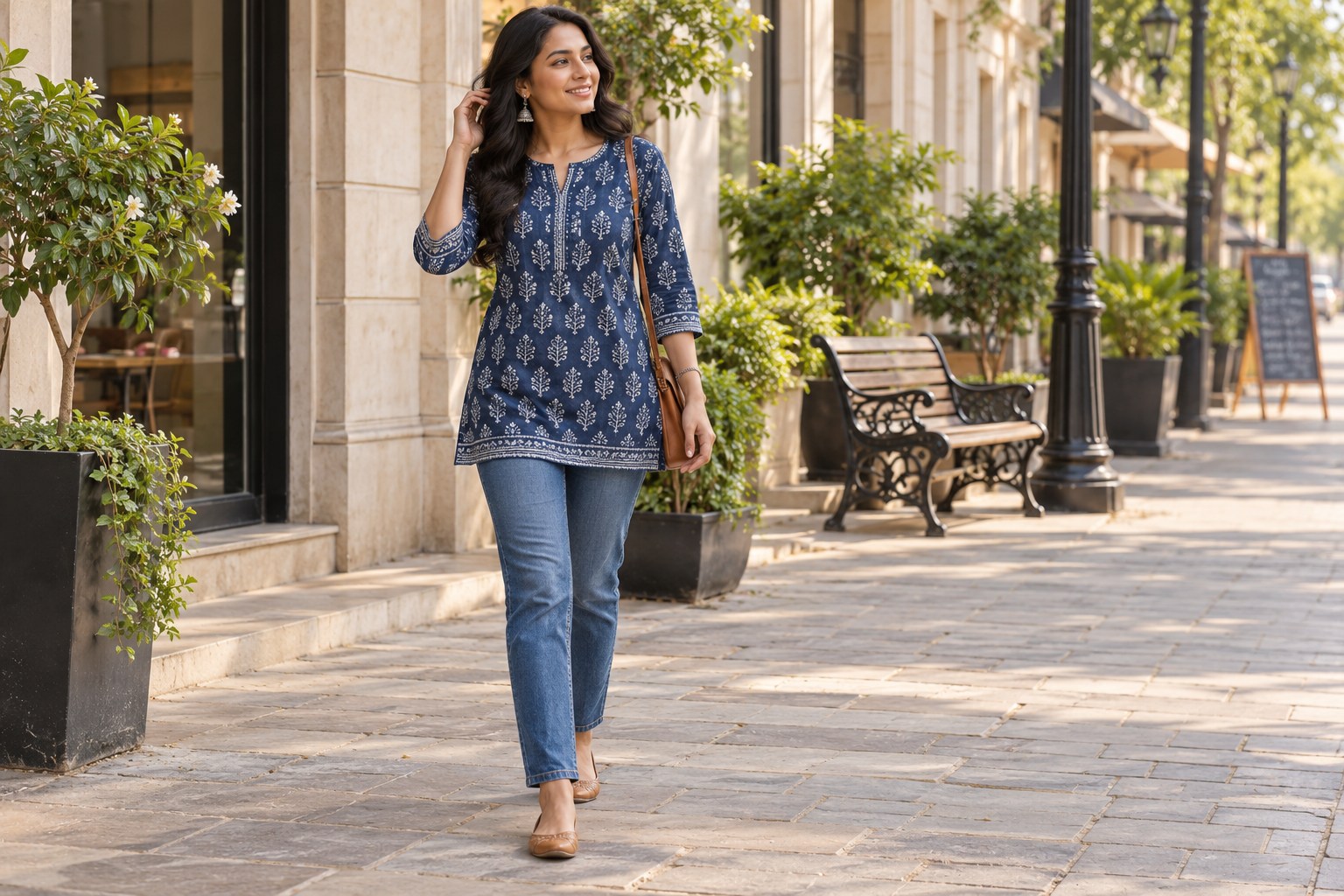
Indian wear & mixing
Choose the kurti length and jean rise together, then check how the hem behaves over pockets and waistbands.