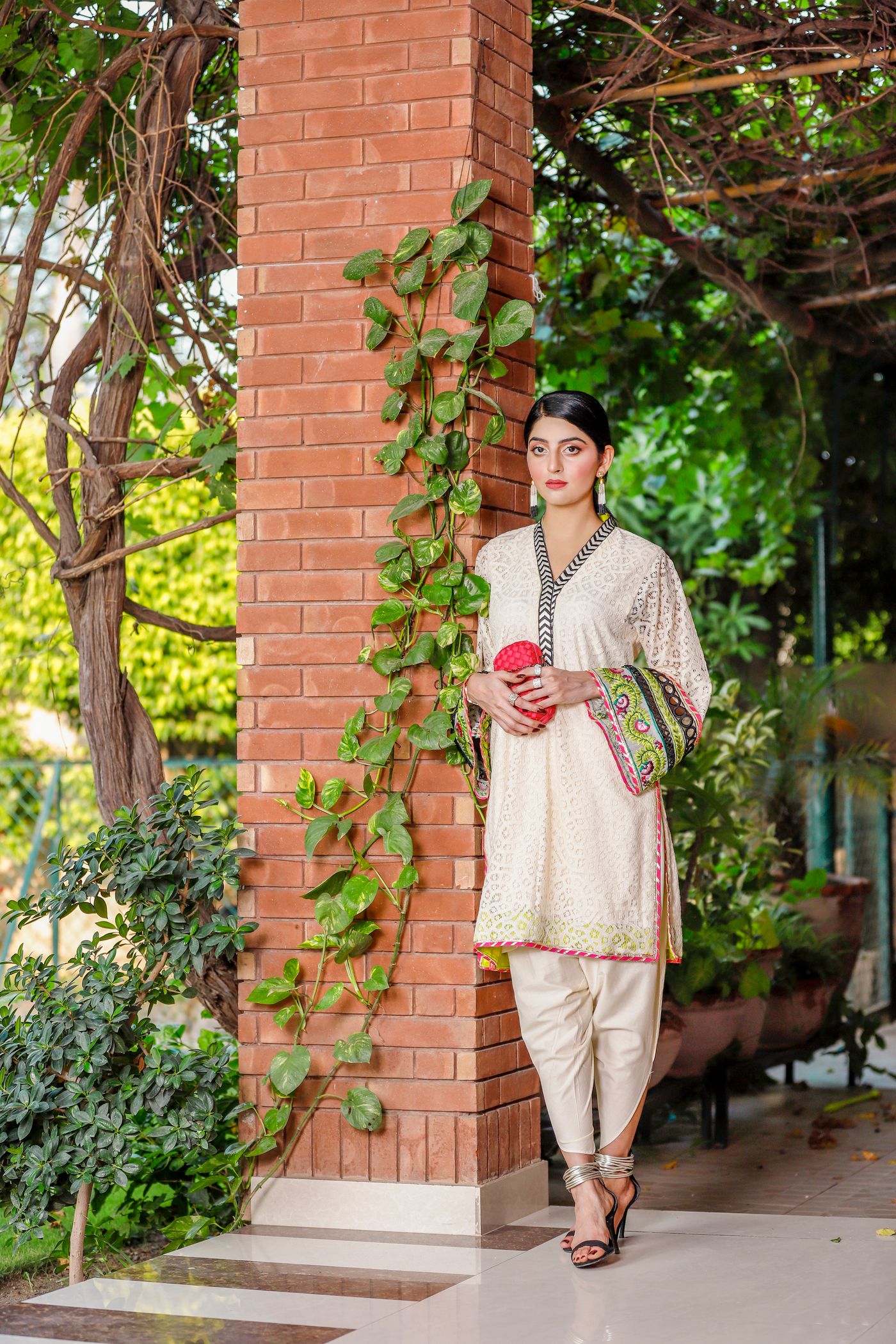
Indian wear & mixing
Wear a straight kurta with tapered trousers
Check the kurta’s side openings and the trouser taper so the two shapes move comfortably together.
Clothes, accessories & the ways to wear them
Indian wear & mixing
A second blouse can make a lehenga useful for more invitations, provided the fit and waistband connection are considered first.
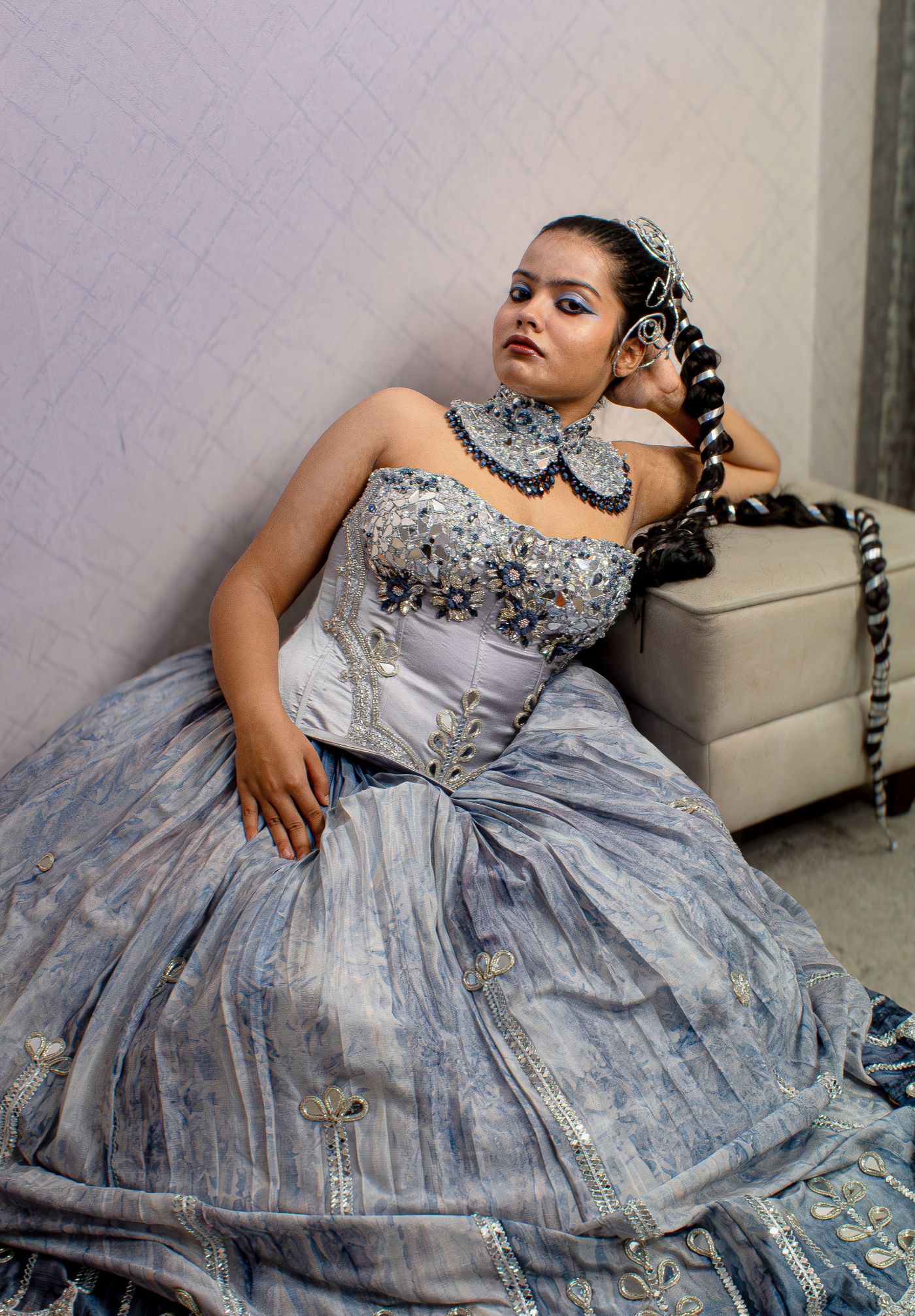
Before buying another blouse for a lehenga, try the skirt with the one you already own. Identify what limits the outfit's use. Is the blouse too elaborate for smaller gatherings, difficult to fasten, uncomfortable at the sleeves or simply a colour you want to change? A replacement should address that specific limitation. A different neckline alone will not solve a waistband that sits in the wrong place.
Measure the relationship between blouse and skirt while wearing them. Decide how much overlap or separation you prefer, then sit and raise your arms. If you are having a blouse made, take the skirt to the fitting and explain those movement requirements. A standing measurement cannot show how the pieces will behave through a meal or an evening of dancing.
A plain blouse can give a heavily embellished skirt more occasions to appear. Look at the skirt's background colour and its smaller accent shades. Repeating an accent may create a more intentional combination than trying to match a slightly different version of the dominant colour. Check candidate fabrics beside the actual skirt in daylight; phone photographs are useful references but can shift colour and hide texture.
The blouse's surface matters as much as its shade. A crisp fabric may support a defined sleeve or collar, while a softer fabric creates a gentler outline. Consider the weight of the skirt when comparing them. A very delicate top beside a stiff skirt can be an intentional contrast, but it may need a clear neckline or sleeve shape to look connected.
If the blouse is meant to work with and without a dupatta, check both versions before finalising the neckline. Ask whether the chosen fastening can be managed comfortably and whether any ties will interfere with a jacket or the chair back. Decorative back details can become awkward when the event requires several hours of leaning against a seat.
Bring the planned underlayer to a fitting rather than expecting it to work later. Its straps and edges affect the neckline and sleeve decision. This is about your preferred coverage and comfort, not a requirement to use a particular kind of undergarment. If a design only works with something you dislike wearing, choose a different design while changes are still possible.
Try at least two complete combinations before deciding the blouse is versatile. For example, a plain deep green blouse might work with the lehenga for a dinner and with a simpler skirt for a family gathering. Add the actual bag and jewellery each time. A blouse earns its place through combinations you will wear, not through an imagined list of future occasions.
If a tailor is making the blouse, describe the occasions you actually want it for. A useful brief might be: wear with this skirt, remain comfortable through a seated meal, allow the arms to lift, and work without the dupatta as well as with it. Add your preferred sleeve length, coverage and fastening. Those details are more actionable than asking for a versatile blouse while showing several unrelated reference photographs.
Bring the intended underlayer, skirt and shoes to the relevant fitting. Shoes affect the skirt position and overall proportion, while the underlayer affects the blouse's shape. Ask which design details can be altered later and which are fixed by the cut. Do not assume a deep neckline, close armhole or elaborate back can be changed easily once the fabric is cut.
At the final fitting, repeat the movements from the brief and inspect the inside finish as well as the outer appearance. Any rough edge, bulky seam or awkward hook will still be present after the outfit is accessorised. If a change is needed, allow another check rather than collecting the blouse immediately before the event. The purpose of a new blouse is to create a repeatable outfit, so the final fit deserves as much attention as the new colour.
Indian wear & mixing
Check the kurta’s side openings and the trouser taper so the two shapes move comfortably together.
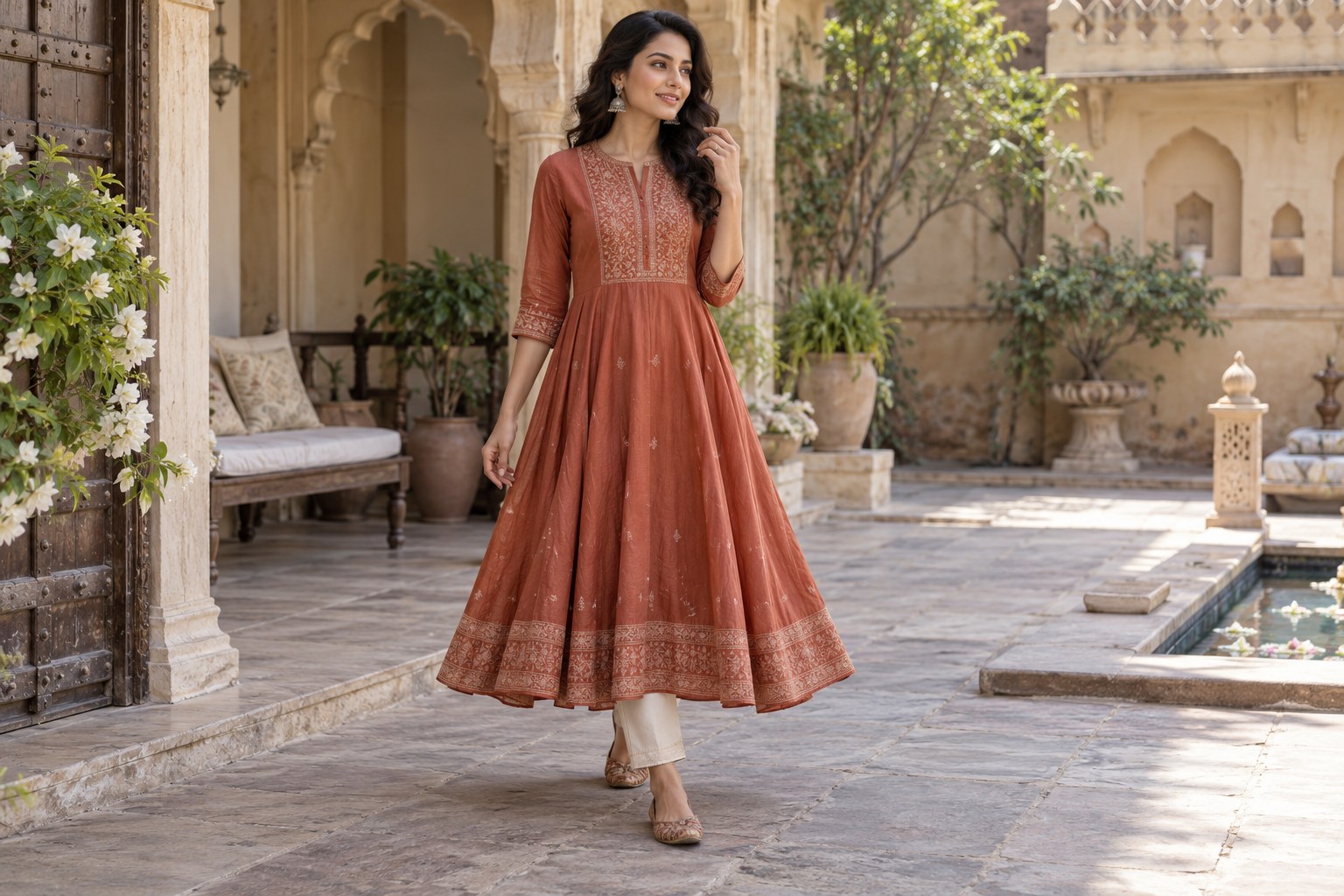
Indian wear & mixing
Let a flared kurta move freely above a narrower trouser shape, with enough room at both waist and thigh.
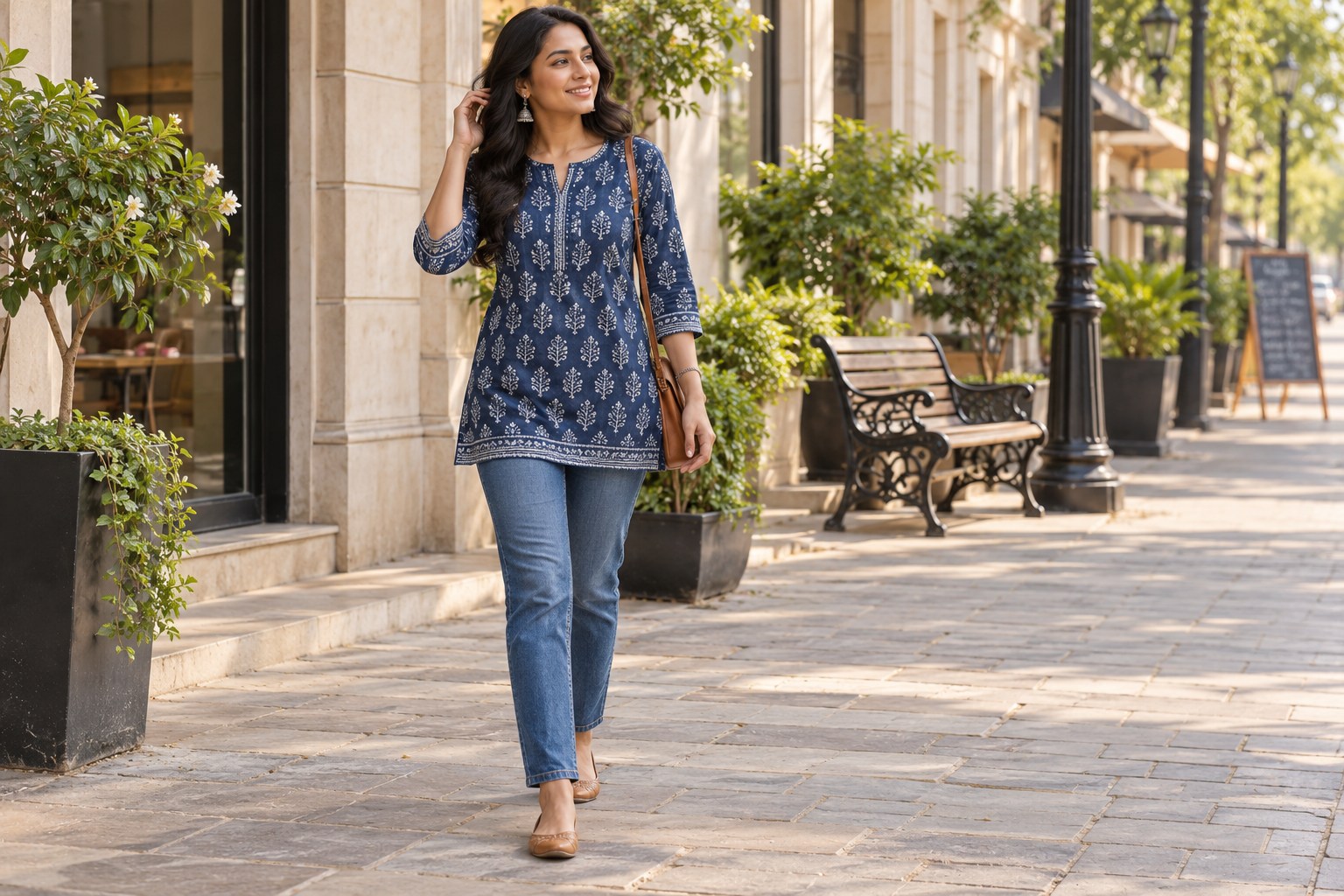
Indian wear & mixing
Choose the kurti length and jean rise together, then check how the hem behaves over pockets and waistbands.