Indian wear & mixing
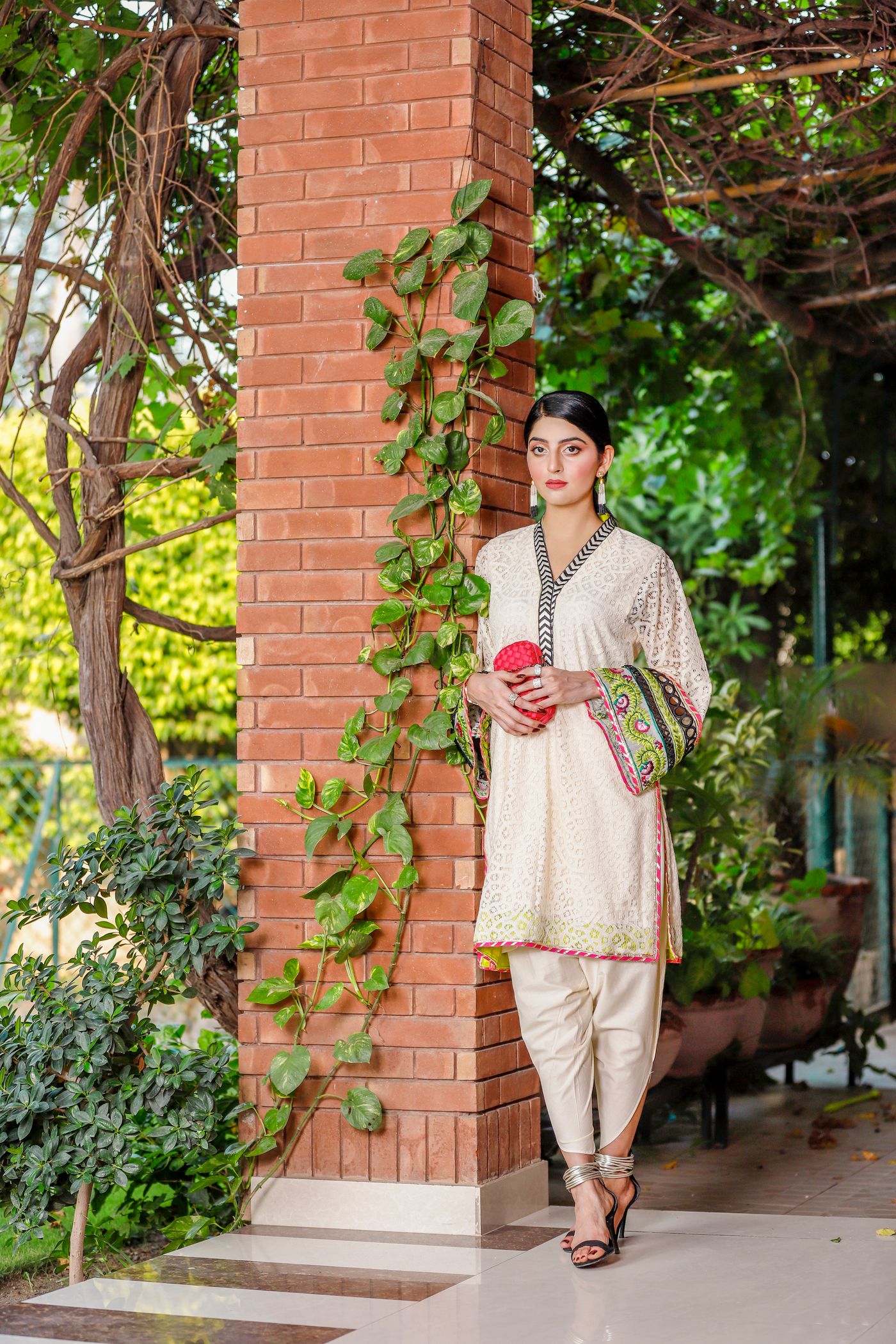
Wear a straight kurta with tapered trousers
Check the kurta’s side openings and the trouser taper so the two shapes move comfortably together.
Clothes, accessories & the ways to wear them
Indian wear & mixing
Use a seated movement check to identify blouse tension before deciding what adjustment to request.
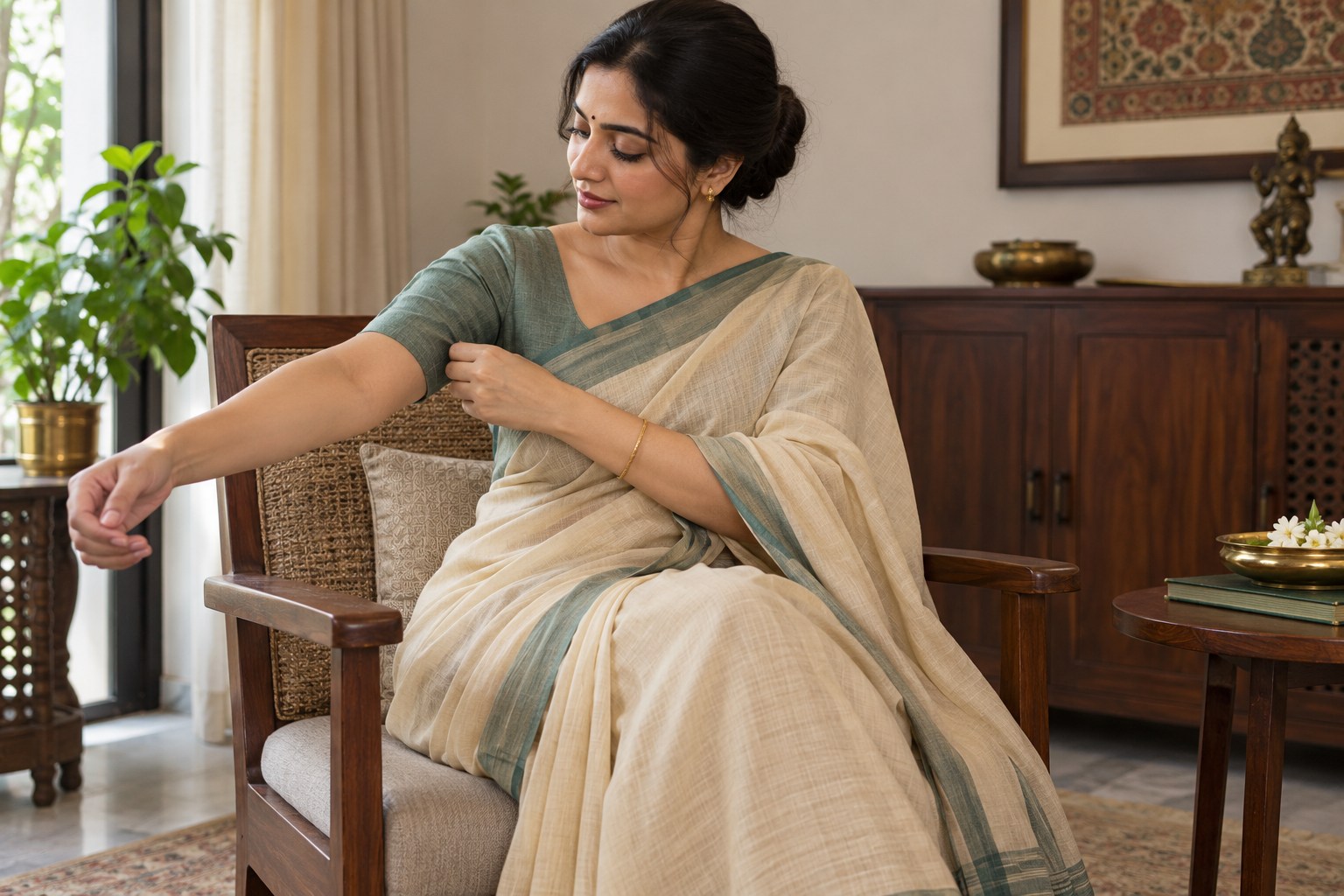
AI-generated illustration. Items shown are illustrative, not specific products for sale.
A blouse fitting should include the positions you will use during the event. Standing with relaxed arms shows only one part of the fit. Sitting, reaching and turning can reveal pressure at the sleeves, neckline or fastening that is easy to miss in a quick mirror check.
Wear the underwear you intend to use with the blouse. Different shapes and straps can change where seams and edges sit. If the blouse will be worn with a saree, have the intended drape available for a later check, but first assess the blouse without the pallu covering the areas you need to observe.
Fasten the blouse normally and take a comfortable breath. The fastening should not need to be forced closed. Sit in a chair and notice whether the lower edge presses, rolls or rises. A close fit can still allow normal movement; pressure you notice immediately is worth discussing rather than expecting to forget about it later.
Look at the front fastening, if present. Gaping between hooks or buttons can indicate tension, but the remedy depends on the construction and where the blouse is tight. Adding another hook may conceal an opening without providing the room you need. Ask a tailor to assess the cause rather than requesting a cosmetic fix alone.
Check the back too, using a mirror or a photograph taken with your permission. Fabric pulling into lines, a fastening under strain or an edge lifting away can help describe what you feel. These observations are not a diagnosis of every fit issue; they are concrete information to bring to the person making the adjustment.
Extend your arms forward as though holding a plate, then raise them to a comfortable height. Notice whether the blouse body is pulled sharply upwards or the sleeve restricts the upper arm. A sleeve can feel tight at the elbow even when there is enough room around the upper arm, so bend it fully as well.
Turn to each side as though speaking to someone seated beside you. Check the neckline's position and whether you still have the coverage you want. If the neckline moves more than expected, discuss the whole fit rather than immediately making it higher or tighter. Shoulder and armhole construction may contribute to the movement.
If the blouse has ties, test whether you can manage them as needed and whether their ends catch in jewellery or hair. Decorative ties should not be pulled painfully tight to compensate for another fit problem. Explain any preference for independent dressing before alterations are finalised.
Arrange the saree in your intended style. A pallu can change how the blouse feels at the shoulder, especially if pinned. Repeat the forward reach and seated turn. If tension appears only after draping, adjust the drape or fastening arrangement before assuming the blouse itself needs further alteration.
Try earrings, necklace and any planned outer layer. A high neckline can contact jewellery differently when seated, and a cardigan can restrict sleeves that were comfortable alone. These are reasons to test the complete outfit, not to reject the blouse based on an isolated photograph.
When speaking with a tailor, explain the movement and location: for example, 'the sleeve presses here when I bend my elbow' or 'the front opens when I reach forward'. Bring the planned underlayer and saree if relevant. Ask what adjustment is possible with the available seam allowance and construction before approving work.
After alteration, repeat the same movements rather than checking only whether the blouse looks smoother standing. Some changes improve one area while affecting another. Leave enough time for that fitting where possible, especially before an event with a fixed date.
The goal is not a blouse that remains motionless through every position. Fabric will move with you. The useful standard is that the movement feels comfortable, the fastenings remain secure and the coverage stays within your preferences during the activities you actually expect to do.
Indian wear & mixing
Check the kurta’s side openings and the trouser taper so the two shapes move comfortably together.
Indian wear & mixing
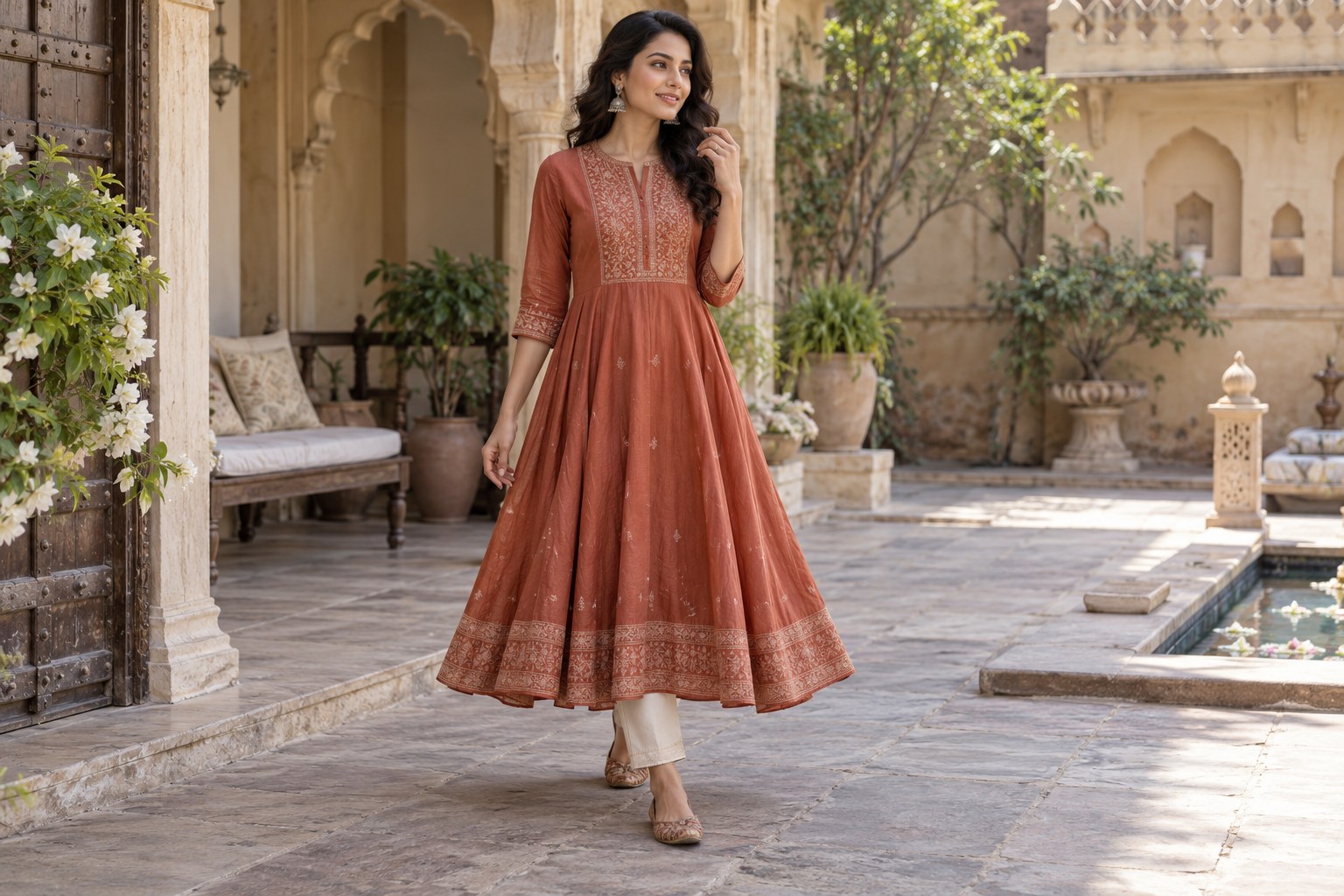
Let a flared kurta move freely above a narrower trouser shape, with enough room at both waist and thigh.
Indian wear & mixing
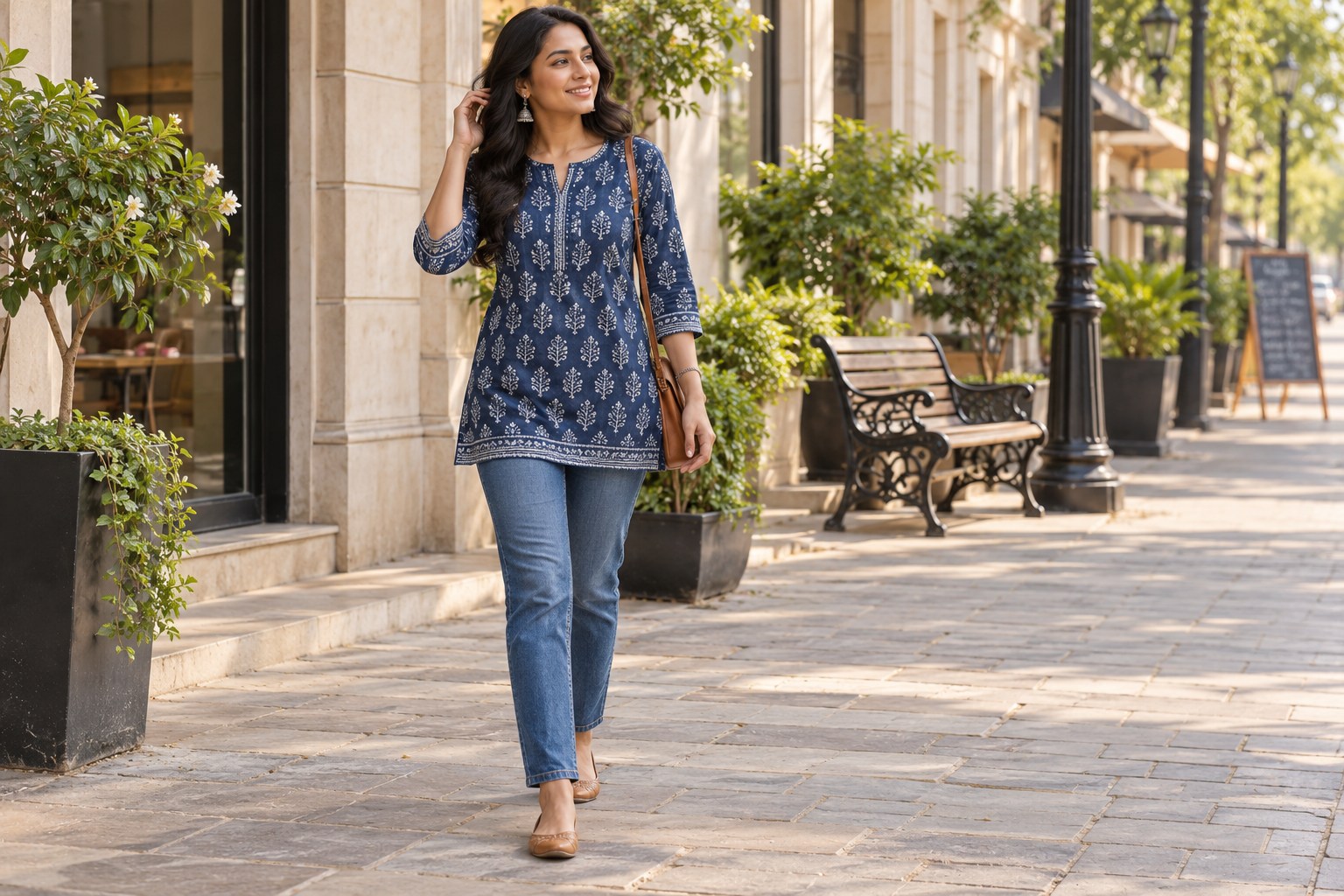
Choose the kurti length and jean rise together, then check how the hem behaves over pockets and waistbands.