Shoes & bags
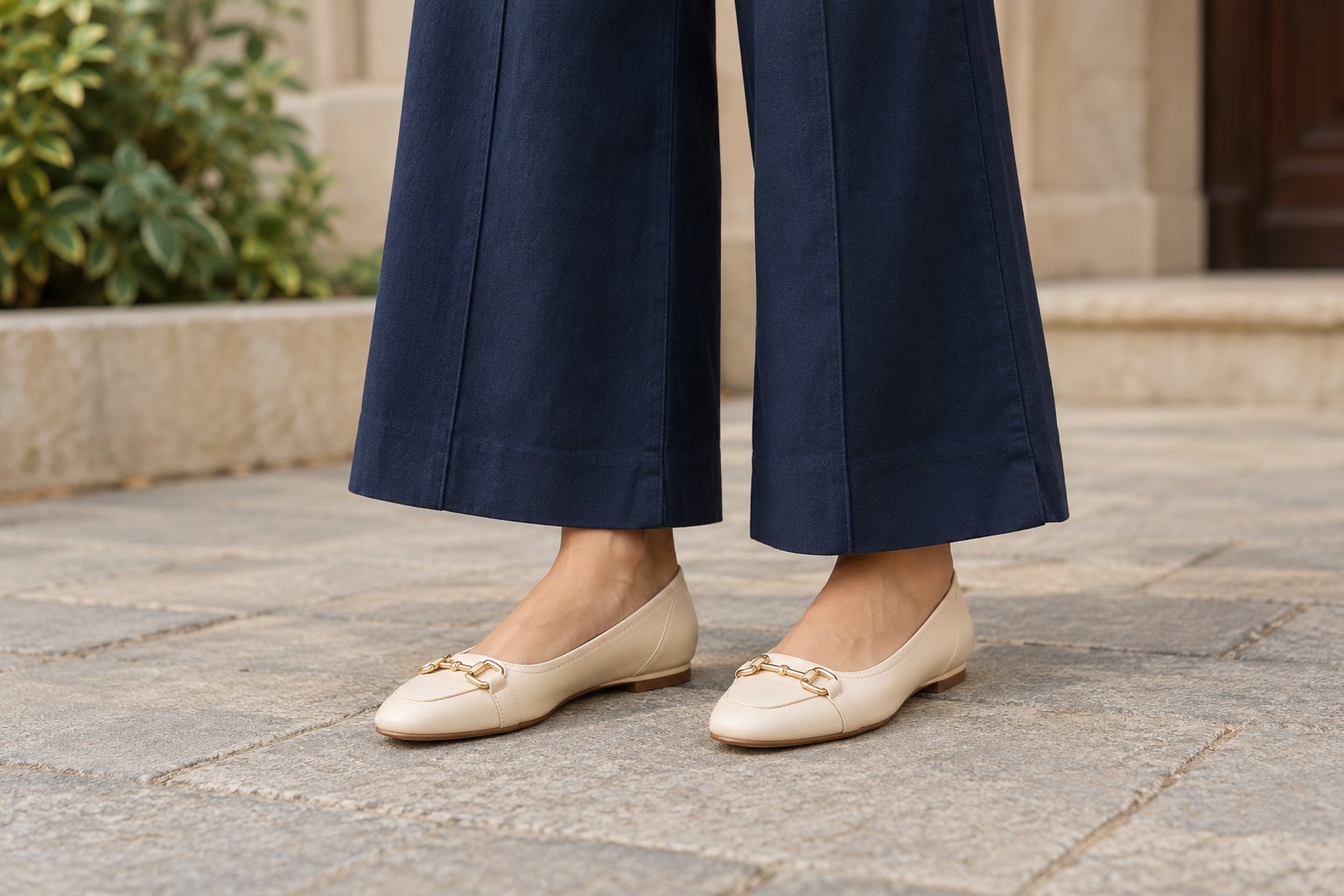
Choose flats to wear with wide-leg trousers
Choose flats with enough visible shape beneath wide trousers, then make sure the hem stays clear while walking.
Clothes, accessories & the ways to wear them
Shoes & bags
Assess a pointed flat through toe space, heel hold and walking movement before making it the shoe for a long day.
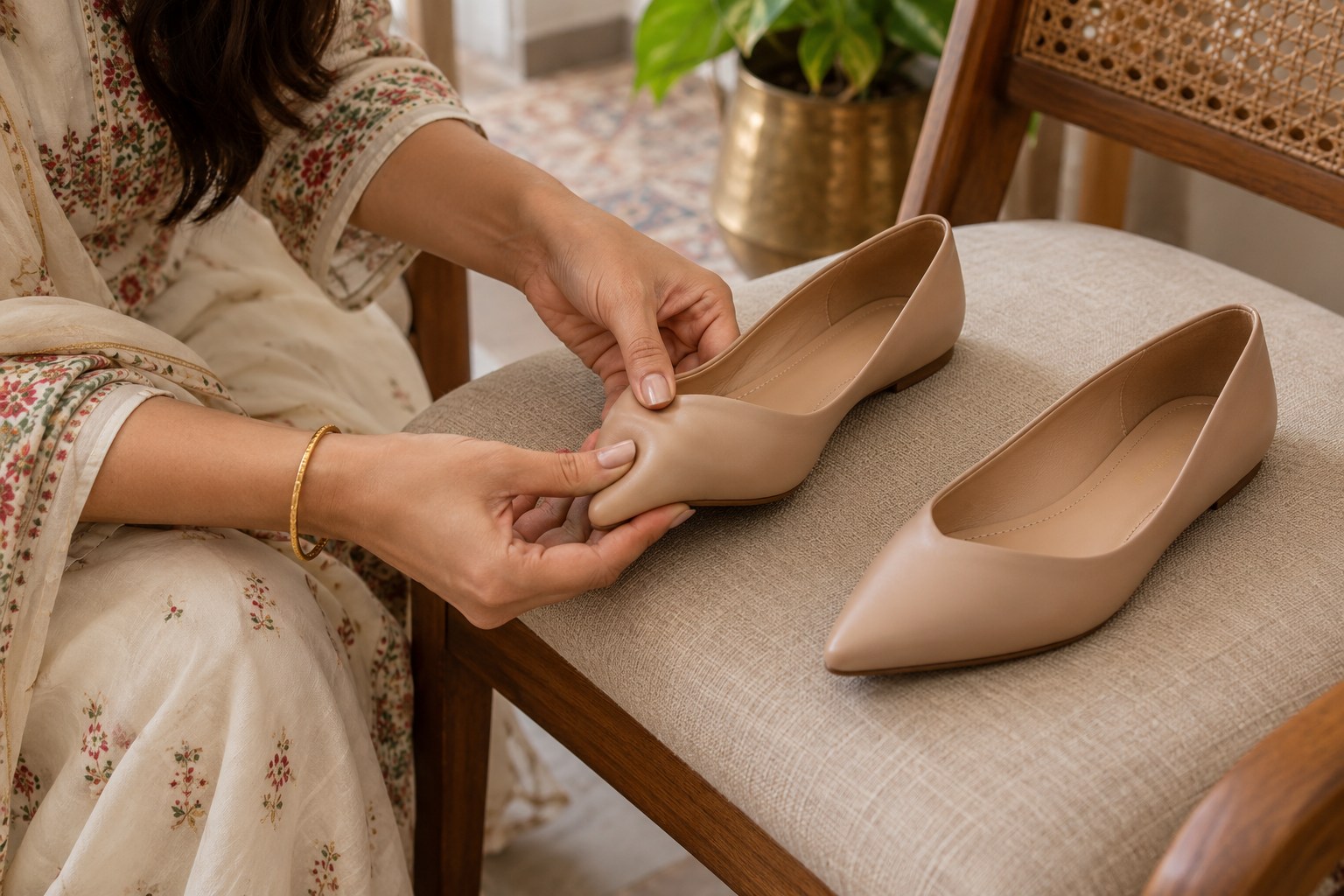
AI-generated illustration. Items shown are illustrative, not specific products for sale.
The pointed outline of a flat does not tell you where your toes sit inside it. Some designs leave decorative space beyond the foot, while others narrow earlier. Try the actual pair in the size and shape that suits you. Do not judge fit by how far the empty point extends, and do not accept pressure at the toes because the shoe is described as elegant or office-friendly.
Wear the socks, liners or hosiery you intend to use, if any. Their thickness and surface can change how the shoe feels. Put on both shoes and stand normally rather than balancing briefly on one foot. Check for compression at the front, pressure along the sides and slipping at the heel. A different size may help, but a different shoe shape may be the better answer if one area fits only when another becomes uncomfortable.
On an appropriate clean surface, walk, turn and stop. Notice whether the heel lifts repeatedly or the foot slides towards the point. If you are gripping to keep the shoe on, do not treat that as a minor styling inconvenience. Try another fit. Avoid assuming an added insert will solve every mismatch; any adjustment should be assessed in the whole shoe rather than added simply to make a purchase work.
Sit and stand as well. A low-cut upper can feel secure while standing and shift when the foot bends. If the shoe has a strap, fasten it comfortably without using excessive tightness to compensate for the rest of the fit. Buckles and seams should remain comfortable through movement.
A pointed toe can catch the hem of a long trouser or skirt when the fabric falls forward. Try the complete outfit and look down while stepping, then ask someone to check the back hem or use a mirror. If the trousers were fitted for a different shoe height, they may need adjustment. A visually longer toe is not a substitute for enough clearance under the fabric.
Consider the day's route and duration. A pair that feels suitable for a short meal may not be the one you want for several hours of standing and walking. Use a familiar alternative if the new pair has not been assessed for your needs. If you notice persistent discomfort, stop relying on the shoe for that day rather than treating discomfort as a necessary break-in stage.
Look at the sole condition, fastening and upper before a long outing. A worn heel area or loose trim may need repair or a different pair. Follow the maker's care instructions for the material. Pointed flats come in many constructions, so a care method suitable for one is not automatically suitable for another.
Only after fit and use are settled should the pointed shape decide the outfit's visual balance. It can provide a clear line beneath wide trousers or a defined finish to a dress. Choose the pair because it works on your foot and with your clothes, not because a general rule claims that pointed shoes are required for a particular proportion.
Shoes & bags
Choose flats with enough visible shape beneath wide trousers, then make sure the hem stays clear while walking.
Shoes & bags
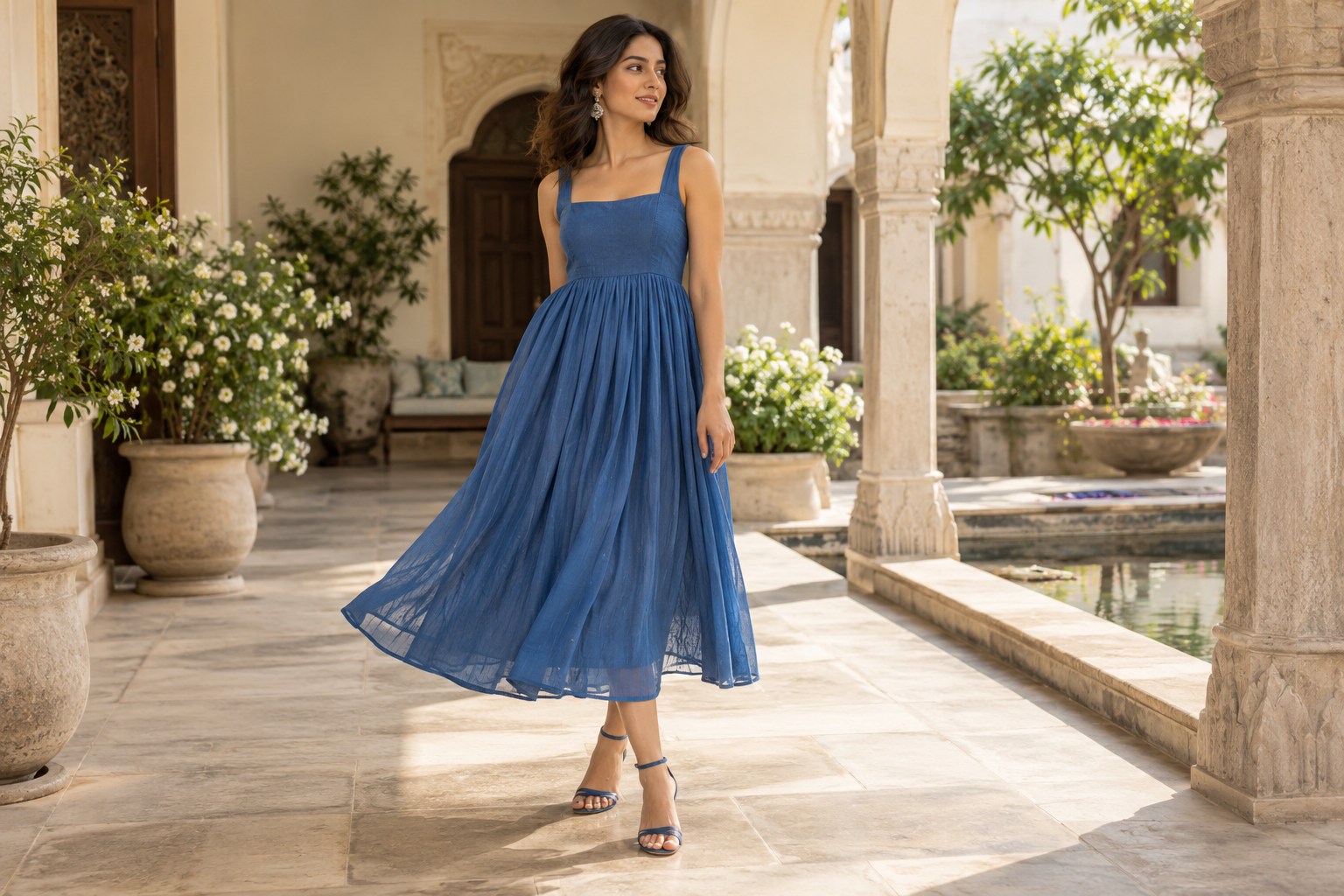
Use sandal straps to echo or contrast the shape of a midi dress, without letting a visual match outweigh fit.
Shoes & bags
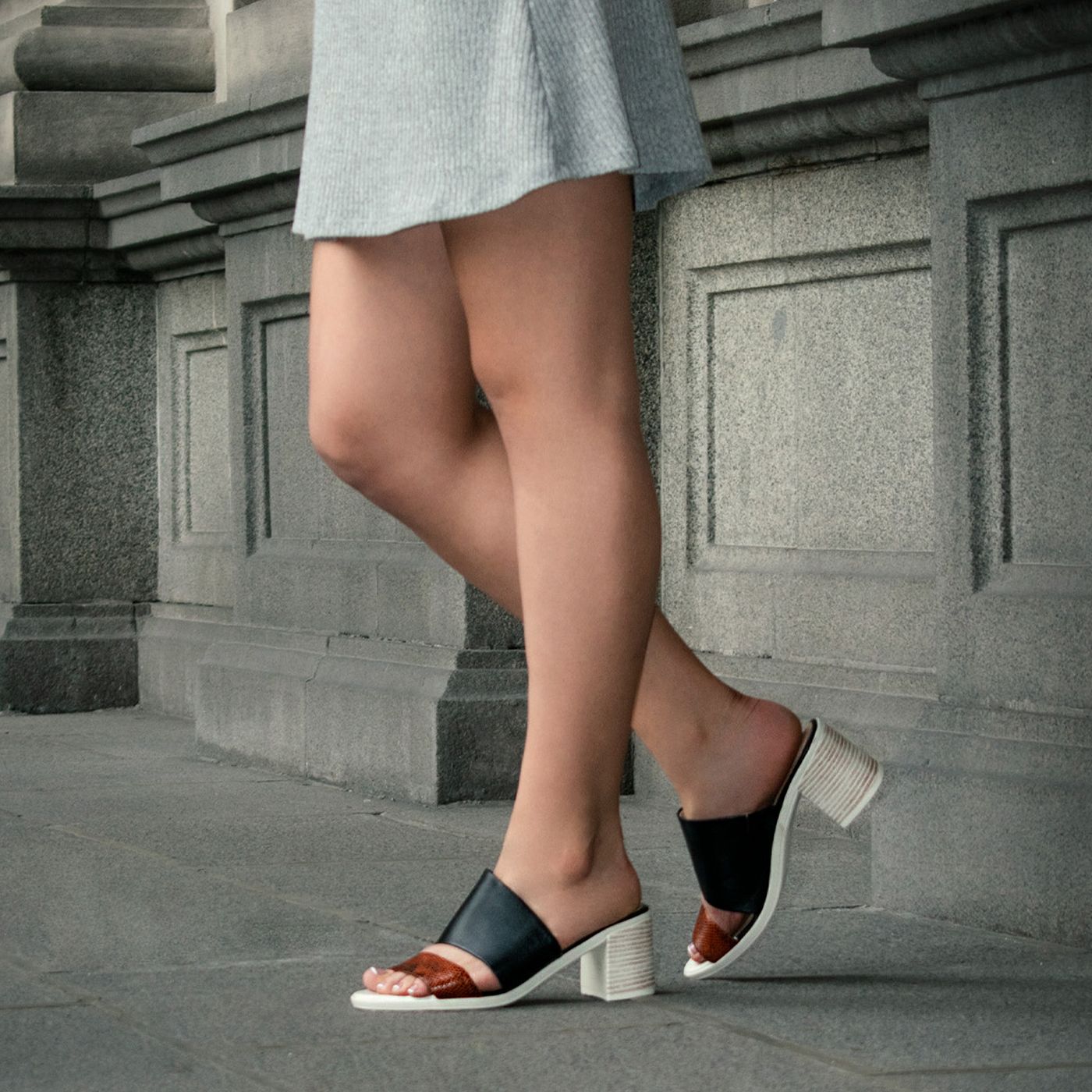
Assess the whole block-heel shoe and the event route; heel width alone does not tell you how it will feel on different surfaces.