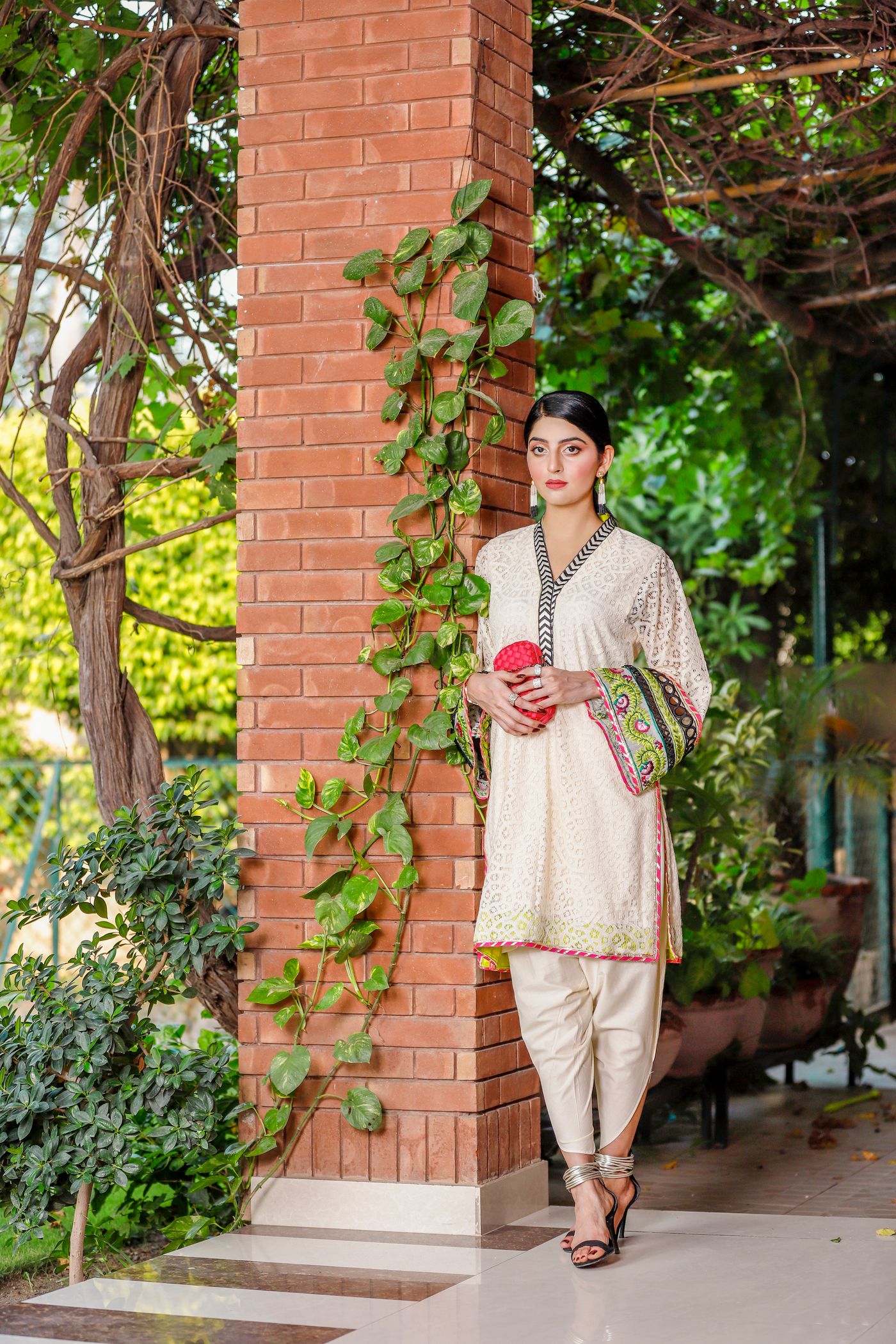
Indian wear & mixing
Wear a straight kurta with tapered trousers
Check the kurta’s side openings and the trouser taper so the two shapes move comfortably together.
Clothes, accessories & the ways to wear them
Indian wear & mixing
Use a handloom cotton dupatta's width, border and texture to shape the outfit around it.
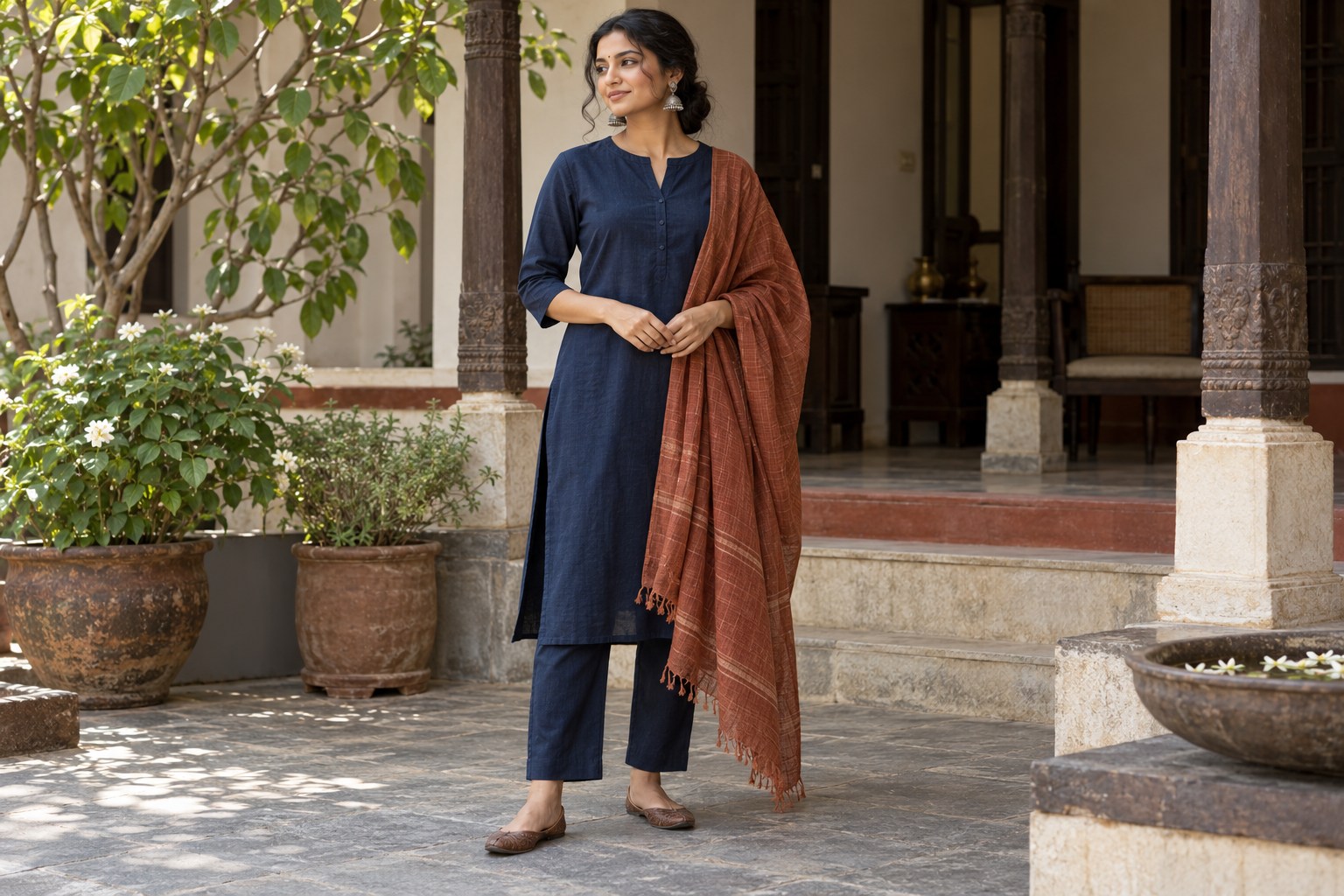
AI-generated illustration. Items shown are illustrative, not specific products for sale.
Spread the dupatta out before folding it. You may find that the border, end panels and central field contain different amounts of detail. Decide which part you want to show. A narrow fold can turn a broad textile into a strip of colour, while an open shoulder drape displays more of its weave and pattern. Neither arrangement is inherently better; they do different things in the outfit.
If the piece is sold as handloom cotton, check the maker's information and care instructions. The label does not tell you everything about its thickness, softness or colourfastness. Handle the actual textile and consider any extra decoration or mixed fibres. A firm, crisp dupatta may hold a defined fold, while a softer one may settle into smaller folds around the neck.
A white kurta and matching trousers can give a multicoloured dupatta a clear background. Alternatively, choose a kurta that repeats a less dominant colour in the dupatta, leaving its stronger border to create contrast. If the base outfit is also printed, compare the pattern sizes. A large border can remain distinct beside a small all-over print, whereas two similarly sized patterns may blend together.
Try the dupatta while carrying your everyday bag. A shoulder strap can flatten the fold you arranged or push it towards the neck. You might drape the dupatta on the opposite shoulder, use a crossbody position that avoids the border or choose a bag carried by hand for a short event. Make this decision with the bag loaded, since its weight changes where the strap sits.
Walk, sit and reach forward. If the dupatta stays in place, it may not need a pin at all. If it slips, consider a different fold or drape before piercing the fabric. Where a pin is appropriate, use a sound fastener and a discreet area that can bear it; do not force a large pin through a delicate or open weave. Remove it carefully before storing the textile.
Keep jewellery away from any fringe that catches easily. Smooth earrings or a simple ring can be easier companions than several hooks and dangling chains. The outfit is ready when the portion of the dupatta you wanted to display remains visible through ordinary movement, rather than only during a carefully arranged standing pose.
Indian wear & mixing
Check the kurta’s side openings and the trouser taper so the two shapes move comfortably together.
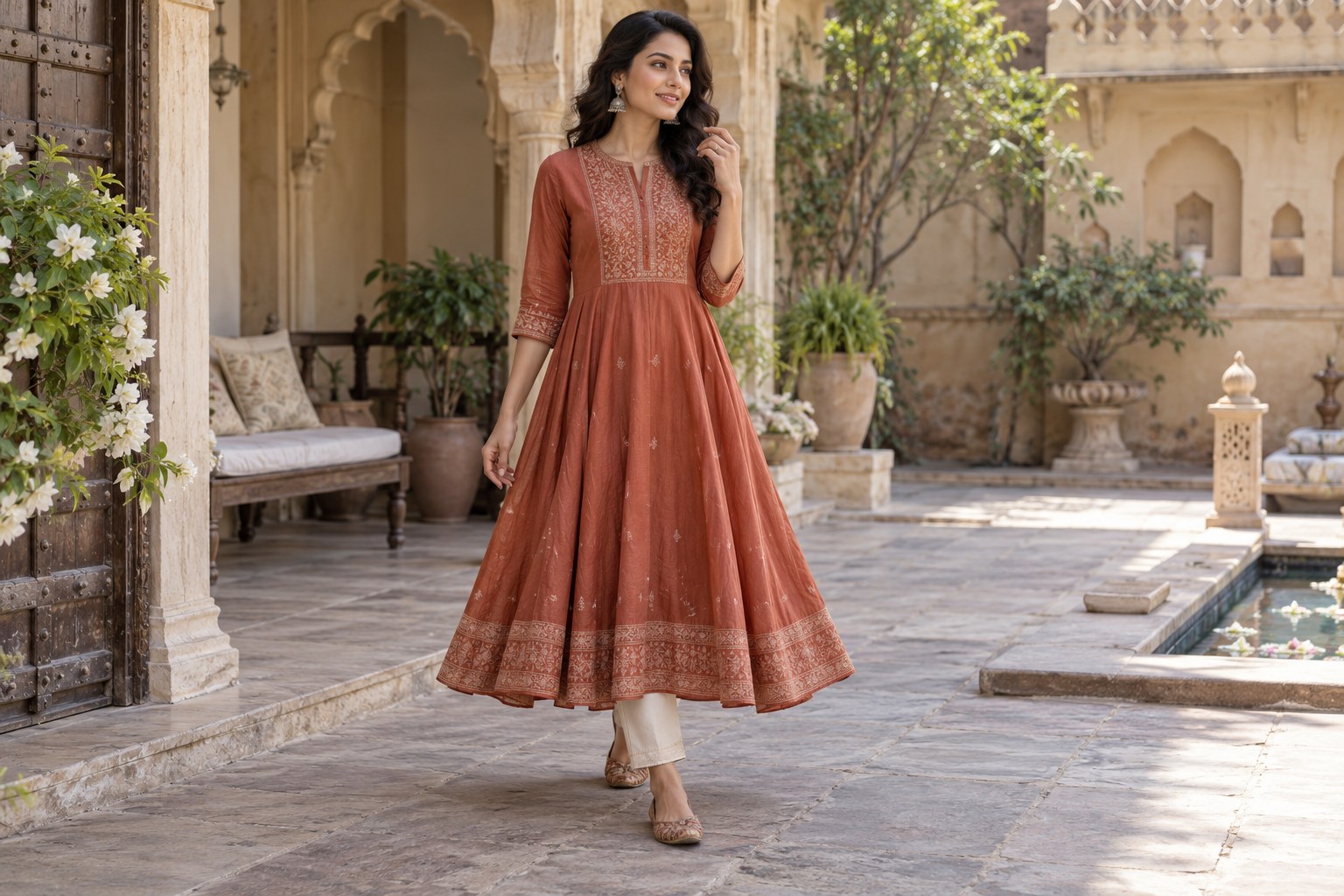
Indian wear & mixing
Let a flared kurta move freely above a narrower trouser shape, with enough room at both waist and thigh.
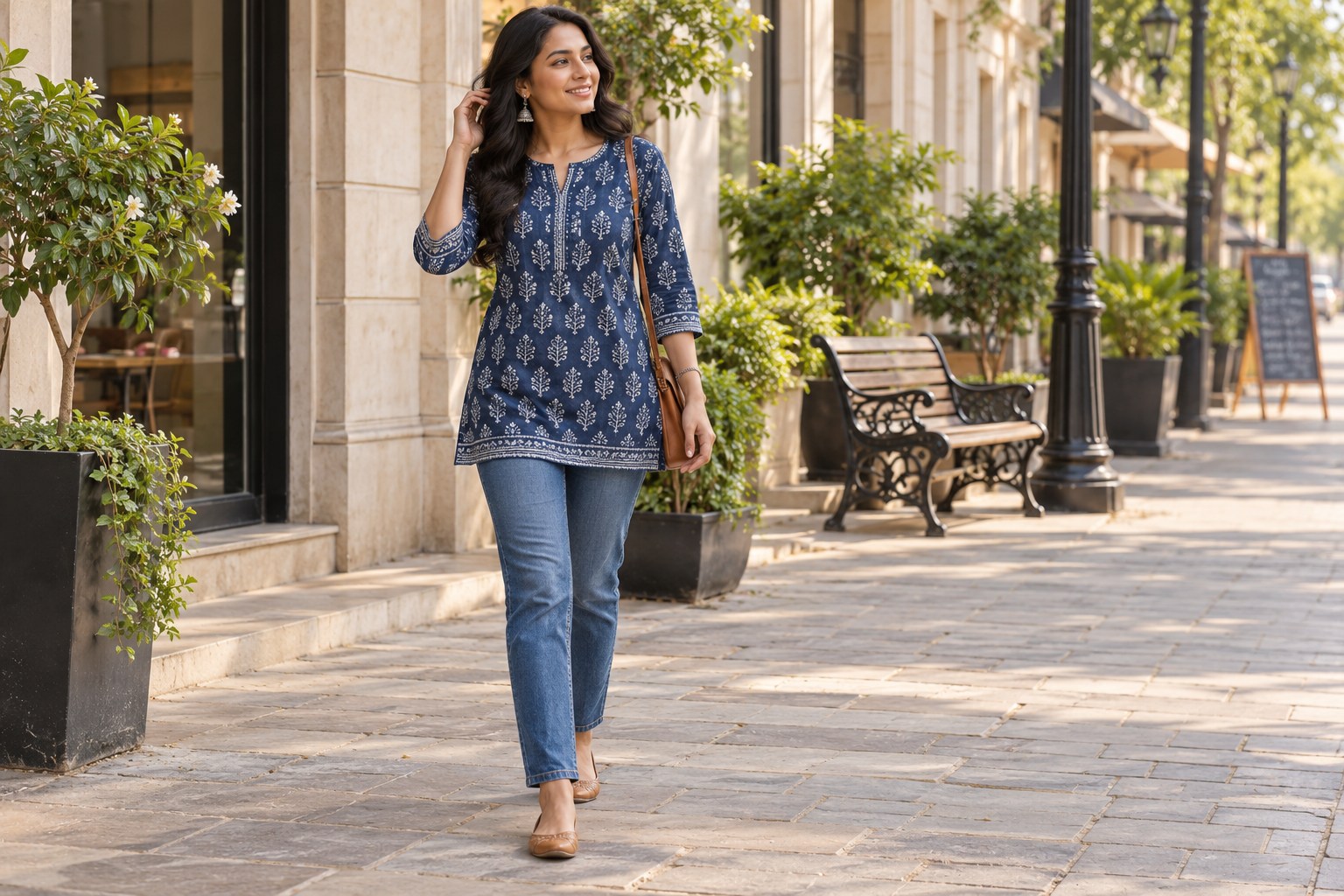
Indian wear & mixing
Choose the kurti length and jean rise together, then check how the hem behaves over pockets and waistbands.