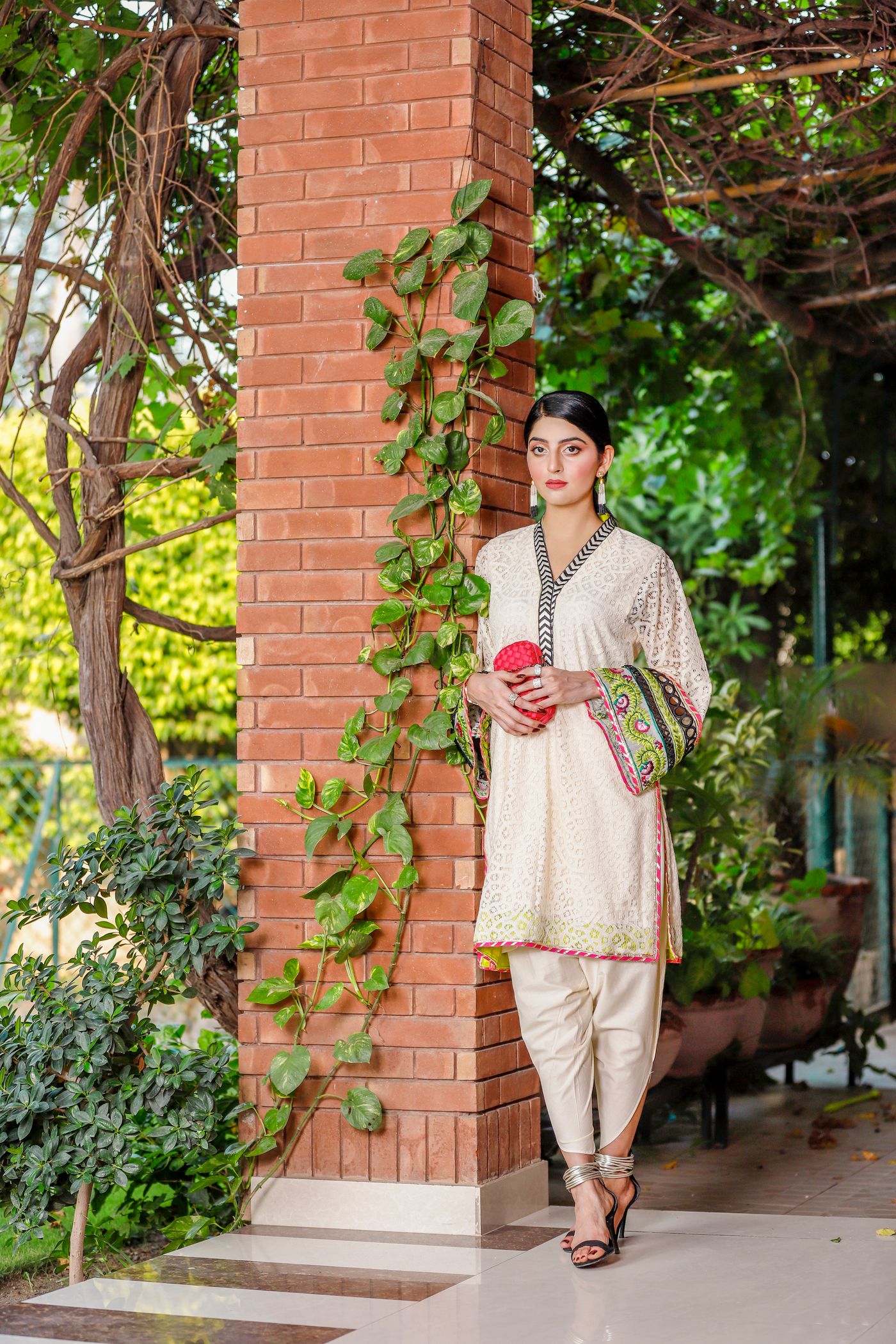
Indian wear & mixing
Wear a straight kurta with tapered trousers
Check the kurta’s side openings and the trouser taper so the two shapes move comfortably together.
Clothes, accessories & the ways to wear them
Indian wear & mixing
Decide where a sharara outfit should carry volume, then test how the layers move together.
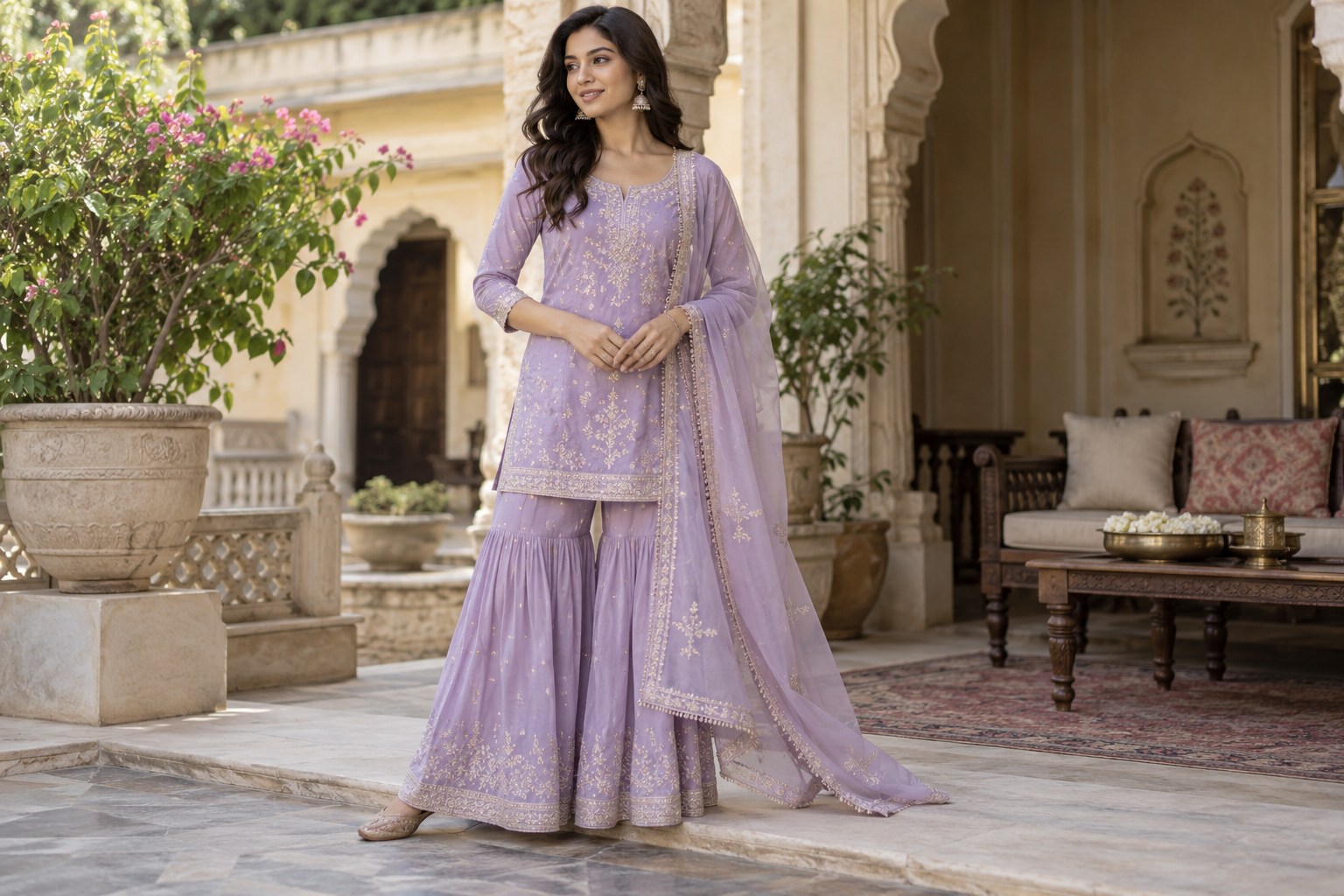
AI-generated illustration. Items shown are illustrative, not specific products for sale.
Sharara trousers bring their own flare, often beginning below a more fitted upper section. The exact cut varies, so judge the garment you have rather than working from a single image of the style. The kurta length, trouser flare and dupatta width can all add volume in different places. You can enjoy that abundance or create a quieter outline by making one element simpler.
Start without the dupatta. Look at the kurta hem against the point where the trousers begin to widen. A shorter kurta can reveal that change in shape; a longer kurta may cover it and leave only the lower flare visible. Both can work, but a hem that stops exactly on a bulky gathered seam may catch or lift. Walk a few steps and check the side view before deciding the proportions are right.
Try turning, climbing a step and sitting. Wide trouser legs can brush each other, particularly when there is a stiff lining or a heavy border. Make sure you can move without catching one foot in the opposite hem. Check the length with your actual shoes and any spare pair. Holding the fabric up for the fitting hides the issue you need to solve.
If the kurta is also heavily flared, consider a lighter dupatta or a narrower drape. This does not reduce the outfit to a strict formula; it gives your arms room and leaves the shape of the clothing visible. A broad, open dupatta may suit a short period of standing photographs, while a folded shoulder drape can be easier for a meal or an evening involving movement.
A plain kurta with richly worked sharara trousers puts emphasis lower in the outfit. Earrings can balance that without adding a large necklace over the upper garment. If the kurta has dense embroidery at the chest, a simpler lower half makes the upper detail easier to see. With an all-over coordinated set, smooth accessories can introduce a useful pause rather than another layer of pattern.
Consider the bag's position as well. A crossbody bag can pull a loose kurta across the body and interrupt its drape. A compact shoulder or handheld bag may work better for a short occasion, provided it holds what you need. Test it with the dupatta, since a bag that looks balanced alone can compete for the same shoulder.
The final check is practical: can you reach your phone, sit down and walk at your usual pace without gathering several layers in your hands? If not, adjust the hem, drape or accessory arrangement. Keep the volume you enjoy, but give it enough space to move with you.
Indian wear & mixing
Check the kurta’s side openings and the trouser taper so the two shapes move comfortably together.
Indian wear & mixing
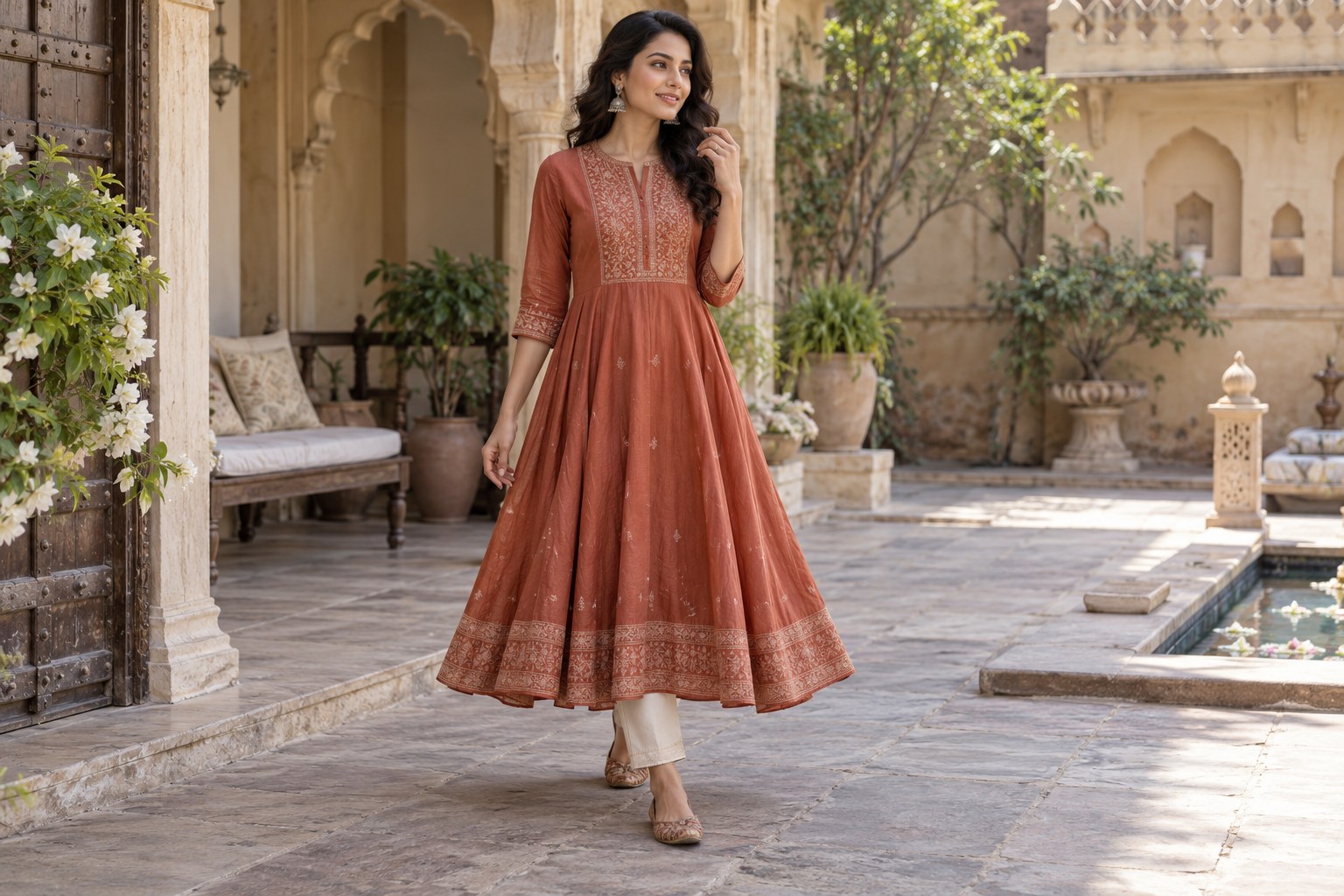
Let a flared kurta move freely above a narrower trouser shape, with enough room at both waist and thigh.
Indian wear & mixing
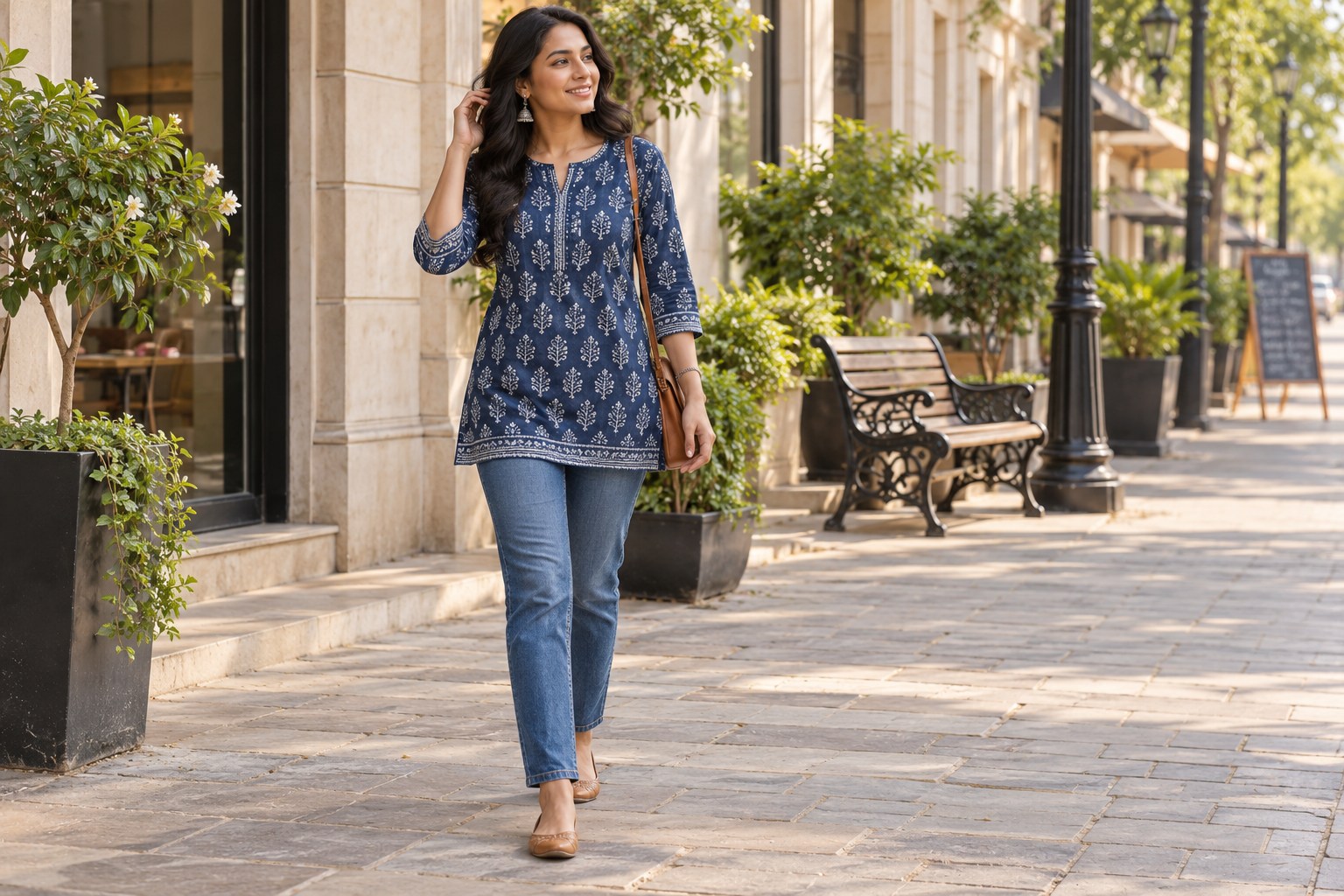
Choose the kurti length and jean rise together, then check how the hem behaves over pockets and waistbands.