Indian wear & mixing
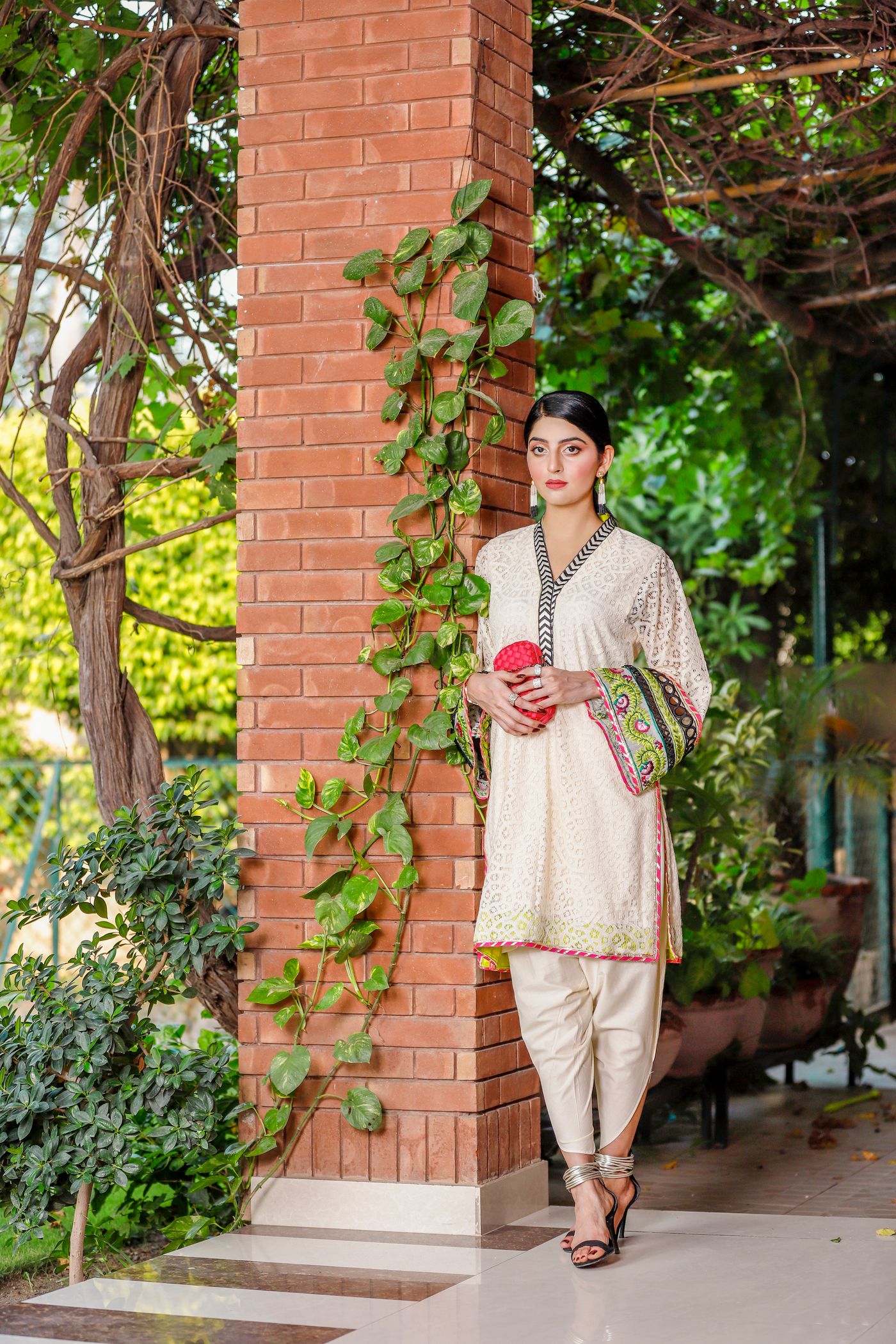
Wear a straight kurta with tapered trousers
Check the kurta’s side openings and the trouser taper so the two shapes move comfortably together.
Clothes, accessories & the ways to wear them
Indian wear & mixing
Choose whether the saree border or the jewellery leads, then check their overlap in the finished drape.
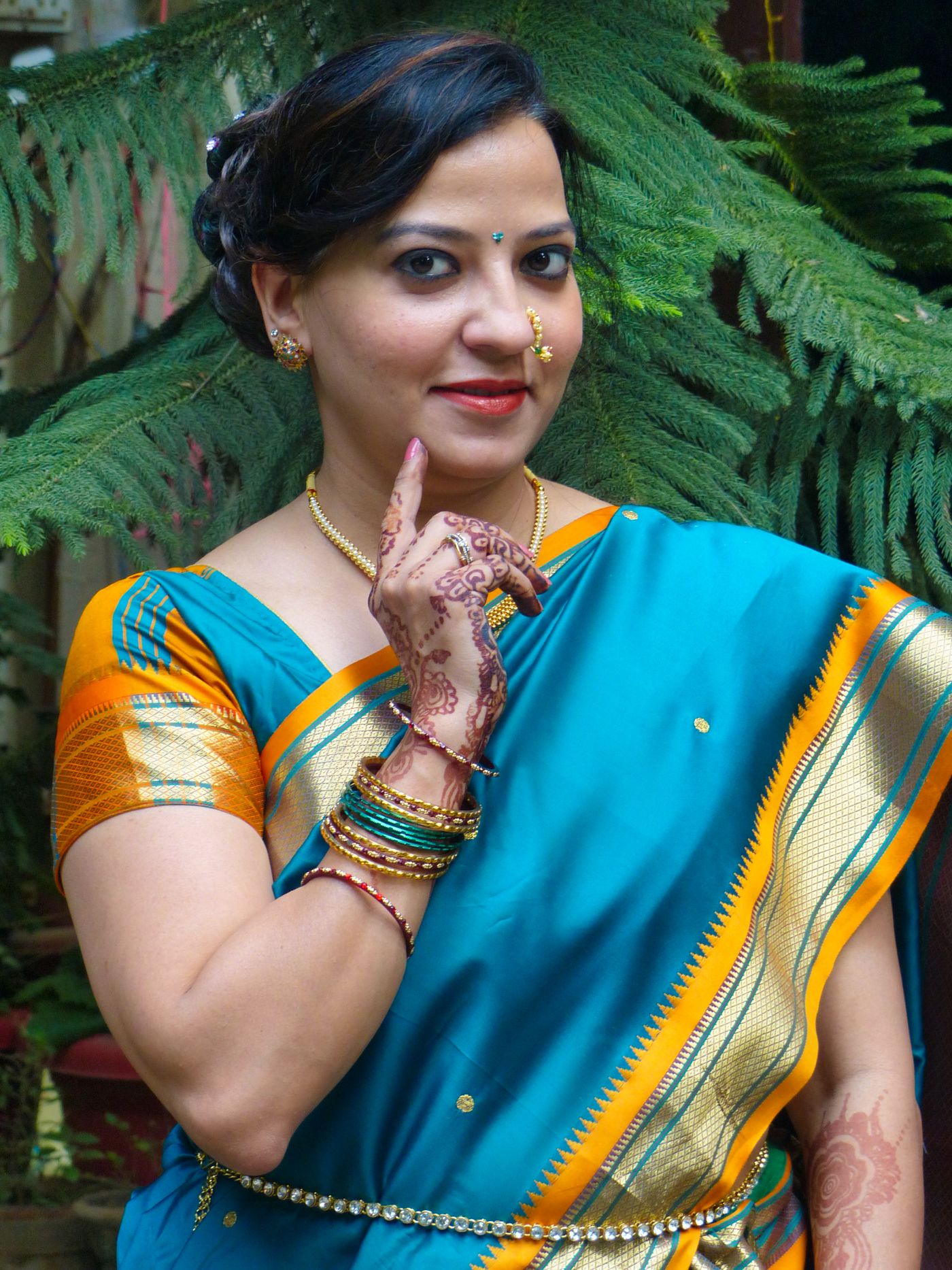
A statement saree border already creates a strong line around the outfit. Jewellery can repeat its detail, contrast with it or remain quiet beside it. Start by draping the saree fully, because a border lying flat on a bed does not show where it will sit near the neck, wrists and face.
Look at the largest visible section of border. If it crosses close to the neckline, a broad necklace may occupy the same area. Try the necklace and move around. If the two catch or obscure each other, a different necklace length or earrings alone may be easier. This is a physical and visual decision, not a ban on wearing rich details together.
If the border is the feature you most want to show, smaller earrings and a simple bracelet can leave it clear. If a necklace has personal meaning or is the main accessory you want to wear, arrange the pallu so the jewellery remains visible and comfortable where the draping style allows.
Metal tones can connect with the border without matching perfectly. A muted metallic border beside highly polished jewellery creates a different contrast from two similarly soft finishes. Compare them in the light expected at the event if possible. The colour name alone does not describe the amount of shine.
Check wrist jewellery against the border when you lift or arrange the fabric. Raised settings, hooks and projecting details can snag. A smoother bangle or fewer pieces may be more convenient if you expect to handle the saree frequently. Keep rings in the same practical check.
A heavily bordered saree can also work with a plain bag and shoes. Repeating the border colour in every accessory is optional and can make the outfit feel more coordinated than you want. Use existing pieces first and add only what serves a clear purpose.
Take a full-length photograph after the accessories are on, then a closer view of the neckline. These show different things: the overall balance and the actual overlap. Keep the combination that works at both distances and remains comfortable when you sit, turn and move your hands.
A gold-tone border and necklace may seem like an automatic match, but their scale can differ substantially. A very narrow border beside a broad collar necklace makes the necklace lead. A wide border near the shoulder may remain more visible even with the same necklace. Decide which relationship you prefer by looking at the finished drape.
If a sentimental necklace is non-negotiable for the occasion, build the blouse and drape around its comfortable resting position where possible. That is a more useful starting point than selecting everything else first and then trying to squeeze the necklace into the remaining space. Personal significance can reasonably guide an outfit more than an abstract idea of visual balance.
Indian wear & mixing
Check the kurta’s side openings and the trouser taper so the two shapes move comfortably together.
Indian wear & mixing
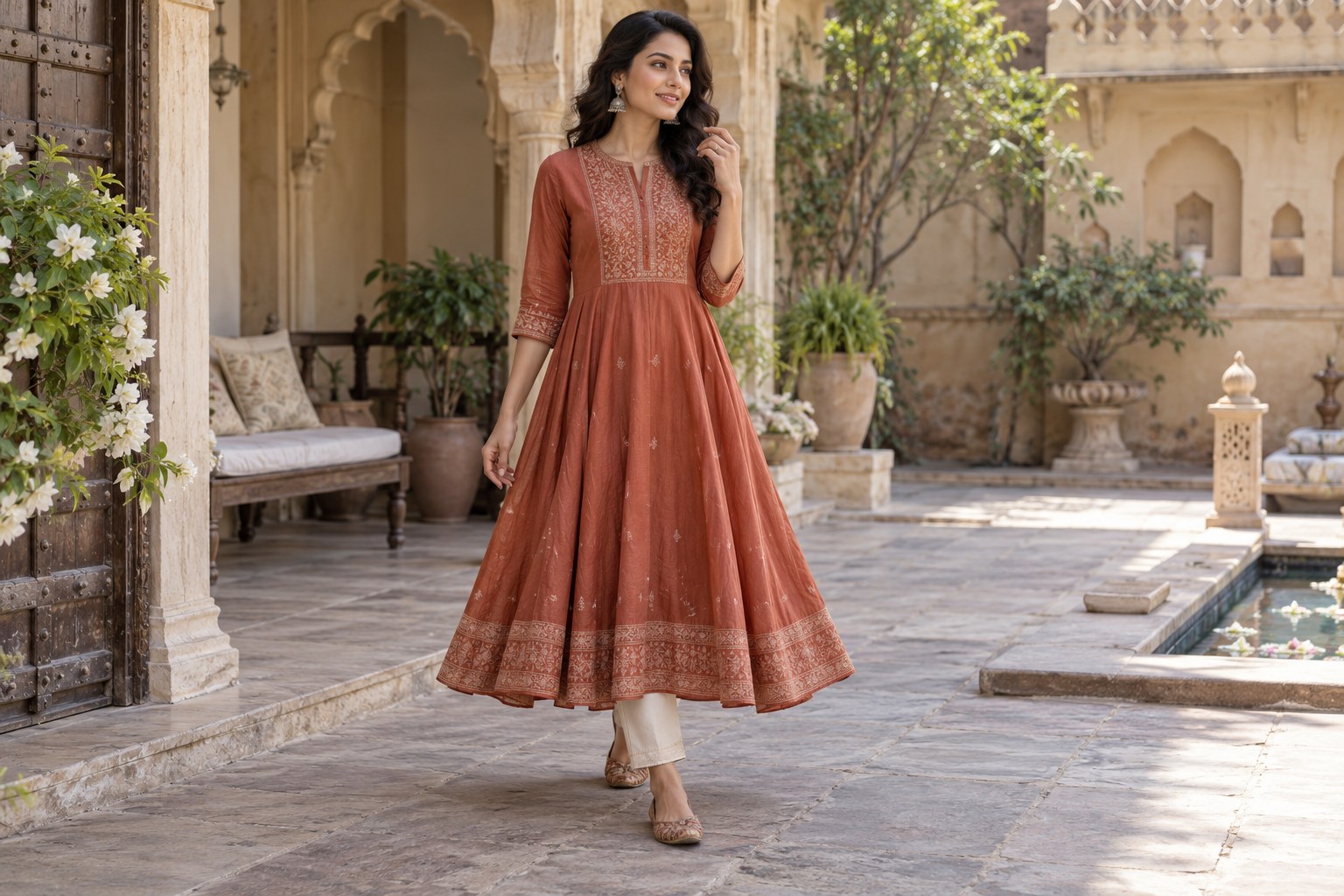
Let a flared kurta move freely above a narrower trouser shape, with enough room at both waist and thigh.
Indian wear & mixing
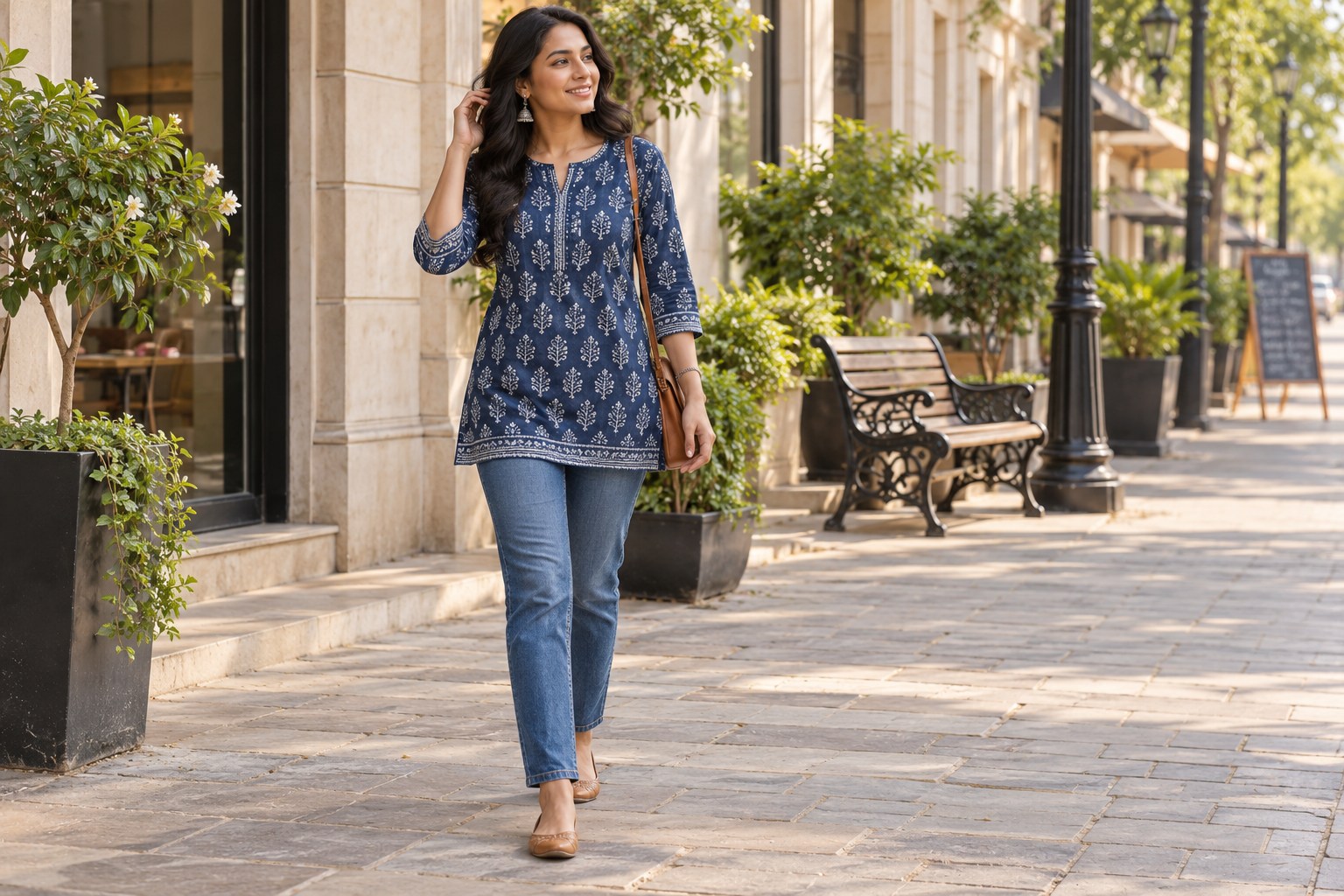
Choose the kurti length and jean rise together, then check how the hem behaves over pockets and waistbands.